
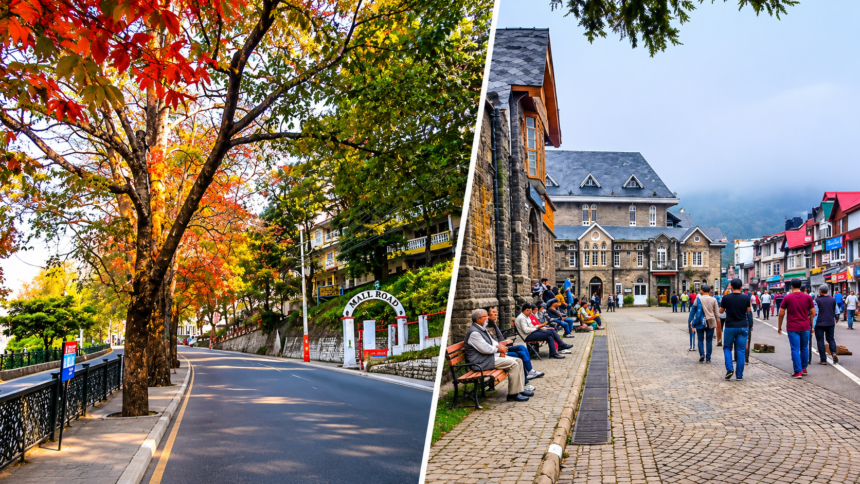
If you have ever visited an Indian hill station, chances are you have spent some time walking along its famous Mall Road. From cosy cafés and handicraft stores to local food stalls and shopping outlets, these roads are often the busiest places in mountain towns. But have you ever wondered why so many hill stations across India have a Mall Road?
Despite being located in different mountain ranges, several Indian hill stations share a similar town layout, with Mall Road serving as a popular destination for tourists and locals. The tradition dates back to the British colonial period and has an interesting connection with the history of mountain settlements in India.
Why Do Indian Hill Stations Have a Mall Road?
To understand the origin of Mall Roads, we need to look back at the 19th century, during British rule in India. British soldiers and officials struggled with the extreme heat, tropical diseases and malaria in the northern plains. As a result, they began looking towards the cooler climates of the Himalayas and the Western Ghats for relief.
Over time, these mountain locations developed into summer retreats and sanatoriums. Several towns, including Shimla, became important centres of British administration. Shimla was officially designated the Summer Capital of British India in 1864.
British urban planners wanted these settlements to resemble familiar English towns. They took inspiration from the traditional English High Street and the grand promenades of British seaside resorts such as Brighton and Blackpool.
This approach gave hill stations a common urban design, with wide walking paths, shopping areas and social spaces. Mall Roads became central to everyday life, providing residents with a place to walk, shop and socialise while enjoying the mountain surroundings.
Why Is It Called ‘Mall Road’?
The word ‘Mall’ was not originally associated with modern shopping centres. Its roots can be traced to the 18th-century British concept of ‘Pall Mall’, which referred to a broad, tree-lined avenue designed for leisurely walks, horse riding and horse-drawn carriages.
The British brought this concept to India and adapted it to the geography of mountain towns. Mall Roads were generally developed along stable mountain ridges, where relatively flat and wide stretches of land were available amid steep and uneven terrain.
These roads became popular promenades where British residents could enjoy evening walks, meet people and socialise. Their elevated locations also offered pleasant views of the surrounding mountains.
Upper Mall and Lower Mall: The Colonial Social Divide
During British rule, Mall Roads were not simply recreational spaces. Their layout also reflected the racial and social divisions of colonial society.
In hill stations such as Shimla, Manali and Nainital, certain areas were divided into Upper Mall and Lower Mall sections, each serving different communities.
Upper Mall: These areas were primarily reserved for senior British officers, European residents and royalty. Ordinary Indians were often restricted from using these roads during particular hours, with exceptions for royalty, senior officials and uniformed servants.
Lower Mall: Located further down the mountain slopes, these areas generally accommodated local Indian markets, shops, workers’ residences and stables.
The Upper Mall was maintained as an exclusive space, with restrictions on activities that could disturb the surroundings. Heavy commercial vehicles and bullock carts were also prohibited to preserve its appearance and peaceful atmosphere.
Historical Landmarks Commonly Found Along Mall Roads
Apart from shopping streets and walking areas, many Mall Roads feature buildings and structures that reflect their colonial past. Several of these landmarks were developed to meet the administrative, religious and social needs of British residents.
- Town Halls and Post Offices: Victorian and Gothic-style buildings served as important centres for civic administration and communication during British rule.
- Gothic Churches: Churches such as Christ Church in Shimla and St. John in the Wilderness in Dharamshala were built at prominent locations along the main ridge.
- Bandstands: These open-air structures hosted evening performances by military brass bands, providing entertainment for people visiting the promenades.
- Heritage Hotels and Clubs: Exclusive establishments, including the Shimla Gymkhana and Nainital Boat Club, served as social gathering places where British residents organised dinners, dances and theatrical performances.
How Mall Roads Changed After Independence
Following India’s Independence in 1947, Mall Roads gradually moved away from their exclusive colonial identity and became popular public spaces.
What was once associated with British officials and European residents eventually developed into a major attraction for both domestic and international tourists. Today, these roads bring together local markets, handicraft stores, traditional food outlets, modern cafés and shopping destinations.
From their colonial beginnings to their present-day popularity, Mall Roads have remained an important part of India’s hill station culture. They are not just busy shopping streets but also reflect the architectural, social and historical development of mountain towns across the country.