
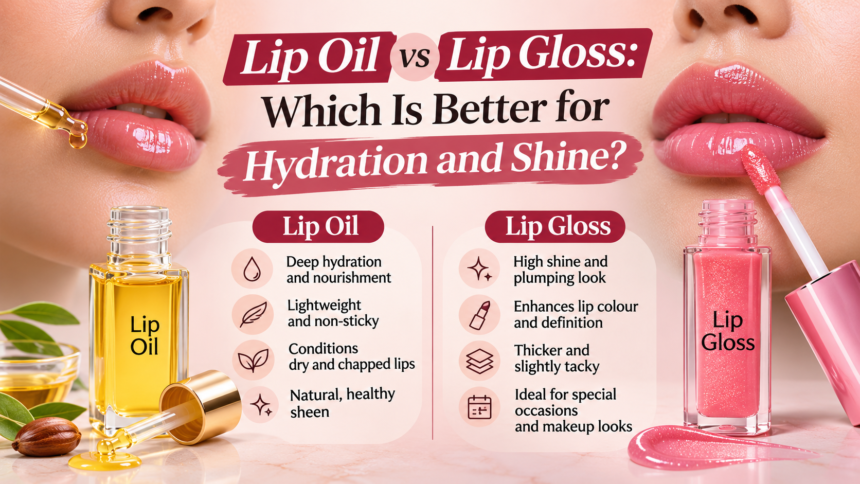
The beauty industry offers a wide range of lip products designed to give lips a smooth, glossy and attractive appearance. Among the popular choices, lip oils and lip glosses have become favourites for achieving a shiny finish. Although both products add shine, they differ in their formulations, benefits and overall purpose.
If you frequently experience dry or chapped lips, choosing between the two can be confusing. While lip oils are generally formulated to provide conditioning and nourishment, lip glosses primarily focus on enhancing the appearance of the lips.
According to Drishti Madnani, co-founder and beauty expert of Shryoan Cosmetics, the main difference lies in their ingredients and intended use. Lip oils generally contain oils and conditioning ingredients that help soften dry lips, whereas lip glosses are primarily designed to provide shine, enhance lip definition and create a fuller appearance.
Lip Oil vs Lip Gloss: Key Differences
| Feature | Lip Oil | Lip Gloss |
|---|---|---|
| Primary purpose | Hydration, nourishment and skin barrier support | High shine, plumping effect and colour enhancement |
| Key ingredients | Plant-based oils such as jojoba and rosehip, vitamin E and fatty acids | Polymers, emollients, synthetic waxes and shimmer |
| Texture and feel | Lightweight, smooth, conditioning and generally non-sticky | Thicker, glossy and slightly tacky |
| Finish | Natural, sheer and healthy-looking shine | Reflective, glass-like and high-gloss finish |
| Best for | Dry, chapped or sensitive lips that need conditioning | Special occasions, makeup looks and layering over lipstick |
Lip Oil: A Better Choice for Everyday Hydration?
Lip oils can be particularly useful for people who frequently experience dryness or irritation. Their oil-based formulations are designed to condition the lips while providing a smooth, glossy appearance.
Many lip oils contain ingredients such as plant-based oils, vitamin E and other moisturising agents. These ingredients help soften the lips and improve their overall appearance and feel.
Another advantage is their lightweight texture, which makes them comfortable for regular use. Lip oils can be applied on their own for a natural finish or layered over lipstick to add extra shine.
For people who prioritise daily lip conditioning along with a glossy appearance, lip oil can be a convenient addition to their beauty routine.
Lip Gloss: Best for Shine and a Fuller Look
Lip gloss is primarily designed to enhance the appearance of the lips by creating a shiny, reflective finish. Its glass-like effect makes it a popular choice for achieving a polished makeup look.
Unlike traditional lip oils, glosses generally focus more on aesthetics than intensive lip nourishment. However, some modern formulations also contain conditioning ingredients to provide additional comfort.
Lip gloss works well when applied over lipstick or worn alone to create a fuller-looking appearance. It is particularly suitable for parties, special occasions and makeup looks where a high-shine finish is desired.
However, people with severely dry or cracked lips may find that lip gloss alone does not provide sufficient conditioning or comfort.
Which One Provides Better Hydration and Nourishment?
The choice between lip oil and lip gloss largely depends on your lip care needs and the finish you want to achieve.
If hydration, softness and everyday comfort are your priorities, lip oil is generally the better option. Its oil-based formulation helps condition the lips while delivering a subtle shine.
On the other hand, if you want an intense glossy finish, enhanced colour and a fuller-looking appearance, lip gloss is a suitable choice.
Final Verdict
Lip oil and lip gloss serve different purposes in a beauty routine. Lip oil offers a combination of conditioning and makeup benefits, making it a suitable choice for everyday use. Lip gloss, meanwhile, is primarily focused on delivering shine and enhancing the appearance of the lips.
Ultimately, your choice should depend on whether you prioritise lip nourishment or a high-shine makeup finish.