
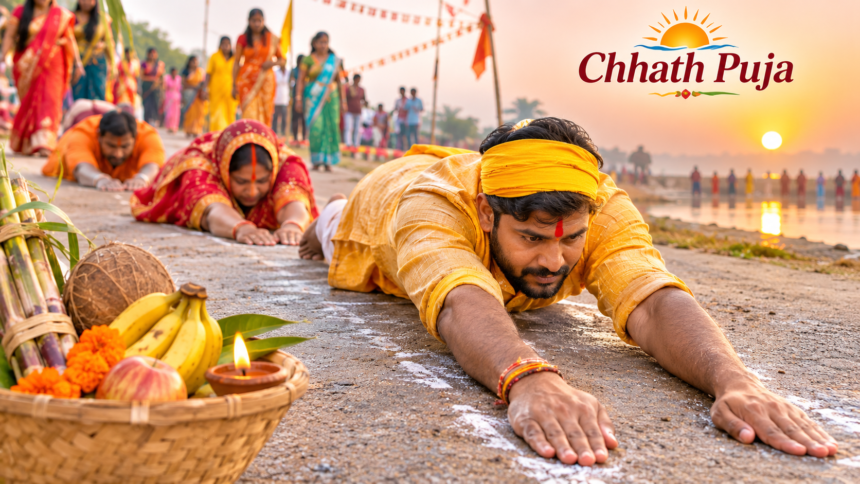
Chhath Puja is known for its deep devotion, traditional rituals and strict religious practices. Among these traditions, Dand Pranam, also called Dandi Pranam or Dandi, is considered one of the most physically demanding forms of worship. During this ritual, devotees repeatedly lie flat on the ground, stretch their bodies forward and gradually move towards the Chhath ghat to offer prayers to Surya Dev and Chhathi Maiya.
Many devotees undertake this journey as part of a personal vow, known as a mannat. Some perform Dand Pranam after a wish has been fulfilled, while others undertake it to seek blessings for their families and children.
Both men and women participate in this practice, which is particularly followed in Bihar and parts of eastern Uttar Pradesh. Chhath Puja 2026 will take place from November 13 to November 16, and some devotees will perform Dand Pranam while travelling towards the ghat for the evening or morning Sun worship.
What Is Dand Pranam in Chhath Puja?
Dand Pranam is a traditional form of worship in which devotees cover the distance to a Chhath ghat through repeated full-body prostrations.
Instead of walking normally, the devotee lies down completely on the ground, stretches forward and marks the point reached. After getting up, the person moves to that position and repeats the same action. This process continues until the destination is reached.
In some traditions, devotees use a small wooden stick, sometimes made from mango wood, to mark their progress. During the journey, they may also chant prayers or recite the names of Surya Dev.
The ritual represents humility, dedication, gratitude and complete surrender to the divine. For devotees, every movement is an expression of faith in Surya Dev and Chhathi Maiya.
Why Do Devotees Perform Dand Pranam?
The practice is closely connected with personal religious promises and wishes. Devotees undertake this physically challenging journey for different spiritual and family-related reasons.
Some of the common beliefs associated with Dand Pranam include:
- Blessings for children: Devotees pray for childbirth, the good health of their children and happiness within the family.
- Fulfilment of a mannat: Some people promise to complete the ritual if a particular wish or prayer is fulfilled.
- Gratitude towards Surya Dev: The journey is performed as an expression of thankfulness for blessings received.
- Faith and spiritual discipline: The physical effort symbolises dedication, patience, humility and devotion.
For many families, Dand Pranam is also a religious tradition followed across generations. The purpose and manner of performing the ritual may differ according to individual vows and family customs.
How Is Dand Pranam Performed During Chhath Puja?
The ritual involves moving towards the Chhath ghat through repeated prostrations. Although the exact procedure can vary, the commonly followed practice includes several steps.
- Preparation: Devotees wear clean and simple clothes and prepare for the journey towards the designated Chhath ghat.
- Full-body prostration: The devotee lies flat on the ground, extending the arms and body forward.
- Marking the position: A wooden stick may be used to identify the distance covered during the movement.
- Repeating the process: The devotee gets up, moves forward to the marked position and performs another full-body prostration.
- Completing the journey: Once the ghat is reached, the devotee participates in the Chhath rituals and offers Arghya to Surya Dev.
Some devotees also chant the 12 names of Surya Dev while performing the ritual. However, the number of prostrations, route and other practices can vary between families and religious traditions.
When Is Dand Pranam Performed During Chhath Puja 2026?
Dand Pranam is generally performed while travelling towards the riverbank or designated ghat for the main Chhath prayers. Some devotees complete the journey before Sandhya Arghya, while others undertake it in connection with Usha Arghya.
The two important worship occasions during Chhath Puja 2026 are:
| Ritual | Date | Day |
|---|---|---|
| Sandhya Arghya | November 15, 2026 | Sunday |
| Usha Arghya | November 16, 2026 | Monday |
During Sandhya Arghya, devotees offer prayers to the setting Sun. The following morning, Usha Arghya is performed in honour of the rising Sun.
It is important to note that Dand Pranam is not compulsory for every Chhath devotee. Many families observe the four-day festival through its traditional fasting, prayers and offerings without undertaking this physically demanding journey.
For those who perform it, Dand Pranam carries a deeply personal meaning. Each prostration represents a prayer, a fulfilled promise or an expression of gratitude towards Surya Dev and Chhathi Maiya. The tradition continues to hold an important place in the religious and cultural practices associated with Chhath Puja.
Disclaimer
This article is intended for general informational and cultural purposes only. Dand Pranam practices, procedures and religious beliefs may differ according to regional traditions and family customs. The information provided should not be considered a compulsory religious guideline or medical advice. Devotees should consider their physical health before undertaking physically demanding religious practices.