
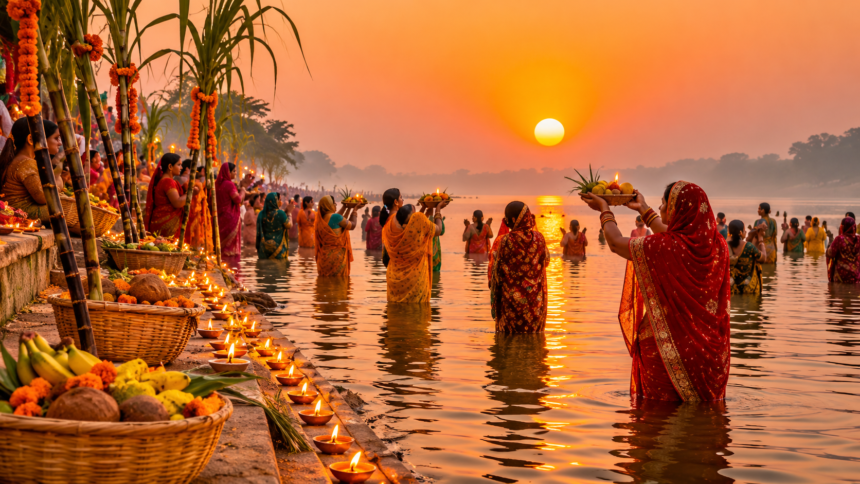
Chhath Puja is one of India’s most significant and spiritually meaningful festivals. Celebrated over four days, the festival involves strict fasting, prayers and offerings to Surya Dev (the Sun God). Devotees gather at riverbanks, ponds and ghats to perform rituals, with many observing a challenging fast without food and water.
One of the most distinctive traditions of Chhath Puja is offering Arghya to the setting sun first, followed by the rising sun the next morning. But why do devotees worship the Sun God during both sunset and sunrise? The tradition carries a deeper spiritual meaning connected with gratitude, hope and the cycle of life.
Chhath Puja 2026: Understanding Sandhya Arghya and Usha Arghya
Chhath Puja includes two important Arghya rituals, performed on the third and fourth days of the festival.
Sandhya Arghya (Evening Offering): Observed on the third day, this ritual involves offering water and prayers to the setting sun. Devotees gather at riverbanks and ghats during sunset to worship Surya Dev.
Usha Arghya (Morning Offering): Performed on the fourth day, this ritual takes place at sunrise. Devotees offer Arghya to the rising sun and pray for health, prosperity and the well-being of their families.
Both rituals hold equal religious importance, as one represents gratitude for the past while the other welcomes new beginnings.
Why Do Devotees Worship the Setting Sun First?
Offering Arghya to the setting sun reflects the importance of gratitude in Hindu traditions. Before welcoming another day, devotees express their appreciation for the sunlight, energy, nourishment and life that the Sun God provides.
The setting sun also represents an important message about life. Success and happiness are not the only experiences worth celebrating. Just as life has mornings, it also has evenings, challenges and endings. Worshipping the setting sun reflects the belief that every phase of life deserves respect and acceptance.
According to Hindu beliefs, Surya Dev has two wives, Usha, representing the morning, and Pratyusha, representing the evening. During Chhath Puja, devotees worship both forms. Sandhya Arghya is associated with Pratyusha, while Usha Arghya is dedicated to Usha.
This tradition makes Chhath Puja distinctive because it honours both sunrise and sunset, symbolising the complete cycle of life.
Why Is Arghya Offered to the Rising Sun?
The rising sun represents hope, positivity, renewal and fresh beginnings. After observing a challenging 36-hour Nirjala fast, devotees gather at the ghats to welcome the first rays of the morning sun and offer their prayers.
According to religious beliefs, worshipping the rising Sun God brings good health, prosperity, longevity and the fulfilment of wishes. The ritual is particularly significant for mothers who observe the fast and pray for the health, happiness and long life of their children.
The morning Arghya also symbolises the completion of the Chhath rituals and the renewal of faith and devotion.
Scientific Significance Behind Chhath Puja Arghya
Apart from its religious importance, Chhath Puja is also associated with traditional beliefs about the benefits of sunlight and spending time in natural surroundings.
During the evening and early morning rituals, devotees stand in water and offer prayers while facing the sun. These periods generally involve less intense sunlight than midday, making exposure more comfortable.
Traditional explanations associate the practice with relaxation, mental calmness and the benefits of sunlight. The combination of standing in water, breathing fresh air and focusing on prayer can also create a meditative experience.
However, claims that the ritual directly detoxifies the body, improves blood circulation or increases Vitamin D levels should not be considered established medical benefits.
Conclusion
Chhath Puja is a festival that highlights devotion, gratitude, equality and respect for nature. Its rituals do not centre on elaborate ceremonies or idol worship. Instead, devotees from different economic and social backgrounds gather at the same ghats, offer Arghya to the Sun God and share traditional prasad.
The practice of worshipping both the setting and rising sun carries a meaningful message: appreciate what life has given you and welcome every new beginning with hope.
This Chhath Puja 2026, as devotees offer Arghya at sunrise and sunset, the tradition serves as a reminder that gratitude for the past and faith in the future are equally important.