
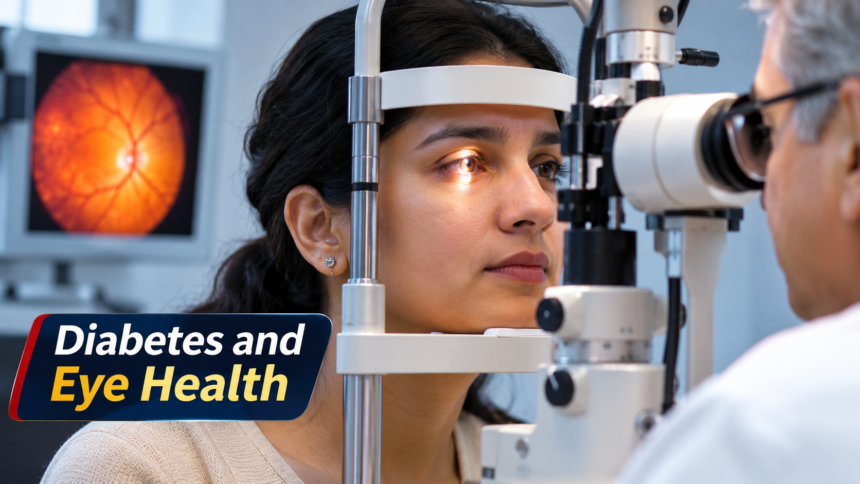
New Delhi: Diabetes is widely known for its effects on the heart, kidneys and nerves, but its impact on eyesight is often overlooked. One of the biggest concerns is that diabetes-related eye damage can develop gradually without causing any noticeable changes in vision. A person may continue seeing clearly even while damage is taking place inside the eye.
By the time symptoms such as blurred vision become noticeable, the condition may already have progressed. This makes regular eye examinations particularly important for people living with diabetes.
How Does High Blood Sugar Damage the Eyes?
The retina is a light-sensitive layer located at the back of the eye. It contains numerous tiny blood vessels that deliver oxygen and nutrients needed for healthy vision.
When blood sugar remains consistently high, these delicate blood vessels can become damaged. Their walls may weaken, allowing blood or fluid to leak into the retina. This condition is known as diabetic retinopathy.
During the initial stages, diabetic retinopathy may not produce obvious symptoms. Small haemorrhages or areas of swelling can develop without affecting everyday activities such as reading, driving or working.
As a result, people may not realise that their eyes are being affected. Clear eyesight does not necessarily mean that the retina is free from diabetes-related damage.
Diabetic Macular Oedema and Other Eye Complications
If diabetic retinopathy progresses, damaged blood vessels can leak fluid into the retina and cause swelling. When this swelling affects the macula, the central area responsible for detailed vision, the condition is called diabetic macular oedema.
In more advanced stages, abnormal blood vessels may begin to grow inside the eye. These vessels are fragile and can bleed into the vitreous, the gel-like substance that fills the eye. Such bleeding can lead to serious vision problems and, in some cases, significant vision loss.
Diabetes can also increase the risk of developing other eye conditions, particularly cataracts and glaucoma.
High blood sugar may affect the eye’s lens and cause temporary changes in vision. It can also contribute to a higher risk of glaucoma, a condition in which the optic nerve becomes damaged.
Why Regular Eye Examinations Are Important
One important point people with diabetes should remember is that normal vision does not guarantee healthy eyes.
Even without pain, blurred vision or other warning signs, changes may already be developing in the retina. This is why regular comprehensive eye check-ups are necessary.
People living with diabetes should undergo eye examinations that include a dilated retinal assessment, even when their eyesight appears normal. The timing of subsequent examinations should depend on the condition of the eyes and the advice of the treating ophthalmologist.
Early detection can help identify problems before they cause noticeable vision loss.
How Can People With Diabetes Protect Their Eyes?
Managing blood sugar levels is an important step towards reducing the risk of diabetes-related eye complications. Keeping blood pressure and cholesterol under control is equally important.
Regular eye examinations can help detect retinal changes at an early stage, when appropriate medical care may help manage the condition and protect vision.
Diabetes-related eye damage does not always begin with blurred eyesight or discomfort. Taking care of eye health should therefore be part of regular diabetes management, rather than something people consider only after experiencing vision problems.
Disclaimer: This article is intended for general health awareness and informational purposes only. It does not replace professional medical advice, diagnosis or treatment. People with diabetes should consult a qualified ophthalmologist for regular eye examinations and follow personalised medical recommendations to protect their vision.