
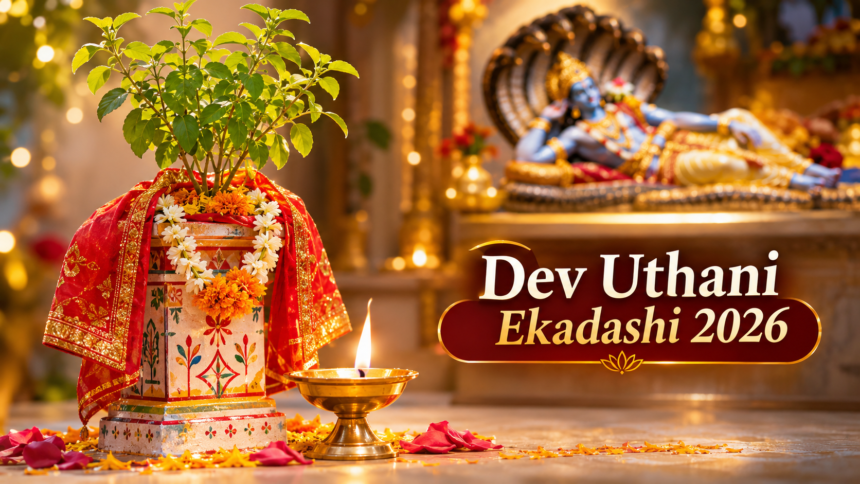
Dev Uthani Ekadashi is an important festival in Hinduism, marking the awakening of Lord Vishnu after his four-month period of yogic sleep. Celebrated during the Shukla Paksha of the Kartik month, the occasion also signals the conclusion of Chaturmas. After this period, auspicious activities such as weddings, housewarming ceremonies and other religious functions are traditionally resumed.
On this day, devotees worship Lord Vishnu, Goddess Lakshmi and Tulsi Mata with special prayers and rituals. One of the most significant traditions is Tulsi Vivah, the ceremonial wedding of Tulsi Mata with Lord Shaligram, a sacred form of Lord Vishnu.
According to Hindu beliefs, performing Tulsi-related rituals on Dev Uthani Ekadashi brings happiness, peace and prosperity to the family. Here is everything to know about the 2026 date, religious importance and seven traditional Tulsi rituals associated with the occasion.
Dev Uthani Ekadashi 2026: Date and Religious Significance
Also called Prabodhini Ekadashi and Devotthan Ekadashi, this festival is regarded as one of the most auspicious Ekadashi observances in the Hindu calendar.
According to religious beliefs, Lord Vishnu enters yogic sleep on Devshayani Ekadashi, which falls during the Shukla Paksha of Ashadha. He awakens on Dev Uthani Ekadashi in Kartik month, bringing the four-month Chaturmas period to an end.
The awakening of Lord Vishnu is considered an important occasion for devotees. It is traditionally believed that weddings, housewarming ceremonies and other auspicious activities can begin again after this day. Observing an Ekadashi fast and offering prayers to Lord Vishnu are also considered spiritually beneficial.
When will Dev Uthani Ekadashi be celebrated in 2026?
According to the Hindu calendar, the Kartik Shukla Ekadashi tithi will begin at 7:15 AM on November 20, 2026, and conclude at 6:31 AM on November 21.
Based on the Udaya Tithi tradition, Dev Uthani Ekadashi will be observed on Friday, November 20, 2026.
Why Is Tulsi Vivah Performed on Dev Uthani Ekadashi?
Tulsi Vivah is among the most important religious traditions associated with Dev Uthani Ekadashi. During this ceremony, Tulsi Mata is symbolically married to Lord Shaligram, who represents Lord Vishnu.
According to Hindu beliefs, performing this sacred ceremony brings peace and happiness to the household. Devotees also believe that the ritual invites the blessings of Lord Vishnu and Goddess Lakshmi, bringing prosperity and well-being to the family.
Many households celebrate Tulsi Vivah with traditional decorations, prayers, offerings and devotional ceremonies.
7 Auspicious Tulsi Rituals to Follow on Dev Uthani Ekadashi
Several practices involving the Tulsi plant are considered especially sacred on this occasion. Devotees traditionally perform these rituals with faith and devotion while praying for the happiness and prosperity of their families.
1. Offer a red chunari to Tulsi Mata
Offering a red chunari to the Tulsi plant is considered an auspicious part of the worship. Devotees perform this ritual as a mark of respect and devotion towards Tulsi Mata.
2. Tie a yellow thread with 11 knots
Another traditional practice involves tying a yellow thread containing 11 knots around the Tulsi plant. According to religious beliefs, this ritual is associated with good fortune and prosperity.
3. Offer raw milk and light a ghee diya
Devotees can offer raw milk to Tulsi Mata and light a ghee lamp near the plant. Lighting a diya, particularly during evening prayers, is considered an important part of Tulsi worship.
4. Offer 11 Tulsi leaves to Lord Krishna
Tulsi leaves, also known as Tulsi Dal, are considered especially dear to Lord Krishna. On Dev Uthani Ekadashi, devotees traditionally offer 11 Tulsi leaves to the deity while praying for divine blessings.
5. Chant the Vishnu mantra 11 times
Sitting near the Tulsi plant, devotees can chant the following mantra 11 times:
Om Namo Bhagavate Vasudevaya Namah
This prayer is traditionally recited to seek the blessings of Lord Vishnu.
6. Tie a kalava around the Tulsi plant
Tying a sacred red or yellow thread, commonly known as kalava, around the Tulsi plant is another customary ritual. Devotees perform this practice while praying for the happiness, health and well-being of their family members.
7. Light a diya and perform Tulsi Parikrama
During the evening, light a ghee lamp near the Tulsi plant and perform seven or 11 rounds of circumambulation, known as Tulsi Parikrama. According to religious beliefs, this practice helps bring positivity, peace and prosperity into the household.
By observing these traditional rituals with devotion, devotees seek the blessings of Lord Vishnu, Goddess Lakshmi and Tulsi Mata. The occasion is considered an opportunity to pray for harmony, happiness and prosperity in family life.
Disclaimer: The information in this article is based on Hindu religious beliefs, traditional customs and calendar details. Rituals and practices may vary across regions and families. This content is intended for general informational purposes and should not be considered a religious directive.