
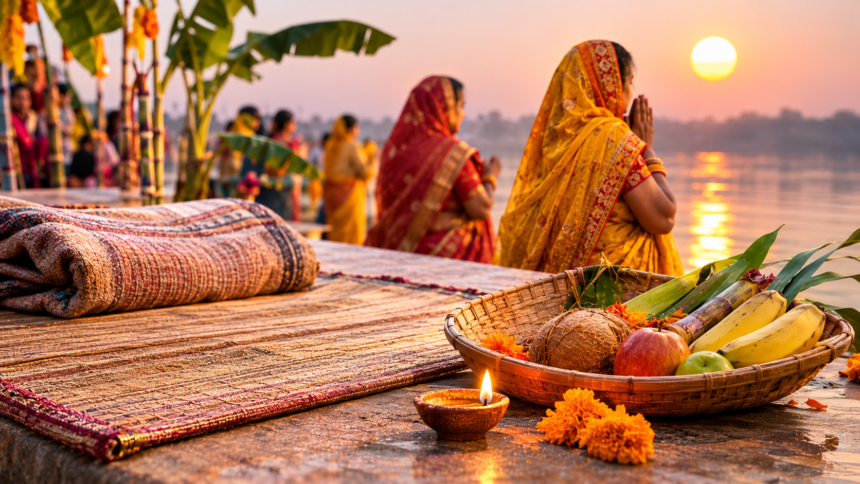
New Delhi: Sleeping on the floor is an important traditional practice followed by many devotees during Chhath Puja. As part of the four-day festival, the person observing the fast, known as the vratin or parvaitin, gives up the comfort of a regular bed and sleeps on a clean mat or simple bedding. This custom reflects simplicity, self-control and complete dedication to religious rituals.
In many households, this practice begins on Nahay Khay and continues until the completion of the fast after Usha Arghya. Along with fasting, maintaining cleanliness and preparing prasad according to traditional customs, sleeping on the floor is considered part of the disciplined lifestyle followed during Chhath.
Chhath Puja 2026 will be celebrated from November 13 to November 16. Sandhya Arghya will take place on November 15, followed by Usha Arghya on November 16. Here is why devotees follow the tradition of sleeping on the floor during this festival.
Why Do Devotees Sleep on the Floor During Chhath Puja?
The tradition of sleeping on the floor is associated with sanyam, which means discipline and self-restraint. During Chhath Puja, devotees voluntarily avoid certain everyday comforts as a way of expressing their dedication and devotion.
Giving up a comfortable bed for a few days is traditionally seen as an act of simplicity and humility. It reminds the person observing the vrat that spiritual discipline and religious responsibilities are more important than personal comfort during this period.
This practice is also connected with the overall lifestyle followed during Chhath. Devotees pay special attention to personal hygiene, food preparation, clothing and everyday activities. Sleeping on a simple mat becomes another part of maintaining this disciplined routine.
From Nahay Khay to Usha Arghya: How Long Does the Tradition Continue?
In several families, devotees start sleeping on the floor from Nahay Khay, which marks the beginning of the four-day Chhath observance. The practice generally continues through Kharna, Sandhya Arghya and Usha Arghya.
For Chhath Puja 2026, the main rituals will take place according to the following schedule:
| Chhath Ritual | Date |
|---|---|
| Nahay Khay | November 13, 2026 |
| Kharna | November 14, 2026 |
| Sandhya Arghya | November 15, 2026 |
| Usha Arghya and Parana | November 16, 2026 |
The exact duration of floor-sleeping may vary depending on family traditions. While many households begin this practice on Nahay Khay, some follow different customs passed down through generations.
Connection Between Floor-Sleeping and Ritual Purity
Cleanliness is one of the most important aspects of Chhath Puja. The traditional rules extend to the devotee, the home, the kitchen and the preparation of offerings.
On Nahay Khay, devotees take a ritual bath and clean their homes before preparing a simple sattvik meal. In households following traditional practices, separate utensils and cooking arrangements may be used. Onion, garlic and non-vegetarian food are generally avoided during the observance. Prasad is prepared carefully, handled with clean hands and not tasted before being offered to the deities.
Sleeping on the floor is followed as part of the same disciplined lifestyle. It helps devotees maintain simplicity throughout the festival and marks the vrat as a special period of religious observance.
However, this tradition does not mean that an ordinary bed is considered inherently impure. Its significance lies in voluntarily giving up comfort as an expression of devotion and self-discipline.
Why Is Chhath Puja Associated With Strict Rules and Discipline?
Chhath Puja is known for its demanding rituals, which require careful preparation and dedication over four days. Sleeping on the floor is just one of several traditional practices followed by devotees.
The festival begins with Nahay Khay, when the vratin takes a ritual bath and consumes a simple sattvik meal. The second day is Kharna, during which devotees observe a day-long fast before preparing and consuming traditional prasad, commonly including jaggery-based kheer and roti.
After Kharna, devotees observing the strict form of the vrat begin a nirjala fast, which traditionally continues for around 36 hours without food or water.
On the third day, prayers and offerings are made to the setting Sun during Sandhya Arghya. The following morning, devotees gather near water bodies to offer Usha Arghya to the rising Sun. The fast concludes with Parana after the final prayers.
Fasting, cleanliness, simple living and prayers to Surya Dev and Chhathi Maiya together define the religious significance of Chhath Puja.
The tradition of sleeping on the floor during Chhath reflects the values of simplicity, dedication and self-discipline associated with the festival. For devotees, leaving behind the comfort of a regular bed is a meaningful part of preparing for the vrat. Along with ritual bathing, carefully prepared prasad and prayers to the Sun God, this custom continues to be observed by families as part of their long-standing religious traditions.
Disclaimer: The religious practices and explanations mentioned in this article are based on traditional beliefs and customs associated with Chhath Puja. Rituals and household practices may differ across regions and families. This article is intended for general informational purposes and does not prescribe a mandatory set of religious practices for all devotees.