
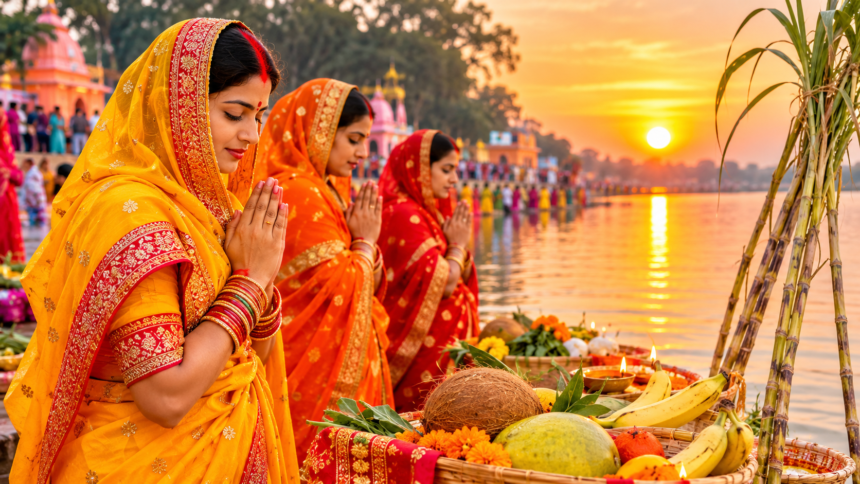
New Delhi: Yellow, orange and red are among the most preferred colours worn by women during Chhath Puja. Each shade carries religious and cultural significance, reflecting devotion to Surya Dev, prosperity, purity and marital well-being. These traditional colours are particularly visible at riverbanks and ghats during Sandhya Arghya and Usha Arghya, when devotees offer prayers to the Sun God.
Chhath Puja 2026 will take place from November 13 to November 16. Devotees will perform Sandhya Arghya on November 15 and offer prayers to the rising Sun on the morning of November 16.
The choice of clothing during the festival is closely linked to long-standing customs and religious beliefs. Yellow, orange and red each have a distinct meaning in Chhath traditions.
Why Is Yellow Considered Auspicious During Chhath Puja?
Yellow holds a special place in Hindu traditions and is commonly associated with sunlight, positivity, purity and prosperity. Since Chhath Puja is dedicated to Surya Dev, many women prefer wearing yellow as a mark of respect and devotion towards the Sun God.
The colour is also connected with haldi (turmeric), which is widely used in religious ceremonies. Turmeric symbolises purity, good fortune and auspicious beginnings, making yellow a preferred choice for traditional festive attire.
Yellow sarees also reflect the brightness and warmth of sunlight. Their golden appearance makes them particularly suitable for the morning and evening worship rituals performed during Chhath.
What Is the Religious Significance of Orange and Red Sarees?
Orange, often called kesariya or saffron, represents faith, devotion, sacrifice and spiritual discipline in Hindu culture. The colour also resembles the shades of the sky during sunrise and sunset, the two important periods when devotees offer Arghya to Surya Dev.
Many women choose orange sarees because the shade reflects the spiritual importance of the festival while matching the natural beauty of the Sun’s rising and setting.
Red, meanwhile, has a strong connection with marriage, prosperity and auspiciousness. In Hindu traditions, it is associated with Shakti, energy and saubhagya, which represents the good fortune of married women.
During Chhath Puja, married women often wear red or maroon sarees while observing the vrat. Through their prayers, they seek the health, happiness and long life of their families and children. Unmarried women and other family members may also choose red or other festive shades according to their preferences and family traditions.
Why Do Women Prefer Wearing Sarees During Chhath Puja?
Traditional sarees are an important part of Chhath Puja celebrations, particularly in Bihar and neighbouring regions. Women observing the vrat often wear new or freshly washed sarees while performing the religious rituals.
In some households, unstitched clothing is preferred because it is traditionally considered a symbol of ritual purity. However, clothing practices can differ from one family to another, and there is no single dress code followed by everyone.
Cotton sarees are especially popular because they are lightweight and comfortable. Women observing the vrat may spend several hours preparing prasad, standing near water bodies and performing different rituals. Simple and comfortable clothing makes these activities easier.
Many families also prefer modest and traditional outfits, reflecting the discipline, simplicity and devotion associated with Chhath Puja.
Why Do Married Women Apply Long Sindoor During Chhath?
One of the noticeable traditions during Chhath Puja is the application of sindoor along the hair parting, sometimes extending towards the tip of the nose. This custom is particularly followed by married women in Bihar and eastern Uttar Pradesh.
According to traditional beliefs, applying sindoor in a long line represents prayers for the husband’s long life, marital happiness and the family’s prosperity. Red and orange sindoor are commonly associated with good fortune and married life.
Although this tradition is often seen alongside colourful sarees and traditional jewellery, the practice of applying sindoor has its own cultural and religious significance.
Yellow, orange and red are more than just popular clothing choices during Chhath Puja. Each colour represents a different aspect of the festival’s beliefs and traditions. Yellow reflects the energy and brightness of Surya Dev, orange symbolises devotion and spiritual dedication, while red represents auspiciousness and family well-being. Together, these colours add to the cultural beauty of Chhath Puja and reflect traditions that continue across generations.
Disclaimer: The religious meanings and cultural practices discussed in this article are based on traditional beliefs and customs. Chhath Puja rituals, clothing preferences and family traditions may vary across regions and households. This article is intended for general informational purposes only.