
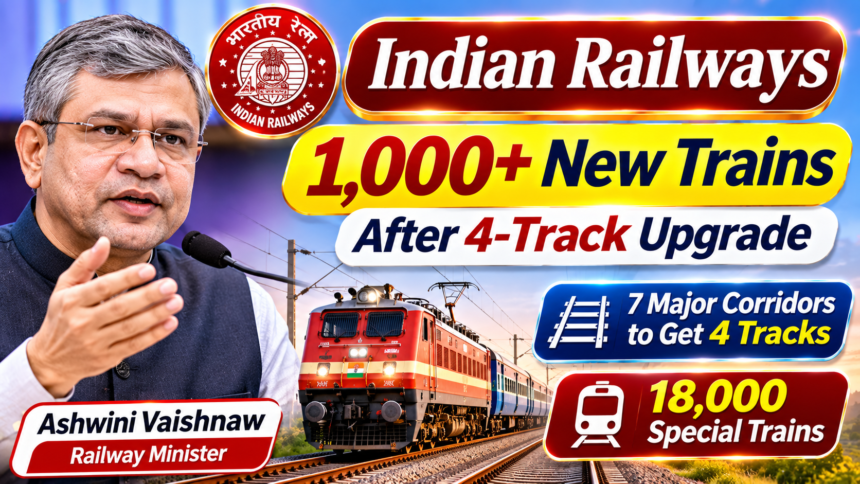
Indian Railways is planning a major expansion of its railway network, with seven important corridors set to be upgraded to four parallel tracks. Railway Minister Ashwini Vaishnaw announced on Saturday that the expansion will make it possible to operate more than 1,000 additional regular trains once the work is completed.
The selected routes include connections between Delhi, Mumbai, Kolkata and Chennai, along with three diagonal corridors: Delhi–Chennai, Mumbai–Kolkata and Delhi–Guwahati.
According to the minister, the expansion is aimed at increasing railway capacity, reducing congestion and easing pressure on passenger waiting lists and ticket reservations. He also highlighted the arrangements being made for the festive rush, including 18,000 special trains, around 700 AI-enabled cameras and dedicated passenger holding areas at approximately 20 stations.
Seven Major Railway Corridors to Get Four Tracks
As part of its long-term infrastructure development plan, Indian Railways will expand seven major routes by adding parallel tracks. The project covers important connections between Delhi, Mumbai, Kolkata and Chennai, which are part of the country’s Golden Quadrilateral railway network.
Three additional diagonal routes — Delhi to Chennai, Mumbai to Kolkata and Delhi to Guwahati — are also included in the plan.
Four-lining means expanding railway sections by increasing the number of parallel tracks, particularly on routes that currently have two lines. This additional infrastructure is expected to create more room for passenger and freight train operations.
Vaishnaw said these corridors have been identified to improve network capacity and address delays caused by increasing traffic. He also pointed to the government’s continued approval of railway infrastructure projects, noting that the Union Cabinet frequently clears new projects during its meetings.
More Than 1,000 Regular Trains Planned After Expansion
Once the four-track expansion is completed across all seven corridors, Indian Railways expects to introduce over 1,000 additional regular trains.
Vaishnaw said the increased capacity would help reduce pressure on waiting lists and improve the availability of reserved tickets. These services will be regular trains rather than temporary special trains introduced during periods of high passenger demand.
The additional tracks are also expected to support the movement of freight trains alongside passenger services, helping the railway network handle higher traffic volumes.
Coal Movement and Passenger Rush Put Pressure on Rail Network
The Railway Minister also discussed the reasons behind congestion and delays on several routes. He said the movement of coal and other goods is placing considerable pressure on the existing railway infrastructure, particularly at a time when passenger traffic is also high.
According to Vaishnaw, the network is currently experiencing peak congestion because freight movement and passenger demand are both elevated.
He added that Indian Railways has laid around 36,000 kilometres of additional tracks over the past 10 years. The minister emphasised that further track construction and infrastructure expansion are necessary to address congestion over the long term.
He described increasing track capacity as the permanent way to manage growing railway traffic and improve operations.
Indian Railways Operates 18,000 Special Trains for Festive Season
To manage the additional passenger rush during Durga Puja, Diwali and Chhath, Indian Railways has arranged 18,000 special trains this festive season. This is higher than the 12,000 special trains operated during the corresponding festive period last year.
Vaishnaw said special trains have been positioned at several important locations in Delhi, including Shakur Basti, Nizamuddin, Anand Vihar, Anand Vihar Terminal and areas around New Delhi Railway Station.
He also shared that approximately 75,000 special trains were operated during the previous financial year. The number is expected to cross 80,000 in the current financial year.
The railway authorities are also preparing additional passenger-management arrangements, including around 700 AI-enabled cameras and dedicated holding areas at nearly 20 stations, to handle the festive-season crowd.
Disclaimer: This article is based on the information and statements attributed to Railway Minister Ashwini Vaishnaw. Railway expansion plans, project timelines and train operations may change as work progresses. Readers should refer to official Indian Railways announcements for the latest updates.