
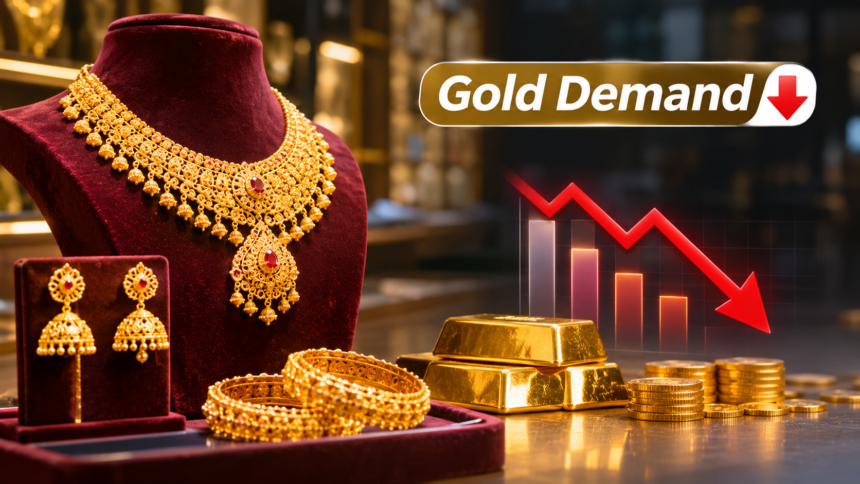
India’s gold market is facing an unusual slowdown just as the country enters its biggest festive and wedding shopping period. Despite Dhanteras and Diwali traditionally bringing strong demand, consumers are becoming cautious about buying gold because of record-high prices, a weak monsoon and rising living expenses.
According to the World Gold Council (WGC), India’s total gold demand could reach around 650 tonnes in 2026. This would be the lowest annual level since 2020. The slowdown has already become visible in recent months, with both jewellery purchases and investment demand declining significantly during the September quarter.
Gold Demand Drops 29% in the September Quarter
The World Gold Council reported that India’s gold demand declined by 29% year-on-year to 162.5 tonnes in the September quarter.
Jewellery demand recorded a 20% decline, while purchases of gold for investment purposes dropped by 40%. The sharp rise in gold prices has made buyers more cautious, affecting household purchases as well as investor interest.
With gold becoming increasingly expensive, many consumers are either reducing the quantity they purchase or delaying their buying decisions.
Weak Monsoon Puts Pressure on Rural Gold Purchases
Rural India plays a major role in the country’s gold market, accounting for more than half of total demand. A slowdown in the rural economy can therefore have a considerable impact on overall purchases.
The weak monsoon in 2026 has affected agricultural activity and farmers’ incomes, reducing their spending capacity. Since gold jewellery is an important form of savings for many rural households, lower earnings have also affected their ability to purchase gold.
This decline in rural buying is adding to the pressure created by already high gold prices.
Iran War, Inflation and Rising Living Costs Affect Demand
Higher living expenses following the Iran war have further reduced the money households can set aside for gold purchases. With everyday expenses taking up a larger share of family budgets, buying jewellery and investment gold has become more difficult for many consumers.
India’s gold imports also declined during the September quarter, although there are indications that unofficial imports have increased.
Retail inflation is expected to reach 6.3% during the October-December quarter. The Finance Ministry has said that inflation in the coming months will depend on factors such as food prices, fluctuations in energy costs, the impact of El Niño and liquidity conditions.
Together, these pressures are weighing on consumer purchasing power and limiting demand for gold.
Can Diwali and the Wedding Season Revive Gold Demand?
The December quarter could bring some improvement as Diwali celebrations and the wedding season traditionally encourage gold purchases. These occasions are important periods for jewellery retailers, as many families consider gold buying an essential part of festive and wedding preparations.
However, the expected recovery may remain limited. High gold prices and weak rural incomes are likely to discourage large purchases, even during the festive period.
The World Gold Council expects India’s total gold demand to remain around 650 tonnes in 2026, which would mark its lowest level since 2020. This suggests that seasonal buying during Diwali and the wedding season may not be enough to fully offset the decline seen earlier in the year.
Disclaimer: This article is intended for general news and informational purposes only. Gold demand estimates and inflation projections are based on the information available at the time of writing and may change as economic conditions develop. Readers should verify the latest market information before making financial or investment decisions.