
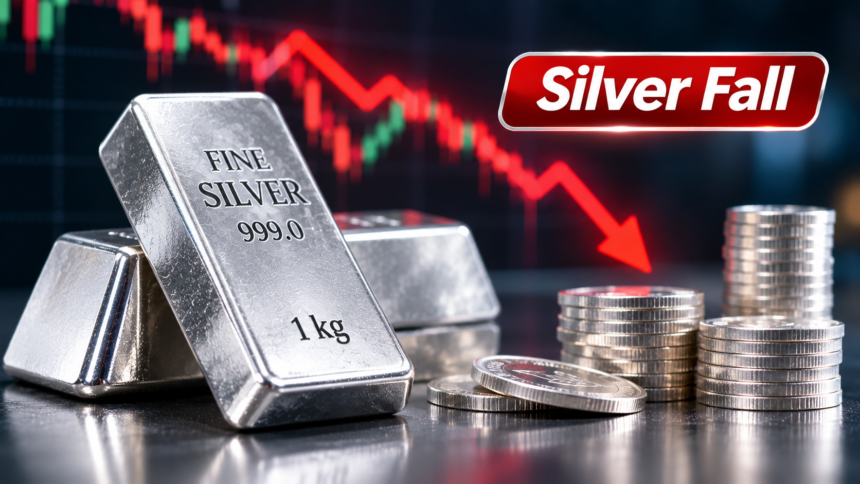
Silver prices have witnessed a major correction in 2026 after delivering an extraordinary rally earlier in the year. The metal, which reached a record high of nearly $120 per ounce in February, fell to around $50 by the end of October, losing more than 58% of its value from the peak.
The decline has also affected Indian investors. Silver futures on the Multi Commodity Exchange (MCX) dropped nearly 20% during October, significantly more than gold’s fall of around 7%. Although prices recovered briefly on November 2, the market remained volatile. On November 3, MCX silver futures again came under pressure, falling more than 2.5% during the morning session.
The sudden reversal has raised concerns among investors who entered the market at higher prices. It has also created a question for those considering fresh investments: is the silver correction an opportunity to buy at lower levels, or could prices decline further?
Here is a closer look at the factors behind the crash, the future outlook and the steps investors should consider.
Why Did Silver Prices Fall So Sharply?
The sharp decline in silver prices is the result of several factors rather than a single market development.
1. Heavy profit-booking after the record rally
Silver attracted substantial investor interest during its rally towards $120 per ounce in February 2026. Strong industrial demand, limited supplies and speculative buying helped push prices to unprecedented levels.
However, after such a steep rise, many institutional investors, hedge funds and traders began booking profits. As selling increased, the decline gathered momentum. Investors who had entered the market expecting further gains also started reducing their positions.
2. Higher US interest rate expectations
Expectations of higher interest rates in the United States have also affected precious metals.
Silver does not generate regular interest income. When bond yields and real interest rates rise, investors may prefer interest-bearing assets over metals. A stronger US dollar can add further pressure because dollar-priced commodities become more expensive for buyers using other currencies.
These changing financial conditions have reduced the appeal of silver as an investment.
3. Weakness in industrial demand
Unlike gold, silver has extensive industrial applications. It is used in solar panels, electric vehicles, semiconductors, electronics and other technologies.
Concerns about slower manufacturing activity, particularly in major markets such as China and Europe, have affected expectations for industrial consumption. Solar manufacturers are also working to reduce the amount of silver used in their products, creating additional pressure on one of the metal’s important demand sources.
4. Stronger dollar and changing investment flows
Investment demand has weakened as some exchange-traded funds (ETFs) experienced outflows. Some investors shifted money towards cash and fixed-income investments instead of holding precious metals.
The October sell-off in equity and technology stocks also encouraged investors with leveraged positions to sell metals to manage losses and liquidity requirements. These developments added to the downward pressure on silver.
Will Silver Prices Recover or Fall Further?
The future direction of silver will depend on several economic and market factors. Although the recent correction has reduced prices considerably, the long-term demand outlook has not disappeared.
Silver continues to play an important role in renewable energy, solar power, electric vehicles, electronics and advanced technologies. The Silver Institute expects global silver supply to remain below demand for the sixth consecutive year in 2026, according to the industry outlook cited by Business Standard. Moreover, much of the world’s silver is produced as a by-product of mining other metals, which limits how quickly producers can increase output.
However, these long-term factors may not immediately lead to higher prices. Slower economic growth could reduce industrial consumption, while increased recycling may add more silver to the market.
The $50-per-ounce level has also become an important psychological price point. A sustained move below it could encourage additional selling, particularly from speculative traders. On the other hand, a weaker dollar, lower interest rates or an improvement in industrial demand could help prices stabilise and recover.
For Indian investors, the outlook over the next six to twelve months will depend on US monetary policy, currency movements, global economic growth, industrial demand and geopolitical developments.
What Should Silver Investors Do Now?
The recent fall may appear attractive to investors who were waiting for lower prices. However, a sharp correction does not necessarily mean that the market has reached its bottom.
Investors should consider the following points before making a decision:
- Avoid investing the entire amount at once: Buying in smaller instalments can reduce the risk of entering the market just before another decline.
- Review your investment horizon: Investors with a longer time frame should assess whether silver still fits their financial goals and risk tolerance.
- Be careful with silver exposure: Silver generally experiences wider price movements than gold. Its allocation should reflect an investor’s ability to handle volatility.
- Avoid leveraged positions: Borrowing money or using excessive leverage to invest in silver can increase losses when prices move sharply.
- Review your existing portfolio: If silver has grown beyond your intended allocation, consider whether portfolio rebalancing is necessary.
Market experts quoted by Business Standard have suggested staggered purchases rather than aggressive buying. One expert also suggested keeping silver exposure around 3–5% of a portfolio, depending on individual risk appetite and investment objectives. This should not be treated as a universal allocation rule.
Investors who already hold silver should avoid making rushed decisions purely because of short-term price movements. At the same time, buying more simply to recover previous losses can increase portfolio risk.
Final Takeaway: Is This the Right Time to Buy Silver?
The 2026 silver crash has been driven by profit-booking, higher interest rate expectations, a stronger dollar, weaker investment flows and concerns about industrial demand. These factors have changed market sentiment after the metal’s extraordinary rally earlier in the year.
Silver still has long-term demand support from renewable energy, electronics and other industrial applications. However, its recovery will depend on whether investment demand returns and global economic conditions improve.
For new investors, gradual purchases may be more prudent than committing a large amount in one transaction. Existing investors should review their holdings, investment horizon and risk tolerance before making changes.
The key point is that silver’s lower price does not automatically make it a safe buying opportunity. Investors should focus on disciplined decisions rather than trying to predict the exact market bottom.
Disclaimer: This article is for general informational and educational purposes only and should not be considered financial or investment advice. Silver prices are volatile and can change due to global economic conditions, currency movements, interest rates and industrial demand. Any investment decision should be based on individual financial goals, risk tolerance and independent research. Consider consulting a SEBI-registered investment adviser before making investment decisions.