
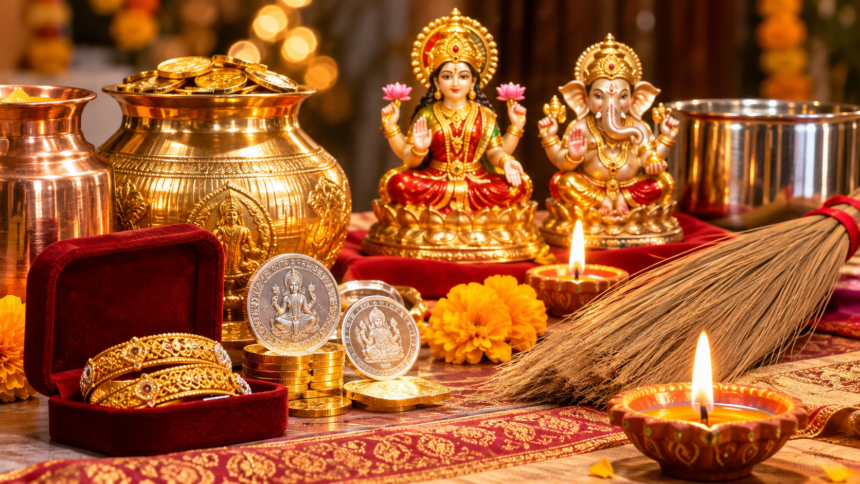
Dhanteras marks the beginning of the five-day Diwali celebrations and is considered an important occasion for welcoming wealth, prosperity and good fortune. Traditionally, people celebrate the festival by purchasing gold, silver, utensils and other household essentials. Markets and jewellery shops also see increased activity as families prepare for Diwali.
In 2026, Dhanteras, also known as Dhantrayodashi, will be observed on Friday, November 6, two days before Diwali. The festival falls on the Trayodashi Tithi of Krishna Paksha in the Hindu month of Kartik.
On this occasion, devotees worship Goddess Lakshmi, Lord Kubera and Lord Dhanvantari, seeking financial prosperity, stability and good health. Another important ritual is Yama Deep Daan, during which a diya is lit in honour of Yama.
Shopping is closely associated with Dhanteras, but there is no requirement to make expensive purchases. Even everyday household items such as a broom, earthen lamps and kitchen utensils carry traditional significance. Here is a look at what you can buy on Dhanteras 2026 and which purchases some families prefer to avoid.
What Should You Buy on Dhanteras 2026?
1. Gold and Silver
Gold and silver are among the most preferred purchases during Dhanteras. People often buy jewellery, coins and small decorative silver items according to their budgets. Coins featuring Goddess Lakshmi and Lord Ganesha are also popular, as many families use them during Diwali Lakshmi Puja.
However, purchasing precious metals is a traditional practice rather than a compulsory part of the festival. People can celebrate Dhanteras without making expensive investments.
2. Lakshmi and Ganesha Idols
Buying new idols of Goddess Lakshmi and Lord Ganesha is another common Dhanteras tradition. Goddess Lakshmi represents wealth and prosperity, while Lord Ganesha is worshipped for wisdom and the removal of obstacles.
Depending on personal preferences and budgets, families can choose idols made from clay, brass, silver or other materials. These idols are generally kept in the puja room and worshipped during Diwali.
3. A New Broom
A new broom, commonly known as a jhadu, is considered an auspicious purchase in several Dhanteras traditions. It represents cleanliness and the removal of dirt from the home before Diwali.
According to popular beliefs, cleaning the house helps prepare it to welcome Goddess Lakshmi. It is also an affordable option for those who want to follow the shopping tradition without spending much money.
4. Brass, Copper and Steel Utensils
Purchasing new kitchen utensils is another long-standing Dhanteras custom. Brass and copper vessels are traditionally preferred, while stainless-steel utensils have also become common choices in modern households.
The practice is associated with Lord Dhanvantari, who is traditionally shown holding a vessel containing amrit, the divine nectar. Some families fill newly purchased utensils with rice, wheat, sweets or water as part of their customary rituals.
5. Earthen Diyas and Puja Essentials
Dhanteras is also a suitable time to purchase essential items for Diwali worship. Earthen diyas, cotton wicks, incense sticks, flowers, roli, akshat and other puja materials are commonly bought during this period.
These items are used to decorate homes and prepare for Diwali celebrations. Earthen lamps are traditionally placed near entrances, balconies and puja areas, with appropriate fire-safety precautions.
What Should You Avoid Buying on Dhanteras 2026?
Along with items considered auspicious, certain purchases are traditionally avoided by some families on Dhanteras. However, these customs are not the same everywhere and may vary depending on regional and family traditions.
1. Iron Items
Some households avoid purchasing iron products on Dhanteras because iron is traditionally associated with Shani Dev. This belief is followed in certain communities but is not a universal restriction.
2. Glass Items
Glass products are also avoided by some people during Dhanteras. The belief is partly linked to the fragile nature of glass and traditional concerns about breaking newly purchased items during an auspicious occasion.
However, this is a customary belief and is not followed by every family.
3. Knives, Scissors and Sharp Objects
Certain traditions discourage buying knives, scissors, blades and other sharp objects on Dhanteras. These items are symbolically associated with cutting or separation, which some families consider unsuitable on a festival associated with prosperity and abundance.
4. Black-Coloured Items
In some households, purchasing black-coloured products is avoided during auspicious occasions, including Dhanteras. This practice comes from traditional beliefs that associate the colour black with inauspiciousness. However, customs differ across regions and communities.
5. Unnecessary Purchases on Credit
Some traditional beliefs discourage borrowing or lending money on Dhanteras because the occasion is associated with wealth and financial prosperity.
From a practical perspective, shoppers should also avoid unnecessary spending and taking on debt simply to participate in festive shopping. Purchases should remain within the household budget.
Is Buying Gold Necessary on Dhanteras?
No, purchasing gold is not compulsory for celebrating Dhanteras. Although gold jewellery and coins remain among the most popular festive purchases, the tradition can be followed with items that suit different budgets.
People can choose a small silver coin, a new utensil, an earthen diya, a broom or essential puja materials. The significance of Dhanteras is connected with traditional worship, prosperity and positive beginnings rather than the amount of money spent on shopping.
Families can therefore celebrate the occasion by following their customs and choosing purchases according to their financial convenience.
Disclaimer
The information in this article is provided for general informational purposes only. References to auspicious and inauspicious purchases are based on traditional beliefs and customs, which may vary across regions, communities and families. Readers are advised to follow their own family traditions and personal preferences. This article does not intend to promote or establish any religious belief as a universal rule.