
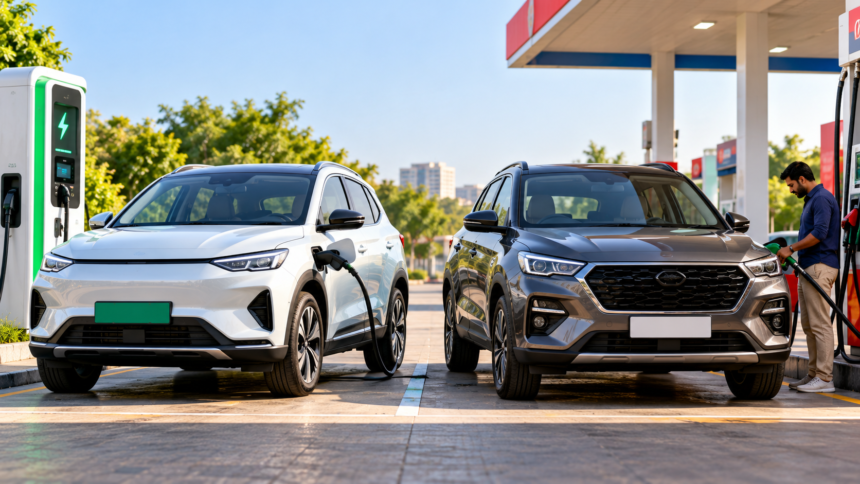
Buying an electric car often means paying more upfront than you would for a comparable petrol vehicle. However, lower electricity and maintenance expenses can help offset that initial difference over time. The amount you drive each day plays an important role in determining how quickly an electric vehicle (EV) can recover its higher purchase cost.
A comparison based on daily driving of 40 km shows how savings on regular vehicle expenses can make an EV financially attractive over the long term.
1. Electric Car vs Petrol Car: Comparing Running Costs
Consider a compact SUV that covers 40 km per day, or approximately 14,600 km annually. For this calculation, the petrol model is assumed to deliver 15 km per litre, with petrol priced at ₹100 per litre. The electric version is assumed to travel 8 km per unit of electricity, with electricity costing ₹8 per unit.
Based on these assumptions, the estimated energy cost works out to approximately ₹6.67 per kilometre for the petrol vehicle, compared with ₹1 per kilometre for the EV.
| Expense | Petrol car | Electric car |
|---|---|---|
| Annual distance | 14,600 km | 14,600 km |
| Energy cost per kilometre | ₹6.67 (approx.) | ₹1 |
| Annual energy expense | ₹97,333 (approx.) | ₹14,600 |
| Annual maintenance | ₹12,000 | ₹5,000 |
| Total annual cost | ₹1,09,333 (approx.) | ₹19,600 |
| Estimated annual savings with an EV | — | ₹89,733 |
Under this scenario, the electric car saves approximately ₹82,733 annually on energy alone. The estimated ₹7,000 difference in yearly maintenance costs increases the total annual saving to around ₹89,733.
These figures are estimates based on the stated assumptions. Actual expenses will depend on vehicle efficiency, electricity and fuel prices, maintenance requirements and driving conditions.
2. How Long Does It Take to Recover the Extra EV Cost?
Suppose the electric car costs ₹3 lakh more than the petrol version after accounting for road-tax benefits. To estimate the recovery period, divide the additional purchase cost by the projected annual savings.
At annual savings of ₹89,733, the extra ₹3 lakh would be recovered in approximately 40 months, or around three years and four months.
This is the break-even point, when the accumulated savings from lower running and maintenance expenses equal the additional amount paid for the EV.
After reaching this point, the continued reduction in vehicle expenses can improve household cash flow. Under the same assumptions, the EV offers savings of nearly ₹90,000 per year compared with the petrol alternative.
3. How Tax and Registration Benefits Affect EV Prices
Taxes and registration costs can influence the initial price difference between electric and petrol vehicles.
For this comparison, the supplied figures assume 5% GST for EVs, compared with 28% GST for petrol vehicles, along with a compensation cess ranging from 1% to 22% for petrol vehicles. Depending on the applicable state policies, road-tax exemptions or discounts can also lower the effective purchase cost of an electric car.
The supplied estimate suggests that these benefits could result in savings of approximately ₹1.2 lakh to ₹1.5 lakh on a car priced at ₹15 lakh.
However, these benefits are already considered in the assumed ₹3 lakh price premium used in the break-even calculation. They should not be counted a second time when calculating annual running-cost savings.
4. Why Daily Driving Distance Matters
The financial case for an electric car changes considerably when the vehicle is driven less frequently. With fewer kilometres travelled, the savings on fuel and maintenance accumulate more slowly.
According to the estimates provided, driving less than 15 km per day could extend the recovery period beyond eight years. For people who cover longer distances regularly, the potential savings may accumulate faster.
Before choosing between an EV and a petrol car, buyers should compare the upfront price difference with their expected daily and annual driving distance. Fuel prices, electricity rates, maintenance costs and applicable tax benefits should all be included in the calculation.
Disclaimer: This article is for general informational and educational purposes only and does not constitute financial or vehicle-purchase advice. All cost estimates are based on the assumptions stated and may differ from actual expenses. GST rates, compensation cess and road-tax benefits depend on the applicable rules and vehicle category. Buyers should verify current taxes, incentives and vehicle costs before making a purchase decision.