
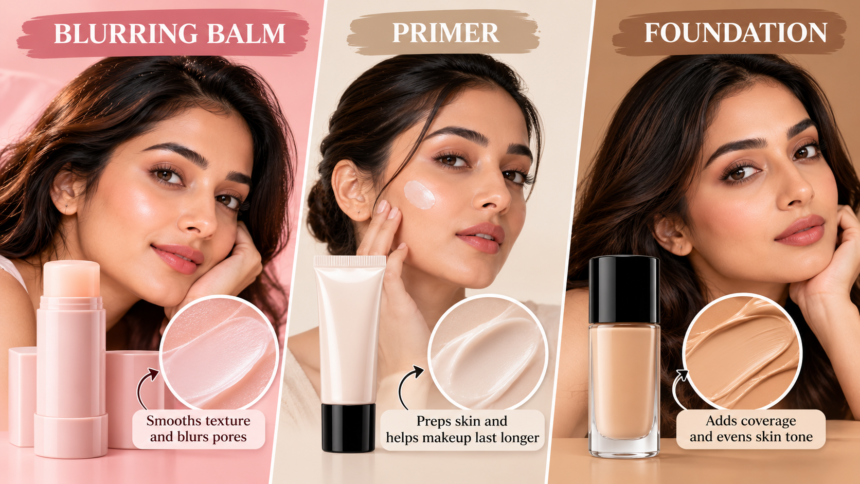
Achieving smooth, filter-like skin does not always require layers of foundation. A blurring balm can help soften the appearance of pores, fine lines and uneven skin texture, creating a smooth, soft-focus finish without significantly changing your natural skin tone.
Unlike traditional makeup products, blurring balms focus on improving the appearance of the skin’s surface rather than providing colour coverage. They have become a useful option for people who prefer a polished look with minimal makeup. But how do they differ from primers and foundations, and which one should you choose?
What Is a Blurring Balm and How Does It Work?
A blurring balm is a face makeup product with a soft, balm-like texture, often available in a solid stick or creamy formula. Many versions are translucent, allowing them to smooth the appearance of the skin without adding noticeable colour.
The product works by creating a smoother-looking surface and diffusing light, which can make pores, fine lines and uneven texture appear less prominent. Some formulas also help reduce the appearance of excess shine, leaving the skin with a soft, velvety finish.
Unlike foundation, a blurring balm is not primarily designed to conceal blemishes, pigmentation or redness. Instead, it focuses on creating the appearance of smoother skin. It can be worn on its own for a minimal makeup look or applied beneath foundation to help create a more even-looking base.
Blurring Balm vs Primer vs Foundation: Key Differences
Although all three products can be part of a makeup routine, each serves a different purpose.
Blurring balm: Its main purpose is to soften the appearance of pores, fine lines and skin texture. It can be worn alone or combined with other makeup products when a smoother finish is desired.
Primer: A primer prepares the skin for makeup and can help improve how foundation applies and wears throughout the day. Depending on its formulation, it may provide hydration, control shine or create a smoother base.
Foundation: Foundation primarily adds colour and coverage to even out the appearance of the complexion. Depending on the formula, it can help conceal redness, dark spots and pigmentation, with coverage ranging from sheer to full.
In simple terms, a blurring balm focuses on the appearance of skin texture, a primer prepares the skin for makeup, and a foundation provides complexion coverage. Some products may combine these functions, but their primary purposes remain different.
How to Apply Blurring Balm for the Best Results
Start with clean, moisturised skin before applying the balm. Use a small amount on areas where pores or uneven texture are more noticeable, such as the sides of the nose, cheeks and forehead.
Gently pat the product into the skin with your fingertips rather than rubbing it vigorously. Applying too much or rubbing repeatedly may cause some formulas to pill or interfere with other makeup products. A thin layer is generally sufficient to achieve the desired effect.
If you plan to wear foundation over the balm, allow the product to settle before applying the next layer. Following the product’s application instructions can also help prevent uneven texture.
Can You Apply Blurring Balm Over Makeup?
Yes, depending on the formula. A small amount can be gently patted over makeup when the base begins to look uneven or settles into fine lines during the day.
This technique may be useful during weddings, festive celebrations and other long events when makeup needs occasional touch-ups. However, compatibility varies between products, so test the balm on a small area first to ensure it does not disturb your foundation.
Who Should Use a Blurring Balm?
Blurring balms can suit people who want a smoother-looking complexion without relying on heavy foundation. They may be particularly appealing to those with oily or combination skin because certain formulas help reduce visible shine while softening the appearance of pores.
People with dry skin can also use a blurring balm, provided they moisturise adequately beforehand. Some formulas may emphasise dry patches if the skin is dehydrated or flaky.
Those with acne-prone or sensitive skin should check the ingredient list before use and perform a patch test to assess compatibility. A blurring balm can improve the appearance of skin texture, but it does not treat acne or replace a suitable skincare routine.
Ultimately, whether you need a blurring balm, primer or foundation depends on your makeup goals. If you want to soften visible pores and texture, a blurring balm may be useful. If your priority is helping makeup apply smoothly and last longer, consider a primer. For concealing discolouration and evening out your complexion, foundation is the more appropriate choice.