
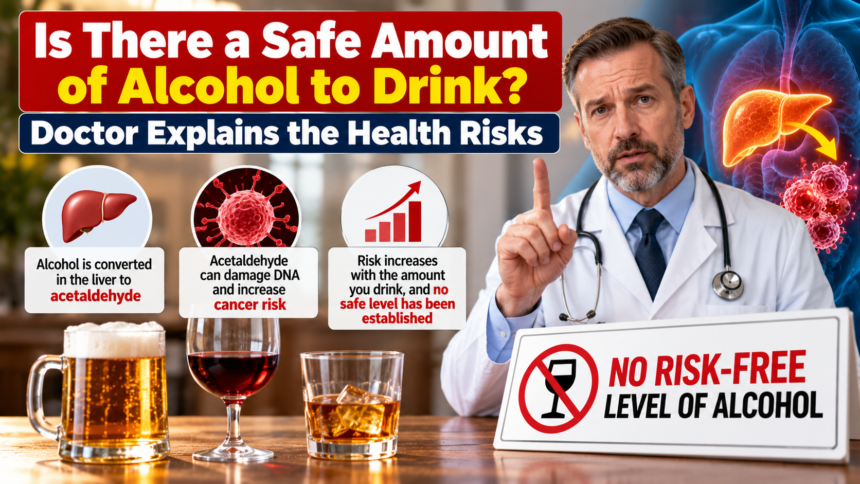
Is any amount of alcohol completely safe for your health? According to cardiovascular surgeon Dr Jeremy London, the answer is no. Whether someone drinks beer, wine or spirits, alcohol can cause cellular damage and increase the risk of certain cancers.
In a video shared on Instagram, Dr London, a board-certified cardiovascular surgeon based in Savannah, Georgia, with more than 25 years of clinical experience, explained why he believes there is no completely risk-free level of alcohol consumption. He also questioned the long-standing belief that moderate drinking may offer health benefits, citing research into cancer risks, observational studies and genetic evidence.
How Alcohol Can Damage the Body
Dr London explained that the body processes alcohol through the liver, where it is converted into acetaldehyde and then acetate.
He identified acetaldehyde as a major concern because of its toxic effects on cells. According to the surgeon, this substance can damage DNA and interfere with the body’s ability to repair it.
Alcohol is classified as a Group 1 carcinogen, reflecting strong evidence that it can cause cancer in humans. The risk generally increases with the amount consumed. Dr London noted that research has not established a level of alcohol consumption at which the risk disappears for certain cancers, including breast and oesophageal cancer.
This does not mean that every level of consumption carries the same risk. Rather, the evidence he highlighted suggests that drinking more can increase exposure to alcohol-related health risks.
Why Moderate Drinking Was Once Linked to Better Health
For many years, observational studies appeared to suggest that people who drank moderate amounts of alcohol lived longer than those who did not drink. These findings contributed to the belief that moderate drinking might protect against certain health problems.
However, Dr London explained that the results may have been influenced by the way researchers classified non-drinkers.
Some people in the non-drinking category were former drinkers who had stopped because of existing illnesses. These individuals, sometimes described as “sick quitters”, could make the overall health of the non-drinking group appear worse than it otherwise would have been.
Dr London also pointed to differences in income, education and general health between moderate drinkers and non-drinkers. When researchers account for these factors, the apparent health advantages associated with moderate drinking become less convincing.
Such findings highlight the challenges of determining whether alcohol itself provides a health benefit or whether other differences between groups explain the results.
What Genetic Research Says About Alcohol Consumption
Genetic studies provide another way to investigate the relationship between alcohol and health. Researchers can examine inherited differences in how people process alcohol, helping them assess associations that may be less affected by lifestyle and socioeconomic factors.
Dr London said these studies have not demonstrated a protective effect from alcohol consumption. Instead, the evidence he cited suggests that health risks rise as alcohol intake increases.
He argued that the supposed benefits of moderate drinking become less convincing when researchers account for potential biases in earlier studies.
However, findings from individual studies should be interpreted in the context of the wider scientific evidence, and the level of risk can vary depending on the health outcome being examined.
Is Any Amount of Alcohol Completely Risk-Free?
Dr London emphasised that his message is intended to inform people rather than judge their personal decisions. Drinking alcohol remains an individual choice, but understanding its potential health effects can help people make informed decisions.
His central argument is that reducing alcohol consumption can reduce associated risks, while avoiding alcohol eliminates alcohol-related exposure.
The broader takeaway is that no completely risk-free level of alcohol consumption has been established. Although the level of risk varies with the amount consumed and the health condition being considered, lower consumption generally means less exposure to alcohol-related harm.
Disclaimer: This article is intended for general health awareness and educational purposes only. It does not replace professional medical advice, diagnosis or treatment. Individual health risks can vary, so consult a qualified healthcare professional for guidance about alcohol consumption and your personal health circumstances.