
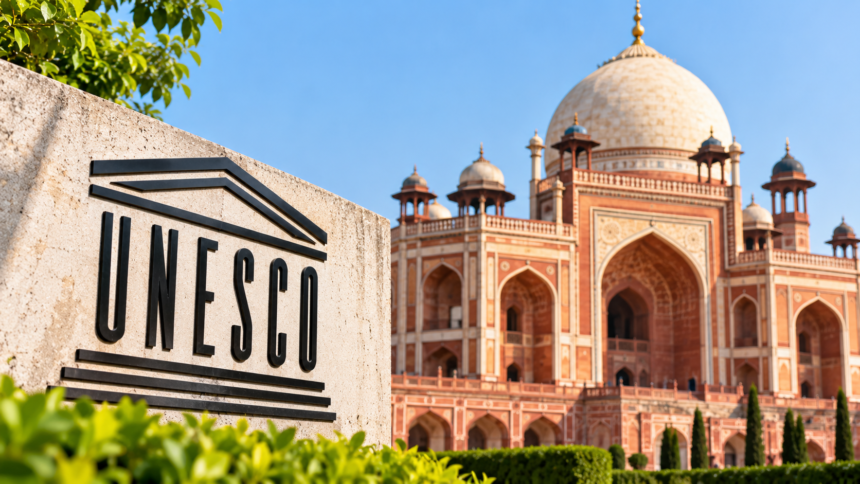
India has added three more locations to its tentative list for the UNESCO World Heritage Convention, marking another step in the country’s efforts to secure international recognition for its natural and cultural heritage.
India’s Permanent Delegation to UNESCO announced the development on Tuesday. The three newly included sites are the Karst-mud-volcano Complex of Baratang, the Andaman Subduction Volcanoes in the Andaman and Nicobar Islands, and the Sirpur Cultural and Archaeological Landscape in Chhattisgarh.
According to a press release issued by India’s Permanent Delegation to UNESCO in Paris on October 20, the sites have been incorporated into the country’s tentative list under the World Heritage Convention.
Three Sites Added to India’s UNESCO Tentative List
The latest additions represent a range of geological and archaeological heritage found across India. The Karst-mud-volcano Complex of Baratang and the Andaman Subduction Volcanoes highlight the country’s distinctive natural features, while the Sirpur Cultural and Archaeological Landscape reflects its historical and cultural heritage.
Inclusion on the tentative list is an important preliminary step in the UNESCO World Heritage nomination process. Sites must first be included on this list before they can be considered for formal nomination to the World Heritage List.
India’s Permanent Delegation also acknowledged the contribution of the Archaeological Survey of India (ASI) to the process. The latest additions bring the three locations closer to consideration for potential World Heritage recognition, although tentative-list inclusion does not guarantee final designation.
India Has 45 UNESCO World Heritage Sites
India currently has 45 UNESCO World Heritage Sites, according to the figures provided in the report. The country’s portfolio includes 37 cultural sites, seven natural sites and one mixed site.
The total increased following the inclusion of the historic Buddhist site of Sarnath in July 2026. India’s heritage portfolio covers a wide range of historical landmarks, archaeological locations and natural landscapes.
The addition of further sites to the tentative list reflects the country’s continuing efforts to identify and prepare locations for possible inclusion in the global heritage network.
India’s Global Position in World Heritage Recognition
India ranks sixth worldwide and second in the Asia-Pacific region in terms of the number of UNESCO World Heritage Sites, according to the reported figures.
The countries with the highest numbers of World Heritage Sites are Italy with 62, China with 61, France with 56, Germany with 55 and Spain with 50.
These figures place India among the countries with substantial internationally recognised cultural and natural heritage.
India’s First UNESCO World Heritage Sites
India’s World Heritage journey began in 1983, when four sites received UNESCO recognition. These were the Ajanta Caves and Ellora Caves in Maharashtra, along with Agra Fort and the Taj Mahal in Uttar Pradesh.
All four were recognised as cultural heritage sites because of their historical, architectural and artistic significance. Since then, India’s World Heritage portfolio has expanded to include numerous cultural landmarks, archaeological sites and natural areas.
Disclaimer: This article is intended for general informational purposes only and is based on the information provided about India’s UNESCO World Heritage sites. Tentative-list inclusion is a preliminary stage and does not guarantee a site’s final inscription on the UNESCO World Heritage List. Readers should consult official UNESCO and Archaeological Survey of India sources for the latest information on site nominations and heritage designations.