
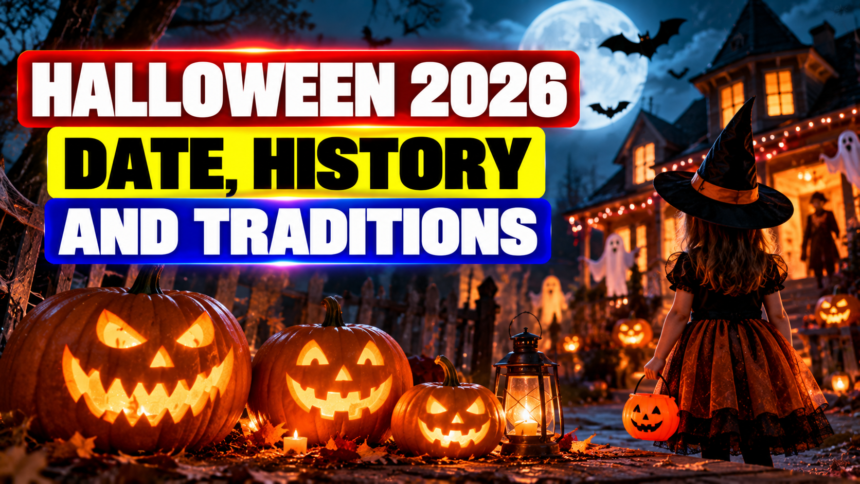
Halloween is celebrated every year with carved pumpkins, spooky decorations, creative costumes and horror-themed activities. In 2026, the festival will fall on Saturday, October 31, giving people an opportunity to enjoy costume parties, decorate their homes and spend time with friends and family over the weekend.
Although Halloween is now widely associated with trick-or-treating, scary movies and haunted attractions, its history stretches back more than 2,000 years. The modern celebration developed through a combination of ancient Celtic customs, Christian observances and cultural traditions that evolved over time.
When Is Halloween 2026?
Halloween 2026 will be observed on Saturday, October 31. The festival takes place annually on the eve of All Saints’ Day, which falls on November 1 in the Western Christian calendar.
Halloween is particularly popular in the United States, Ireland, Canada and the United Kingdom. Common celebrations include dressing up in costumes, carving pumpkins, visiting haunted attractions and organising themed parties. Children also take part in trick-or-treating, visiting homes to collect sweets.
With Halloween falling on a Saturday this year, people can plan weekend celebrations featuring themed decorations, costume gatherings and horror movie screenings.
What Does Halloween Mean?
The name Halloween comes from All Hallows’ Eve, referring to the evening before All Hallows’ Day, also known as All Saints’ Day. The Christian observance honours saints, while Halloween has developed into a broader cultural occasion associated with supernatural folklore, spooky imagery and traditions linked to remembering the dead.
Today, people celebrate Halloween in different ways. Some observe customs connected to religious or cultural history, while others enjoy it as an opportunity for creativity, entertainment and community gatherings.
Halloween History: From Samhain to the Modern Festival
Halloween is commonly linked to Samhain, an ancient Celtic festival marking the end of the harvest season and the beginning of winter. It was observed around October 31 and November 1 in parts of what are now Ireland, the United Kingdom and other areas of Europe.
Celtic traditions held that the boundary between the living and the dead became less distinct during Samhain. Bonfires and disguises were among the customs associated with the occasion, with some practices intended to protect people from spirits.
Over time, these seasonal traditions blended with Christian observances. November 1 became associated with All Saints’ Day, while November 2 was designated All Souls’ Day, a time for remembering the dead. The evening before All Saints’ Day became known as All Hallows’ Eve, a name that eventually developed into Halloween.
The celebration later spread to North America through European migration. The arrival of Irish immigrants during the 19th century helped popularise Halloween customs, which gradually evolved into the modern celebration of costumes, sweets, decorations and neighbourhood activities.
Four Popular Halloween Traditions
1. Trick-or-Treating
Children dress up in costumes and visit homes to ask for sweets, traditionally saying “trick or treat”. The custom has connections to older European practices in which people went from house to house requesting food or offerings during religious festivals.
2. Jack-o’-Lanterns and Pumpkin Carving
Carved pumpkins illuminated from within have become one of Halloween’s best-known symbols. The tradition has roots in Irish and Scottish folklore, where lanterns were originally carved from vegetables such as turnips. After the custom reached North America, pumpkins became widely used because they were readily available.
3. Costume Parties
Halloween costumes allow people to dress as witches, vampires, superheroes, movie characters and other figures. The tradition of disguising oneself has historical connections to older customs involving supernatural beliefs and seasonal celebrations.
4. Horror Movies and Haunted Attractions
Watching horror films, sharing ghost stories and visiting haunted houses are popular ways to celebrate Halloween. These activities offer people a chance to experience suspense and fear in an entertaining setting.
In India, Halloween-themed parties, social gatherings and special events also provide opportunities to experiment with costumes, makeup and imaginative decorations.
Disclaimer: This article is intended for general informational and educational purposes only. Historical details and cultural traditions are presented as a general overview and may vary across regions and communities.