
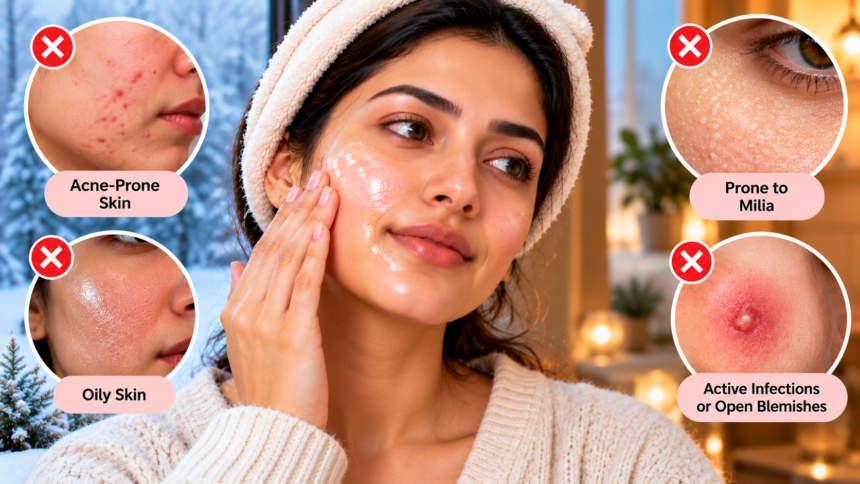
Skincare trends frequently gain popularity on social media, and slugging has become a widely discussed technique in recent years. Inspired by Korean beauty practices, this method involves applying a thick layer of a petrolatum-based ointment, such as Vaseline or Aquaphor, as the final step of a nighttime skincare routine. The aim is to seal in moisture, helping the skin appear softer, smoother and more hydrated by morning.
Although slugging can benefit people experiencing severe dryness, it is not suitable for every skin type. In some cases, the practice may contribute to breakouts, clogged pores and irritation, particularly when used alongside certain skincare products or on already irritated skin.
How Does Slugging Work?
Slugging relies on petrolatum, which acts as an occlusive ingredient by forming a protective layer over the skin. Unlike humectants such as hyaluronic acid, which attract water, or emollients, which soften rough skin, occlusives help prevent moisture from escaping.
This protective layer can reduce transepidermal water loss (TEWL) by more than 98%, helping maintain skin hydration and supporting the recovery of a weakened skin barrier.
However, the same moisture-sealing effect that makes slugging useful for some people may not suit those with particular skin concerns. Choosing the right approach depends on individual skin needs and the products already included in a skincare routine.
Four Skin Types That Should Avoid Slugging
1. Oily and Acne-Prone Skin
People with oily or acne-prone skin should be cautious about applying thick occlusive layers. Although pure petrolatum is generally considered non-comedogenic, slugging may aggravate breakouts in some individuals, particularly when applied over excess oil, sweat, dead skin cells or unsuitable skincare products.
The additional layer can also make the skin feel excessively greasy. Those who frequently experience inflamed pimples or clogged pores may find that a lighter moisturiser is a more suitable option.
2. People Using Strong Active Ingredients
Slugging requires extra caution when a nighttime routine includes potent skincare ingredients. These may include retinoids such as tretinoin and retinol, exfoliating acids such as glycolic acid and salicylic acid, or vitamin C.
Applying a heavy occlusive layer over certain active ingredients may increase their effects by changing how they interact with the skin. This can potentially lead to redness, irritation, peeling and significant discomfort.
Anyone using these ingredients should consider their existing routine carefully before trying slugging, particularly if their skin is already sensitive.
3. People Prone to Milia
Milia are small, white bumps caused by keratin becoming trapped beneath the skin’s surface. They commonly appear around the eyes and cheekbones.
People who frequently develop milia may want to avoid heavy ointments if they notice that these products worsen the condition. A rich layer of skincare can be unsuitable for some individuals, and persistent milia may require professional assessment and treatment.
4. Skin With Active Infections or Open Blemishes
Slugging should also be avoided over open pimples, recently popped blemishes or areas affected by infections, including cold sores.
Covering damaged or infected skin with a heavy ointment without appropriate care may interfere with suitable treatment and potentially worsen the problem. It is important to allow affected areas to receive appropriate care rather than covering them with an occlusive layer.
Alternatives to Vaseline for Skin Barrier Repair
People who want to maintain hydration without using a thick layer of petrolatum can consider moisturisers suited to their skin type.
For oily or acne-prone skin, lightweight gel-creams containing niacinamide, hyaluronic acid or Centella asiatica may be suitable options. Those with combination or sensitive skin can look for barrier-supporting moisturisers containing ceramides, squalane and fatty acids.
For dry or flaky skin, plant-derived oils such as marula oil and rosehip seed oil may help soften the skin and support moisture retention.
The most appropriate choice depends on how the skin responds to individual ingredients and formulations.
Conclusion
Slugging can be useful for managing dryness and supporting moisture retention, but it is not a necessary step for every skincare routine. People with oily or acne-prone skin, a tendency to develop milia, active skin infections or routines involving potent active ingredients should be particularly cautious.
Before following a viral skincare trend, consider your skin type, existing concerns and current products. Choosing a suitable moisturiser and maintaining a consistent routine can help support the skin barrier without introducing unnecessary irritation.