
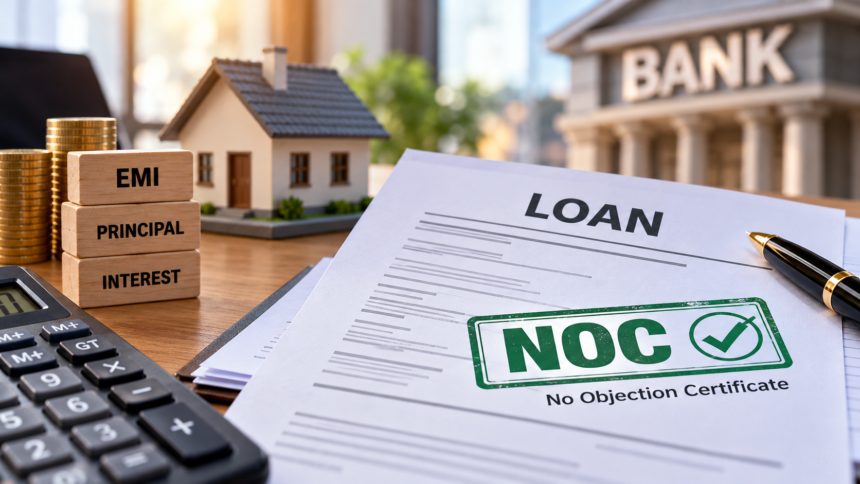
Paying your loan EMIs on time is an important part of maintaining a healthy repayment record. Regular payments can help borrowers manage their financial commitments and support their credit profile. However, making every EMI payment does not automatically mean that the loan has been officially closed.
A No Objection Certificate (NOC) serves as written confirmation from a lender that a borrower has repaid the loan in full and has no outstanding dues. This raises a common question among borrowers: Is a loan NOC issued after every EMI, or only after the entire loan has been repaid?
Understanding when this document is issued, why it matters and how to obtain it can help borrowers complete the loan closure process properly.
What Is a Loan NOC and When Is It Issued?
A loan No Objection Certificate is an official document provided by a bank or financial institution confirming that the borrower has cleared all dues on a particular loan account. Depending on the lender, it may also be called a loan closure certificate or loan closure letter.
An NOC is generally issued after the entire loan has been repaid, not after every EMI. Each EMI covers a scheduled portion of the principal and interest. Although every successful payment reduces the outstanding liability, the loan remains active until all the required payments and charges have been settled.
After the final EMI is paid, the lender checks the account details and verifies the borrower’s information. Any remaining penalties, overdue amounts or other applicable charges must also be cleared before the loan can be closed.
Borrowers who repay their loans before the scheduled end date may also request an NOC after completing the lender’s required formalities and complying with the terms of the loan agreement.
Why Is a Loan NOC Important?
A loan NOC provides written evidence that the borrower has fulfilled their repayment obligations. It can be useful if a lender’s records later show an outstanding balance or if a dispute arises regarding whether the loan was fully settled.
The certificate is especially important for secured loans, where a borrower pledges an asset as collateral. These loans may involve additional steps to release the lender’s claim over the asset after repayment.
For example, after a car loan is closed, borrowers may need documents from the lender to remove the hypothecation recorded on the vehicle’s registration certificate.
Similarly, following the repayment of a home loan, the borrower may need closure documents to release the lender’s charge over the property. Keeping the NOC and related paperwork safely can help establish that the loan has been settled.
What Should You Do If You Have Not Received Your Loan NOC?
If you have repaid your loan but have not received the NOC within the lender’s stated timeframe, start by checking your loan account and closure details. Make sure your name, account information and other relevant records are correct, and retain proof of your final payment and any charges cleared.
You should then submit an official request for the certificate through the process specified on your bank’s or financial institution’s website. If the document is delayed, contact the lender and ask for an update on the closure request.
Borrowers should also verify that the loan has been marked as closed in the lender’s records. Paying the final EMI is an important step, but confirming the closure and obtaining the relevant documentation helps complete the process.
Disclaimer
This article is intended for general informational purposes only and should not be considered legal or financial advice. Loan closure procedures, NOC requirements and processing times may differ between lenders and depend on the terms of the loan agreement. Borrowers should contact their respective lending institution for guidance specific to their account.