
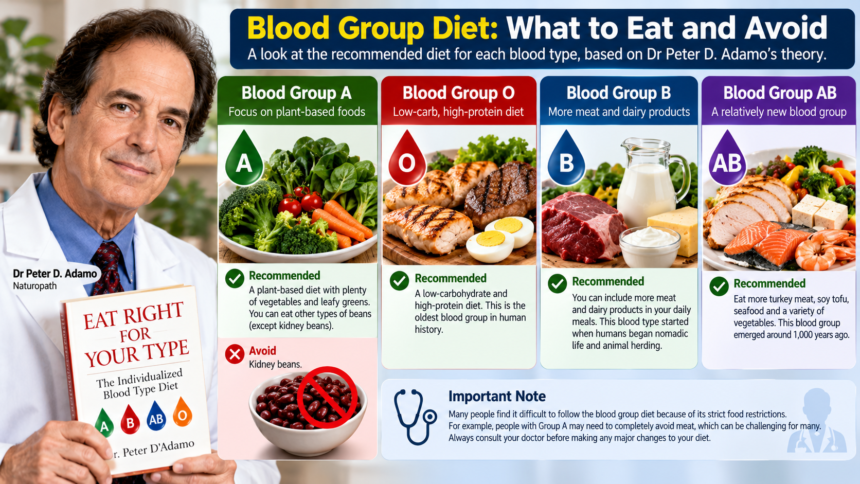
The blood group diet became widely known after naturopath Dr Peter D. Adamo discussed the concept in his 1996 book. The approach suggests that people should choose foods according to their blood type to support their health and reduce the risk of certain health problems.
According to this theory, each blood group has different dietary requirements. However, the idea that eating according to blood type can prevent chronic diseases is not firmly supported by scientific evidence. Anyone considering major dietary changes should focus on balanced nutrition and seek advice from a qualified healthcare professional.
Blood Group A: Focus on Plant-Based Foods
The blood group diet recommends that people with Group A prioritise plant-based foods, including vegetables and leafy greens. It also advises avoiding kidney beans while allowing certain other types of beans.
Some versions of the diet recommend that people with this blood group avoid meat and follow a vegetarian or vegan eating pattern. However, completely eliminating meat is not medically necessary simply because someone has Group A blood.
Blood Group O: A Protein-Rich Diet
The theory describes Group O as the oldest blood group in human history. It recommends a diet that is high in protein and relatively low in carbohydrates.
Foods such as meat and other protein sources are commonly emphasised in this approach. However, individual nutritional needs vary, and a healthy diet should provide sufficient fibre, vitamins, minerals and other essential nutrients.
Blood Groups B and AB: Recommended Food Choices
The blood group diet associates Group B with the period when humans began nomadic lifestyles and animal herding. Under this approach, people with this blood type are encouraged to include meat and dairy products in their meals.
For Group AB, which the theory describes as a relatively recent blood group that emerged around 1,000 years ago, suggested food choices include turkey, soy tofu, seafood and a variety of vegetables.
These recommendations are part of the blood group diet theory rather than established medical requirements. There is no strong scientific evidence that people need to follow different diets solely because of their blood type.
Is the Blood Group Diet Difficult to Follow?
Strict food restrictions can make the blood group diet challenging for some people. For example, someone following its recommendations for Group A may feel that avoiding meat requires a major change to their usual eating habits.
Such restrictions can be difficult to maintain over time, particularly when they do not fit a person’s preferences, lifestyle or nutritional needs.
Before making significant changes to your diet, consult a qualified doctor or registered dietitian. A balanced eating plan tailored to your health, activity level and individual requirements is more important than choosing foods based only on your blood group.
Disclaimer: This article is for general informational purposes only and is not a substitute for professional medical or nutritional advice. Blood group diet recommendations are not firmly established by scientific evidence. Consult a qualified healthcare professional before making major dietary changes, particularly if you have an existing health condition.