
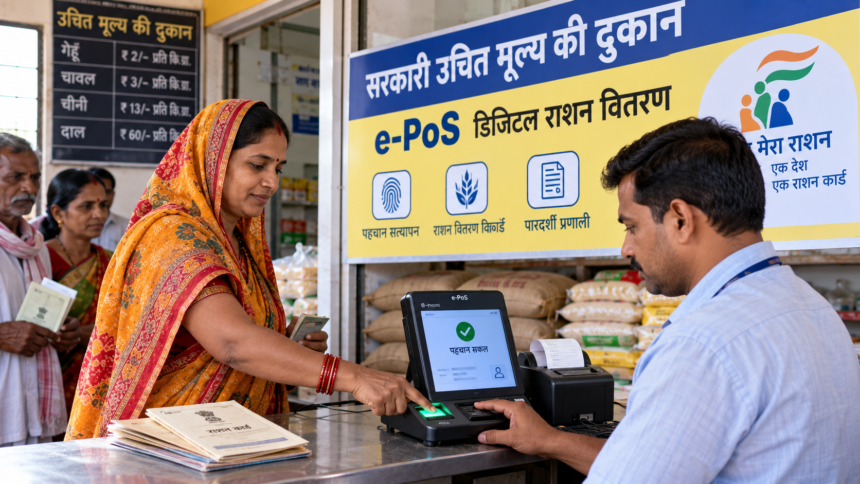
The government is using digital technology to improve the distribution of subsidised and free food grains through the Public Distribution System (PDS). Electronic Point of Sale (e-PoS) machines installed at ration shops help verify beneficiaries and record the quantity of food grains distributed to them.
The system is designed to improve transparency, maintain digital records and reduce the possibility of irregularities. For ration card holders, it provides a technology-based process for collecting their entitled food grains.
What Is an e-PoS Machine and How Does It Work?
An e-PoS machine is an electronic device used at authorised ration shops to verify beneficiaries and record ration distribution.
When a ration card holder visits a shop to collect food grains, their identity is checked through the prescribed verification process. Once verification is completed, the details of the distribution are entered into the system.
These digital records help the authorities track how much ration has been issued to each beneficiary and when the distribution took place.
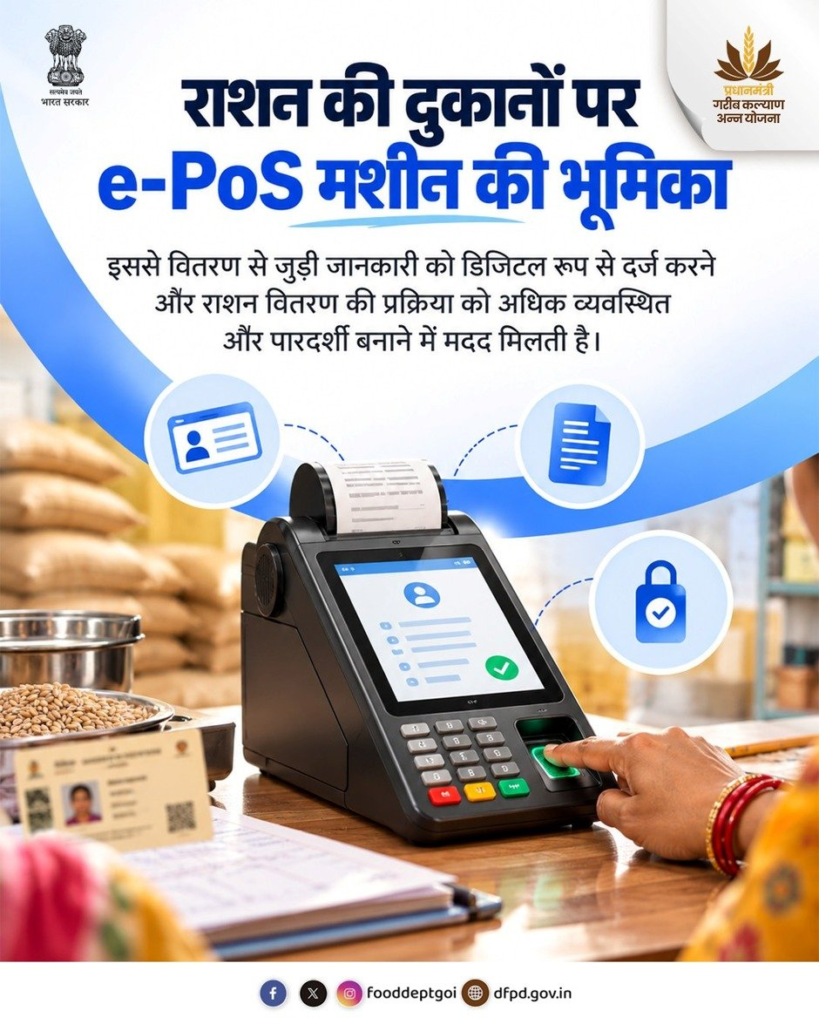
Key Benefits of Digital Ration Distribution
One of the main advantages of e-PoS machines is identity verification. Aadhaar-based authentication is used where applicable, helping reduce the risk of unauthorised individuals collecting food grains. If biometric authentication fails, alternative procedures may be available under the relevant state’s rules.
Another important benefit is the digital recording of ration transactions. These records make it easier for authorities to monitor distribution, check beneficiary details and investigate potential discrepancies.
The system also supports greater accountability at ration shops. Beneficiaries should check the quantity they receive against their entitlement and follow the prescribed complaint procedure if they are given less than the amount due to them.
How e-PoS Supports One Nation, One Ration Card
The e-PoS system also supports the implementation of the One Nation, One Ration Card initiative. Under this arrangement, eligible ration card holders can collect their entitled food grains from authorised ration shops outside their home location, subject to the scheme’s applicable procedures.
This facility is particularly useful for migrant workers and families who move to other villages, cities or states for employment. It helps eligible beneficiaries access ration supplies without being restricted to their original location.
Digital transaction records also help authorities monitor food grain distribution across participating locations.
What Is Sarthak PDS?
Sarthak PDS is mentioned in the context of efforts to improve the Public Distribution System through technological and administrative measures. These initiatives aim to strengthen the efficiency and management of ration distribution.
For accurate information about its specific features, implementation and availability, ration card holders should consult the official guidelines issued by the relevant department.
Disclaimer
This article is intended for general informational purposes only. The availability of e-PoS services, identity verification methods, alternative authentication procedures and ration portability arrangements may vary according to applicable government rules. Beneficiaries should check the latest instructions issued by their state Food and Civil Supplies Department or the relevant official authorities before relying on specific services.