
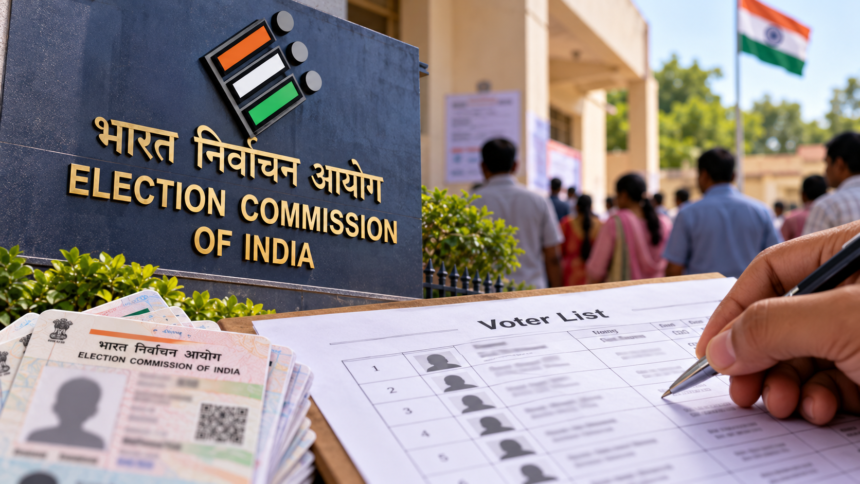
The Election Commission of India (ECI) has ordered a Special Summary Revision (SSR) of electoral rolls in 17 states and Union Territories, with January 1, 2027, set as the qualifying date. The process aims to ensure that voter lists contain accurate information and include all eligible citizens.
The exercise is taking place alongside the Special Intensive Revision (SIR) being conducted in other parts of the country. Although both initiatives are intended to improve electoral rolls, they differ in their procedures and the way voter information is verified.
What Is Special Summary Revision (SSR)?
Special Summary Revision is the process of updating an existing electoral roll. It allows eligible citizens whose names are missing to apply for inclusion and enables corrections to inaccurate details. The process also helps identify duplicate entries, deceased voters and individuals who have permanently moved away.
Booth Level Officers (BLOs) may conduct house-to-house verification during the preparatory stage. Under the Election Commission’s order dated October 15, Electoral Registration Officers (EROs) must publish an integrated draft electoral roll and invite claims and objections before the final list is prepared.
Voters can use the appropriate forms depending on the changes they need to make:
- Form 6: To apply for inclusion in the electoral roll.
- Form 6A: For eligible overseas electors.
- Form 7: To raise objections or request deletion of a name.
- Form 8: To request changes such as shifting an address or correcting details.
SSR 2026–27: Important Dates
The Election Commission has outlined a schedule for publishing the draft list, accepting applications and finalising the revised electoral roll.
| Activity | Scheduled date |
|---|---|
| Publication of draft electoral roll | November 12, 2026 |
| Submission of claims and objections | November 12 to December 11, 2026 |
| Disposal of claims and objections | By December 28, 2026 |
| Publication of final electoral roll | January 4, 2027 |
The exercise will also allow advance applications from individuals who become eligible to vote on April 1, July 1 or October 1, 2027.
Voters should review their details in the draft roll and submit any necessary applications or objections within the prescribed period.
What Is the Difference Between SSR and SIR?
The main distinction is that SSR updates the existing electoral roll, whereas Special Intensive Revision involves a fresh enumeration process and more extensive verification.
Under SIR, enumeration forms are distributed to electors, and BLOs carry out the prescribed verification before the draft electoral roll is prepared. The names included in the draft list then go through the applicable claims-and-objections process.
The two exercises also use different reference records. SSR begins with the most recently finalised electoral roll, while the SIR process described in the announcement uses electoral rolls from 2002–04 as its baseline.
Documentation and verification requirements under SIR depend on the specific instructions issued by the Election Commission. Voters should therefore follow the directions applicable to their area and check that their details are correctly recorded.
Why Should Voters Check Their Names?
An accurate electoral roll helps eligible citizens exercise their right to vote. During the revision process, voters should verify their names, addresses and other particulars and report any errors through the prescribed procedure.
Those whose names are missing can apply for inclusion, while voters who find incorrect information can request corrections using the appropriate form. Keeping track of the official schedule is important because claims and objections must be submitted within the specified period.
Disclaimer: This article is intended for general informational purposes only. The dates and procedures mentioned are based on the information provided in the report. Voters should consult official Election Commission of India notifications and the relevant electoral registration authorities for the latest instructions, eligibility requirements and confirmed deadlines.