
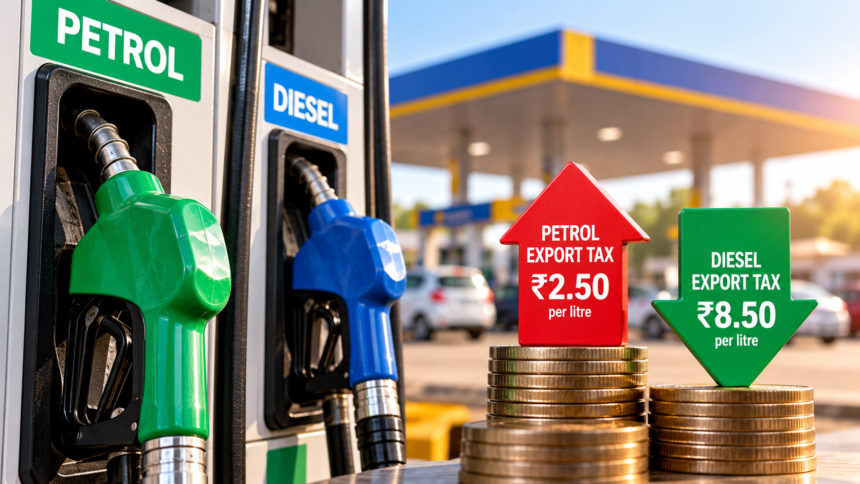
The central government has revised the windfall tax on petrol and diesel exports, with the new rates coming into effect on October 16, 2026. Under the revised structure, the export tax on petrol has increased by ₹2 to ₹2.50 per litre, while the duty on diesel exports has been reduced from ₹16 to ₹8.50 per litre, according to the report cited from Reuters.
The changes were announced late Thursday evening. The export duty on aviation turbine fuel (ATF) has remained unchanged. Here is a look at the revised rates and what they mean for consumers.
New Windfall Tax Rates on Petrol and Diesel
The government has made separate adjustments to the export duties on petrol and diesel. Petrol exports will now attract a windfall tax of ₹2.50 per litre, while the tax on diesel exports has been lowered by ₹7.50 per litre.
The revised rates apply to fuel exports. The government has not announced a corresponding change in the taxes on petrol and diesel sold for domestic consumption.
Will Petrol and Diesel Prices Rise in India?
The latest change in export duties does not directly alter retail petrol and diesel prices in India. Since the government has not changed the applicable taxes on fuel supplied to the domestic market, the revised windfall tax alone does not indicate whether consumers will pay more or less at petrol pumps.
Fuel prices in India are influenced by several factors, including crude oil prices, taxation and decisions taken by oil marketing companies. Although fuel prices in some countries respond quickly to movements in international oil markets, the impact in India can vary depending on these factors.
Government-owned oil marketing companies operate more than 90% of petrol stations across the country. Private fuel retailers, including Nayara and Reliance-BP, determine their prices independently.
Petrol and Diesel Rates Remain Unchanged in Delhi
Following the revision of the export tax, HPCL, IOCL and BPCL released their fuel prices on Friday morning. Petrol in Delhi continued to cost ₹102.12 per litre, while diesel remained at ₹95.20 per litre.
The unchanged rates indicate that the latest export duty revision has not resulted in an immediate change in the retail prices quoted for Delhi.
How Often Is the Windfall Tax Reviewed?
The government reviews windfall tax rates every 15 days, taking into account changes in international crude oil and petroleum product prices. The tax is intended to help balance the benefits of fuel exports with the availability of petroleum products in the domestic market.
India first introduced windfall taxes on fuel exports in July 2022 and withdrew them two years later. The government subsequently brought the tax back in March 2026 after crude oil prices increased during the US-Israeli war on Iran.
Disclaimer: This article is intended for general informational purposes only. Fuel prices, export duties and government tax policies may change. The information presented here is based on the details available at the time of writing and should not be treated as financial or investment advice. Readers should refer to official government notifications and oil marketing company updates for the latest information.