
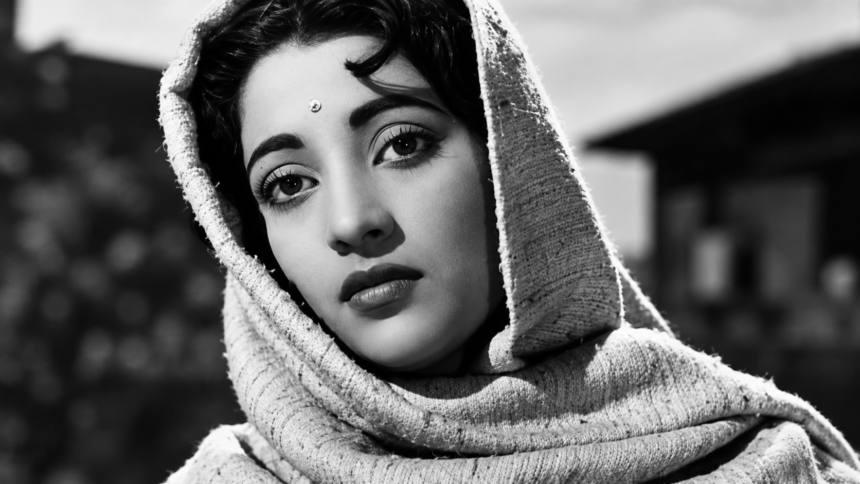
Long before Bollywood celebrities became a source of inspiration for Durga Puja pandals, legendary Bengali actress Suchitra Sen had already captured the imagination of Kolkata. During the 1950s and 1960s, she was celebrated as a leading star and widely known as the Mahanayika of Bengali cinema. Her influence extended beyond films, shaping fashion trends and inspiring women across Bengal to imitate her signature saree styles and elegant appearance.
Her popularity reportedly reached the world of religious art as well. During this period, some idols of Maa Durga in Kolkata were believed to have been modelled on Suchitra Sen’s facial features, reflecting the extraordinary influence she held over popular culture.
Who Was Suchitra Sen?
Suchitra Sen made her Bengali film debut with Shesh Kothaay in 1952, although the film was never released. Her first officially released film was Saat Number Kayedi, directed by Sukumar Dasgupta, in 1953.
She soon established herself as one of the biggest stars in Bengali cinema. Her films attracted large audiences, with moviegoers eager to see her performances on the big screen. Beyond her box-office success, she developed a special place in the hearts of Bengali audiences.
Some of her most memorable films include Agnipariksha, Saptapadi, Saat Paake Bandha and Bimal Roy’s Devdas. Through her performances, Sen became known for portraying complex emotions with remarkable sensitivity.
Her screen presence, graceful demeanour and distinctive beauty further strengthened her popularity. She became more than a successful actress, emerging as a cultural icon whose influence extended into everyday life.
How Suchitra Sen Inspired Maa Durga Idols
Kumartuli, Kolkata’s renowned potters’ neighbourhood, is famous for its artisans who create idols for Durga Puja celebrations. During the 1960s, sculptors, including the noted artisan Ramesh Chandra Pal, were bringing greater realism and human expression to their representations of the goddess.
Suchitra Sen’s elegance and expressive features reportedly became a source of inspiration for some of these creations. Maa Durga idols with sharp, expressive eyes and facial features resembling the actress were said to have appeared during this period.
Although the resemblance was never officially credited, the association became part of the cultural story surrounding her influence. For devotees who had grown up watching Sen on the big screen, seeing a goddess whose face reminded them of their favourite actress added a familiar and personal dimension to the festive experience.
When Bengali Cinema and Durga Puja Came Together
The reported connection between Suchitra Sen and Maa Durga idols reflects a time when popular cinema and religious traditions naturally influenced one another. This was decades before elaborate theme-based pujas and designer installations became prominent features of Durga Puja celebrations.
Sen’s impact went beyond her performances, influencing fashion, beauty ideals and, reportedly, the artistic imagination of idol makers. Her legacy remains closely associated with the golden era of Bengali cinema, while the story of Durga idols inspired by her reflects the lasting relationship between Bengal’s cultural icons and its most cherished festival.