
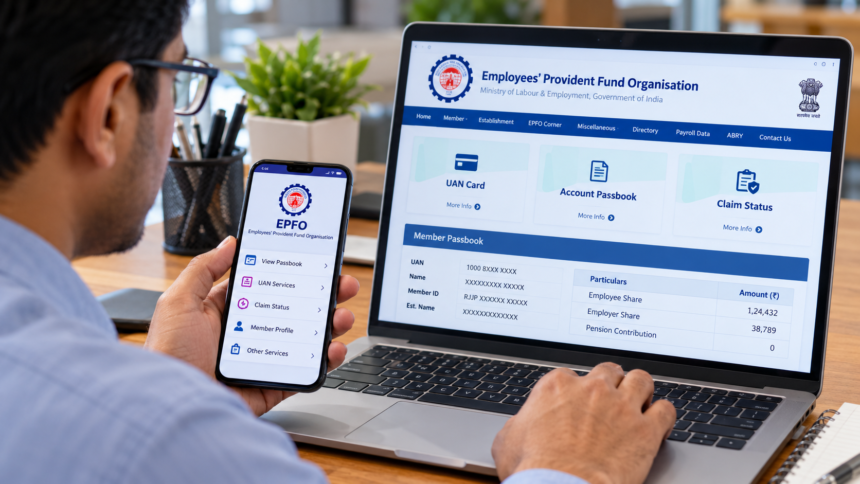
Employees’ Provident Fund (EPF) members often have questions about what happens to their accumulated savings after leaving a job or retiring. One common concern is how long a PF account continues to earn interest and when it is classified as an inoperative account.
Employees who contribute to the Employees’ Provident Fund through monthly salary deductions should understand the difference between interest eligibility and the status of their account. Leaving a job or keeping PF savings unclaimed does not necessarily mean that interest stops immediately. The applicable rules depend on the employee’s age, retirement circumstances and the period for which the money remains unclaimed.
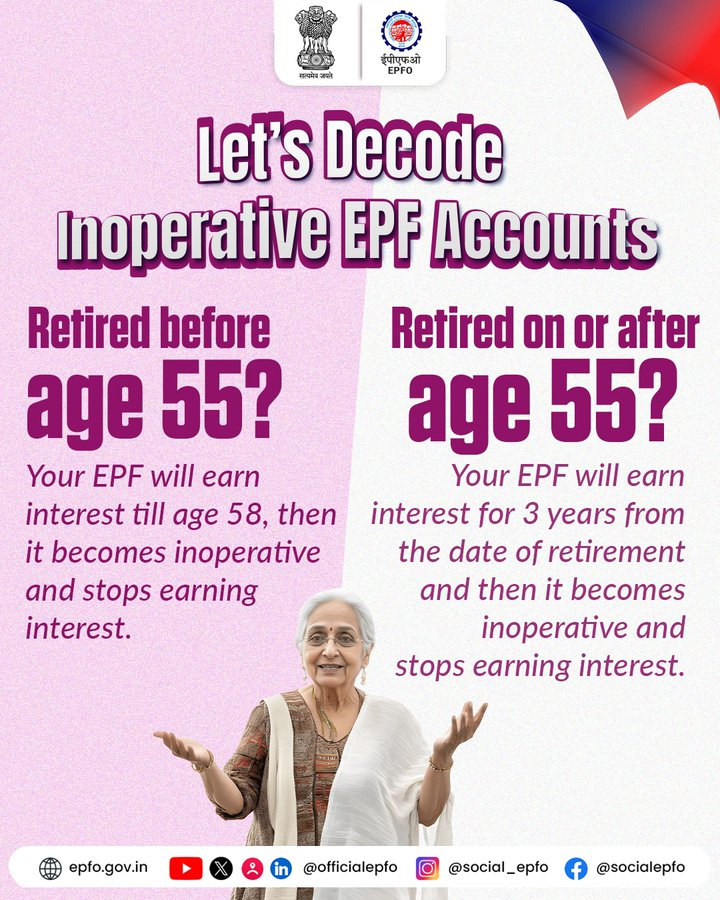
What Happens to PF Interest After Retirement Before Age 55?
Under the rules described for EPF accounts, interest treatment depends on the circumstances in which an employee leaves service. For an employee who retires before turning 55, the relevant provisions must be considered separately from the rules governing an account’s inoperative status.
For example, if an employee retires at the age of 50 and leaves the accumulated PF balance untouched, the account may continue to earn interest until the age of 58 under the rule described in the source information. If no claim is made by the applicable deadline, the account may subsequently become inoperative.
Members should confirm their individual interest eligibility and account status with EPFO before deciding when to withdraw their savings.
When Does a PF Account Become Inoperative After Age 55?
For employees retiring at age 55 or later, the account’s inoperative status is determined by the relevant dates and the period during which the accumulated amount remains unclaimed.
According to the rule outlined in the source information, an account becomes inoperative when no claim is made within 36 months of the later of these two dates: the date the member turns 55 or the actual date of retirement.
For instance, an employee retiring at the age of 60 would reach the relevant 36-month period at age 63, provided the other applicable conditions are met.
The classification of an account as inoperative should not automatically be interpreted as meaning that interest eligibility and account status are the same thing. Members should check the applicable EPFO provisions for their specific circumstances.
How to Check Your PF Balance and Account Status
EPF members can check their accumulated savings and interest details through the official Employees’ Provident Fund Organisation website and member passbook portal.
To review their account information, members should visit the official EPFO website and access the relevant member services. By logging in to the passbook portal, they can view their PF balance, contributions and available interest details.
Checking the account periodically can help members identify their accumulated savings and understand whether any action is required regarding an unclaimed balance.
Disclaimer: This article is intended for general informational purposes only and should not be treated as legal, financial or official EPFO advice. PF interest eligibility and inoperative account rules may depend on the member’s circumstances and the applicable regulations. Members should verify the latest provisions directly with EPFO or consult an authorised representative before making decisions concerning their PF savings.