
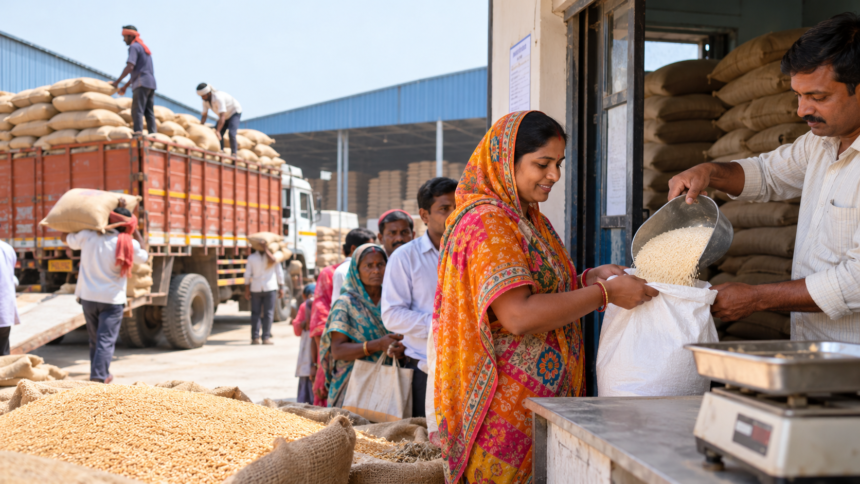
India’s food security system involves several stages, from purchasing crops from farmers to delivering food grains to eligible households through government ration shops. The Department of Food and Public Distribution oversees key aspects of this process, including procurement, storage, quality checks and distribution.
The main objective is to ensure that people have access to sufficient, safe and good-quality food grains according to their eligibility and requirements. For ration card holders, receiving their monthly supplies is the final step in a much larger system that operates across the country.
How Does India’s Food Security System Work?
The process begins with farmers who grow crops such as wheat and rice. The government announces the Minimum Support Price (MSP) for these food grains, helping farmers receive a predetermined price for eligible produce purchased under the procurement system. The procured grain is then used to support the Public Distribution System (PDS).
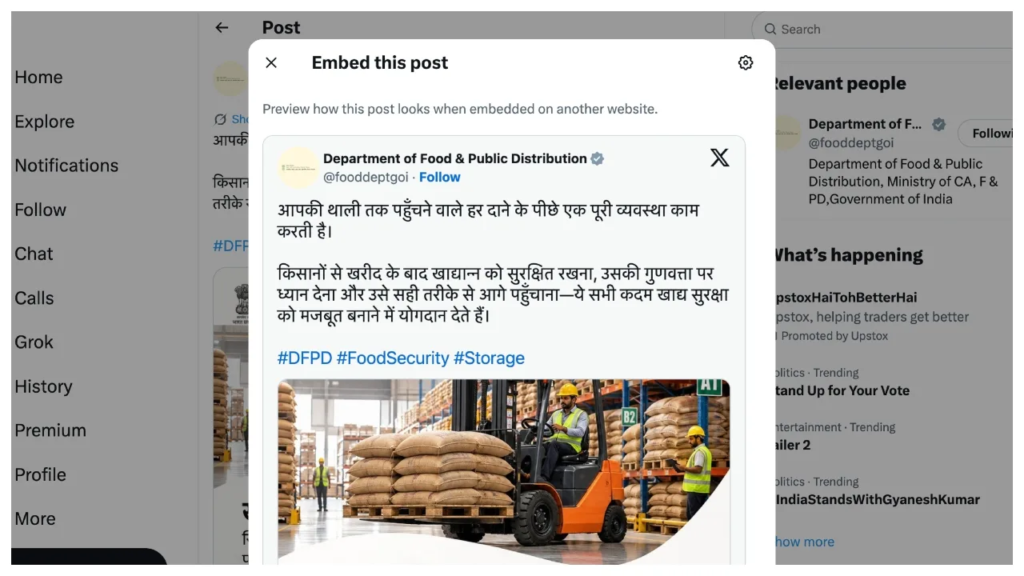
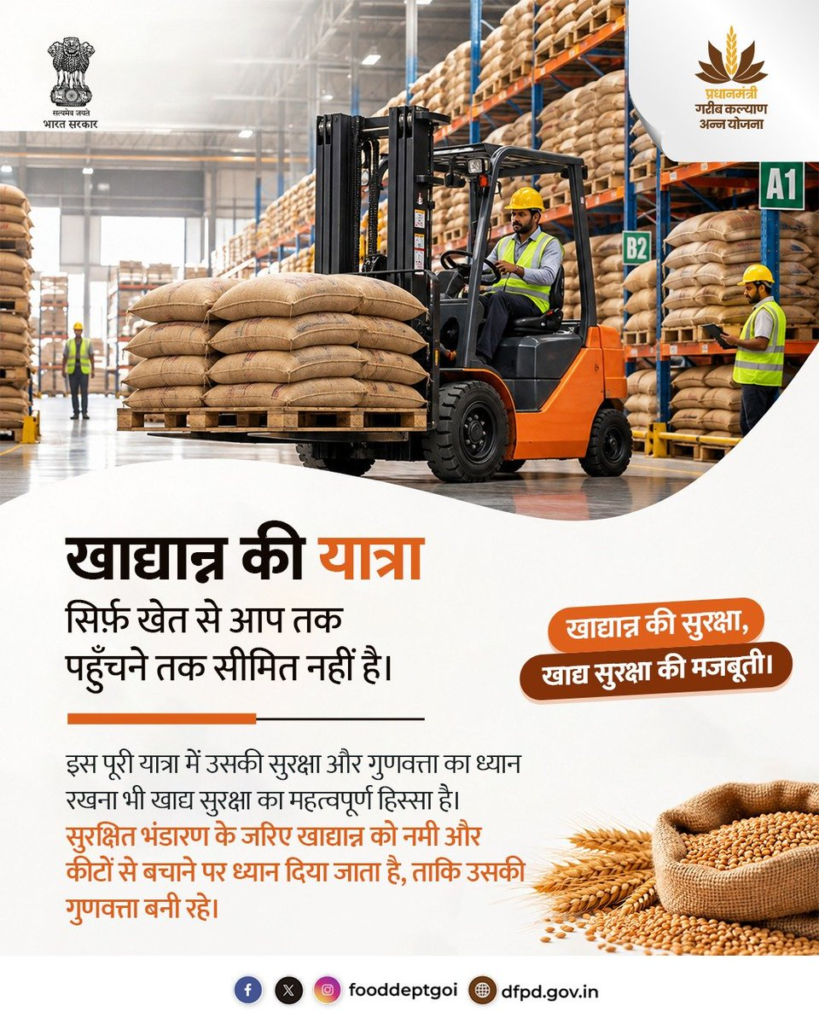
Once purchased, food grains must be stored properly to maintain their quality over an extended period. Government warehouses are used for storage, with measures in place to protect supplies against moisture, pests and spoilage.
Before the grains are distributed, their quality is checked to ensure they remain suitable for consumption. The food grains are subsequently transported from storage facilities to different states by rail and road. From there, they reach government ration shops, where eligible beneficiaries can collect their allocated supplies at the applicable prices.
What Is the PM Garib Kalyan Anna Yojana?
The government operates food distribution programmes to support eligible households and improve access to essential food grains. The PM Garib Kalyan Anna Yojana is an important part of these efforts.
Under the scheme, eligible beneficiaries covered by the National Food Security Act (NFSA) receive food grains free of cost according to the applicable provisions. The programme is intended to reduce the financial burden on economically disadvantaged families and help them meet their basic food requirements.
How Much Ration Do Beneficiaries Receive?
The quantity of food grains provided depends on the beneficiary category under the government’s distribution system.
Under the Priority Household (PHH) category, eligible individuals receive 5 kg of food grains per person each month. For example, a household with four eligible members receives a total of 20 kg per month.
Beneficiaries covered by the Antyodaya Anna Yojana (AAY) category are entitled to 35 kg of food grains per household each month, subject to the applicable scheme provisions.
These allocations help eligible families access essential food supplies through the Public Distribution System.
How Does the One Nation, One Ration Card Scheme Help?
The One Nation, One Ration Card (ONORC) scheme allows eligible ration cardholders to collect their entitled food grains from any participating government ration shop across India, subject to the applicable rules.
The facility is particularly useful for migrant workers and other people who move away from their home towns or villages for employment or other reasons. Instead of depending solely on a ration shop in their home area, eligible beneficiaries can access their food grain entitlements in another city or state.
The initiative makes ration access more flexible for eligible households and supports the wider reach of India’s food security system.
Disclaimer: This article is intended for general informational purposes only. Ration entitlements, eligibility criteria and distribution procedures are governed by applicable government rules and may be subject to change. Beneficiaries should check the latest official guidelines issued by the Department of Food and Public Distribution or their respective state food department for accurate and updated information.