
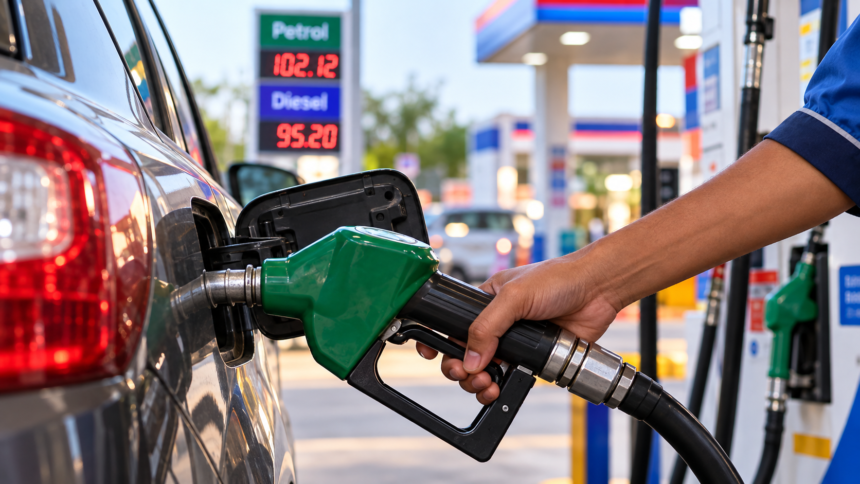
Petrol and diesel prices remained unchanged across major Indian cities on October 12, despite international crude oil prices staying above $100 per barrel. However, private fuel retailer Jio-bp increased petrol prices by ₹5 per litre and diesel prices by ₹3 per litre from October 11. Nayara Energy had announced a similar price hike earlier in the month.
Meanwhile, state-owned oil marketing companies, including Indian Oil, Bharat Petroleum (BPCL) and Hindustan Petroleum (HPCL), continued to keep regular petrol and diesel rates unchanged.
Brent crude was trading at around $103 per barrel, while US West Texas Intermediate (WTI) crude fell to $90.04 per barrel amid expectations of additional oil supplies from Russia. Despite the decline, geopolitical tensions and possible supply disruptions remain key concerns for the international oil market.
India imports around 90% of its crude oil requirements, making domestic fuel costs vulnerable to changes in global oil prices and currency movements.
Petrol and Diesel Rates in Major Indian Cities
The latest reported petrol and diesel prices in selected cities are listed below.
| City | Petrol Price (₹/litre) | Diesel Price (₹/litre) |
|---|---|---|
| Mumbai | ₹111.21 | ₹97.83 |
| Delhi | ₹102.12 | ₹95.20 |
| Kolkata | ₹113.51 | ₹99.82 |
| Chennai | ₹107.77 | ₹99.55 |
| Bengaluru | ₹111.68 | ₹99.56 |
| Hyderabad | ₹115.69 | ₹103.82 |
Fuel prices vary from city to city because of differences in local taxes and other charges. Prices offered by private fuel retailers may also differ from those charged by state-run companies.
Global Crude Oil Prices Ease Amid Supply Developments
International crude oil prices edged lower on October 12 following an announcement by US President Donald Trump regarding a proposed energy ceasefire between Russia and Ukraine, along with an arrangement for additional Russian diesel supplies.
However, concerns over the security of global energy supplies continued. Rising tensions in the Middle East, attacks on Saudi Arabia and fresh incidents involving oil tankers added to worries about possible disruptions to crude oil and fuel shipments.
Although crude prices declined slightly, the impact on India’s domestic fuel market remained limited, with state-run oil companies continuing to hold retail prices steady.
Oil Companies Face Pressure From High Crude Prices
Sustained increases in international crude oil prices can raise India’s import expenditure and put pressure on fuel retailers’ profitability.
According to an estimate by ICRA, state-run oil marketing companies were facing marketing margins of minus ₹8 per litre on petrol and minus ₹9 per litre on diesel in September. These negative margins translated into combined daily losses of approximately ₹530 crore.
If global oil prices remain elevated, fuel retailers could face further pressure on their margins. India’s heavy dependence on imported crude also means that prolonged price increases could affect the country’s overall import bill.
What Stable Fuel Prices Mean for Consumers
Despite Brent crude trading at around $103 per barrel, petrol and diesel prices have remained relatively stable over the past week in many major cities.
The rupee-dollar exchange rate is another important factor for India because crude oil imports are priced internationally in US dollars. A weaker rupee makes oil imports more expensive, potentially increasing costs for domestic fuel retailers.
For commuters, unchanged prices at fuel stations mean there has been no immediate widespread increase in regular fuel rates. However, petrol and diesel remain expensive in several cities, and consumers may notice differences depending on their location and fuel retailer.
Motorists should check the latest local rates before refuelling, particularly in areas served by private fuel companies, where prices may differ from those of state-owned retailers.
Disclaimer: The prices and market estimates in this article are based on the supplied information and may change. Actual petrol and diesel rates can vary by city, retailer, applicable taxes and other local charges. Readers should confirm current prices with their local fuel station before making purchasing decisions.