
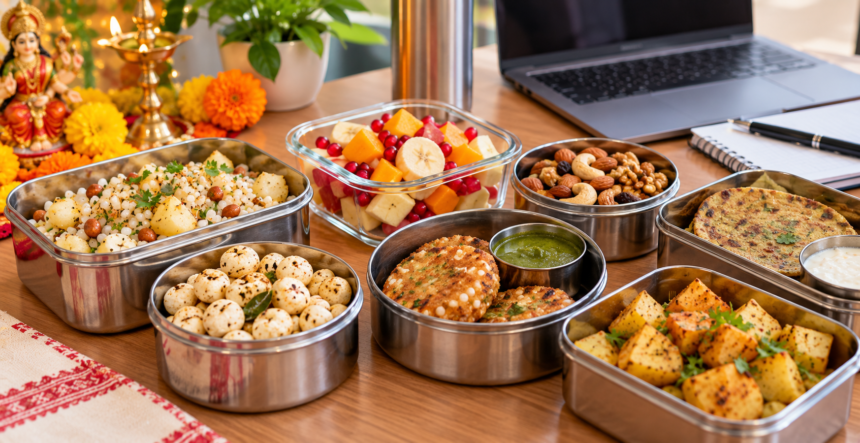
Navratri is a time of devotion, celebration and fasting for millions of people across India. However, observing a vrat while handling office meetings, deadlines and daily responsibilities can be challenging. Without proper planning, long gaps between meals may leave you feeling hungry and tired during the workday.
Fortunately, fasting does not have to mean compromising on convenience or taste. With a little preparation, you can pack simple, satisfying snacks that follow your fasting traditions and fit easily into your office routine.
From traditional sabudana dishes to fresh fruits and sweet potato chaat, here are seven easy Navratri vrat snacks to carry to work.
1. Sabudana Khichdi
Sabudana khichdi is a popular fasting dish prepared with tapioca pearls, potatoes, roasted peanuts and mild spices. It can serve as a filling snack or a light meal during a busy workday.
Prepare it at home using sendha namak (rock salt) and ingredients permitted under your fasting rules. Pack the khichdi in a suitable food container so it is easy to eat during a short break.
Packing tip: Let the khichdi cool slightly before closing the container to minimise excess moisture.
2. Roasted Makhana
Roasted makhana, also known as fox nuts, is a convenient snack for office hours. These light, crunchy bites can be prepared with a little ghee, sendha namak and fasting-friendly spices.
You can roast a batch in advance and divide it into small portions to enjoy between meetings. Since makhana requires little preparation, it is also a practical option for busy mornings.
Packing tip: Use a dry, airtight container to help keep the makhana crunchy throughout the day.
3. Fresh Fruit Bowl
A bowl of fresh fruit offers a refreshing option for people observing Navratri fasts. Apples, bananas, papaya, pomegranate and pears can be combined according to your preferences and availability.
Fruits provide water, fibre and essential nutrients, making them a useful addition to your fasting routine. If you prefer something simpler, carry a whole apple or banana that you can eat without any preparation.
Packing tip: Keep cut fruits refrigerated until you leave for work and carry them in a leak-proof container. If refrigeration is not available, whole fruits are a convenient alternative.
4. Sabudana Tikki
For those who prefer a savoury snack, sabudana tikki is another option worth considering. Made with soaked sabudana, mashed potatoes, crushed peanuts and suitable seasonings, these patties can be prepared at home.
Shallow-fry the tikkis using a small amount of ghee or another suitable cooking fat. Allow them to cool slightly before packing, and carry a fasting-friendly chutney separately if desired.
Packing tip: Line the container with a paper towel to absorb excess oil and help prevent the tikkis from becoming soggy.
5. Roasted Peanuts and Dry Fruits
Roasted peanuts, almonds, walnuts, cashews and raisins make a practical snack when your office schedule leaves little time for a proper break. Nuts provide protein and fats, while dry fruits offer a convenient source of energy.
Prepare small portions in advance and store them in reusable snack pouches or containers. This makes it easier to manage hunger between meetings without needing to prepare food during office hours.
Packing tip: Keep portions moderate because nuts and dry fruits are energy-dense. Check that your chosen ingredients are allowed under your family’s Navratri fasting traditions.
6. Kuttu or Singhara Atta Cheela
Kuttu (buckwheat) flour and singhara (water chestnut) flour are commonly used to prepare fasting-friendly dishes. A simple cheela made with the permitted flour, water, mashed potato and suitable seasonings can be a convenient savoury option.
Cook the cheela thoroughly and let it cool slightly before placing it in your lunchbox. You can prepare it in the morning or make it the previous evening and refrigerate it promptly.
Packing tip: Carry the cheela in a separate compartment and pair it with suitable chutney or plain yoghurt if dairy products are permitted in your fasting routine.
7. Boiled Sweet Potato Chaat
Sweet potato chaat is an easy-to-prepare option for Navratri fasting. Boil or roast a sweet potato, cut it into bite-sized pieces and season it with sendha namak, lemon juice and fasting-friendly spices.
Sweet potatoes provide carbohydrates and fibre, making them a useful addition to your workday snack box. You can adjust the seasoning according to your taste and the ingredients allowed under your fasting traditions.
Packing tip: Store the prepared chaat in a clean, sealed container and keep it refrigerated until you leave. Use an insulated lunch bag with ice packs when needed, and avoid leaving cooked food at room temperature for extended periods.
Tips for Managing Navratri Fasting at Work
A little preparation can make it easier to balance fasting with your professional responsibilities.
Prepare snacks the previous evening by washing fruits, roasting makhana and dividing nuts into individual portions. Plan short snack breaks around your meetings to avoid long gaps without food, and carry a water bottle to stay hydrated if your fasting routine permits drinking water.
It is also important to follow your family’s fasting traditions when selecting ingredients. Rules concerning salt, spices, flour and dairy products can vary between households. Use clean, sealed containers and refrigerate perishable foods promptly to maintain food safety.
Conclusion
Observing Navratri vrat while working does not have to mean sacrificing convenience or flavour. Sabudana khichdi, roasted makhana, fresh fruits, sabudana tikki, nuts and dry fruits, fasting-friendly cheela and sweet potato chaat offer practical options for office snacks.
Preparing food in advance, carrying suitable portions and planning breaks can help make fasting more manageable throughout the workday. Choose options that fit your fasting traditions, dietary needs and schedule so you can observe Navratri comfortably.
Disclaimer: This article is intended for general informational purposes only. Food choices and fasting practices vary according to individual traditions, dietary requirements and health needs. Readers should choose foods appropriate for their circumstances and consult a qualified healthcare professional if they have concerns about fasting or nutrition.