
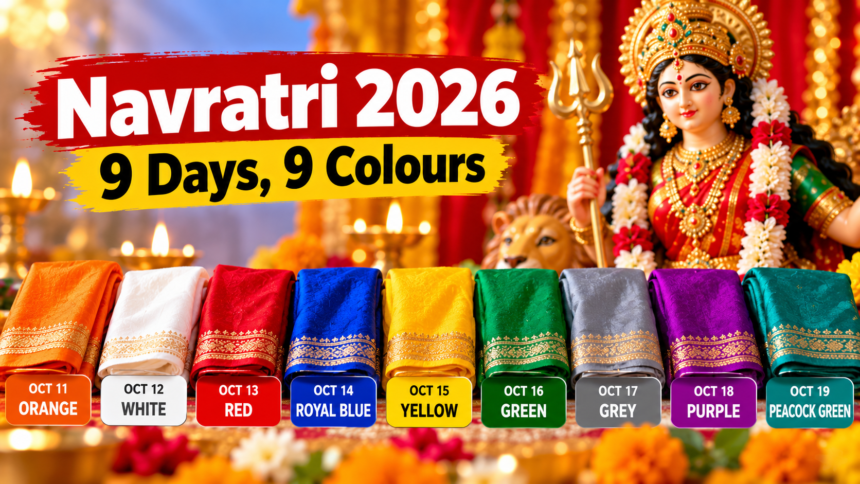
Shardiya Navratri 2026 begins on October 11 and will be celebrated over nine days with prayers and devotion to Maa Durga and her nine forms. During the festival, many devotees follow the tradition of wearing a specific colour each day, with every shade carrying its own cultural and spiritual significance.
The nine colours associated with Navratri 2026 are orange, white, red, royal blue, yellow, green, grey, purple and peacock green. These colours are traditionally linked with qualities such as peace, courage, happiness, prosperity and spiritual growth.
The daily colour tradition is especially popular among families participating in puja, temple visits, Garba and Dandiya celebrations. Here is the complete Navratri 2026 colour list, along with the dates and meanings associated with each shade.
Navratri 2026: Date-Wise Colours for All Nine Days
Shardiya Navratri begins on Sunday, October 11, 2026. The following schedule follows a widely observed colour tradition in which the opening colour is linked to the weekday on which the festival begins.
| Date | Day | Navratri Colour | Traditional Significance |
|---|---|---|---|
| October 11, 2026 | Sunday | Orange | Energy, warmth and enthusiasm |
| October 12, 2026 | Monday | White | Peace, purity and serenity |
| October 13, 2026 | Tuesday | Red | Strength, passion and divine power |
| October 14, 2026 | Wednesday | Royal blue | Confidence, stability and dignity |
| October 15, 2026 | Thursday | Yellow | Joy, optimism and positivity |
| October 16, 2026 | Friday | Green | Growth, renewal and harmony |
| October 17, 2026 | Saturday | Grey | Balance, composure and resilience |
| October 18, 2026 | Sunday | Purple | Spirituality, dignity and nobility |
| October 19, 2026 | Monday | Peacock green | Freshness, individuality and compassion |
This is a commonly followed Navratri colour schedule. The sequence and its interpretations may differ according to regional customs and local traditions.
What Is the Significance of the Nine Navratri Colours?
Each colour represents a different quality in the traditional symbolism associated with the festival.
Orange is linked with enthusiasm, warmth and energy, while white represents purity and inner peace. Red symbolises strength and the protective power of the Goddess. Royal blue is associated with confidence, stability and dignity.
Yellow represents happiness and optimism, while green signifies growth, harmony and renewal. Grey is connected with balance and resilience, and purple reflects spirituality and nobility. Peacock green is associated with freshness, compassion and individuality.
For many devotees, these colours provide a way to express their devotion and reflect on positive qualities during the nine days of worship. Their meanings are cultural and spiritual associations rather than guarantees of particular blessings or outcomes.
Is Wearing the Navratri Colour of the Day Compulsory?
No. Wearing a particular colour each day is a popular cultural and devotional practice, but it is not a universal requirement for Navratri worship.
Devotees can perform puja in clean, appropriate clothing according to their family customs and personal preferences. Those who wish to follow the colour schedule can choose a saree, kurta, dupatta or accessory in the designated shade.
Buying nine new outfits is not necessary to participate in the tradition. Even a small addition of the day’s colour can be a simple way to join the celebrations.
How to Follow the Navratri Colour Calendar in 2026
Keeping the date-wise colour list handy can help devotees plan their outfits for daily prayers, temple visits and festive gatherings. People attending Garba and Dandiya events can also use the schedule when selecting their clothing.
If a family or local temple follows a different colour sequence, devotees can continue observing that tradition.
Ultimately, the colours add a festive element to Shardiya Navratri, but the central focus remains worshipping Maa Durga and her nine divine forms. Whether someone follows the daily colour tradition or not, the festival offers an opportunity to express faith through prayer, aarti, fasting and other customary observances.
Disclaimer
This article is intended for general informational purposes. The Navratri colour sequence and the meanings associated with individual colours are based on commonly followed cultural traditions and may vary by region, community and religious practice. The colour schedule should not be considered a compulsory rule for worship. Readers may follow the customs observed by their families or local temples.