
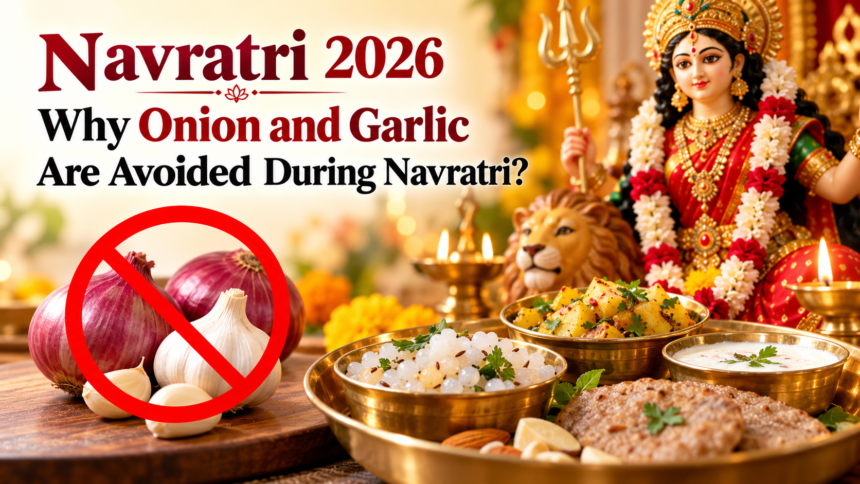
Shardiya Navratri 2026 begins on October 11, when devotees across India will observe nine days of worship dedicated to Maa Durga and her nine divine forms. Along with prayers and fasting, many Hindu households follow specific dietary practices during the festival, including avoiding onion and garlic.
This tradition is linked to the concept of a sattvic diet, which emphasises purity, balance and mental calmness. In certain Hindu philosophical and dietary traditions, onion and garlic are classified as rajasic or tamasic foods because they are traditionally associated with stimulation, restlessness or heaviness.
However, these restrictions are not followed by every Hindu family. The dietary rules can vary according to regional customs, family traditions and individual religious practices. Understanding the beliefs behind these food restrictions helps explain their significance during Navratri.
What Are Sattvic, Rajasic and Tamasic Foods?
In traditional Hindu philosophy, nature and human behaviour are described through three qualities, known as gunas: sattva, rajas and tamas. These concepts also influence dietary practices in several Hindu and yogic traditions.
Sattvic foods are associated with purity, harmony, clarity and balance. Fresh fruits, milk, nuts and simply prepared vegetarian meals are commonly included in a sattvic diet.
Rajasic foods are traditionally linked with activity, passion, stimulation and restlessness. Some dietary traditions recommend limiting foods believed to encourage excessive stimulation, particularly during periods of meditation or spiritual discipline.
Tamasic foods are associated with heaviness, inertia and dullness in certain philosophical interpretations.
The classification of individual foods is not identical across all traditions. Onion and garlic, for instance, may be described as rajasic, tamasic or associated with both qualities, depending on the interpretation followed.
Why Are Onion and Garlic Avoided During Navratri?
The traditional practice of avoiding onion and garlic during Navratri comes from the belief that food can influence not only the body but also a person’s mental state and spiritual routine.
According to certain religious and dietary traditions, onion and garlic are considered unsuitable for a strict sattvic diet because of their perceived stimulating qualities. Devotees who follow these beliefs prefer simple meals that support their focus on prayer, meditation and worship.
During the nine days dedicated to Maa Durga, avoiding particular ingredients can also serve as a form of self-discipline. For those observing a vrat, following customary food restrictions is one way to express devotion and maintain the discipline associated with the festival.
These explanations reflect traditional religious beliefs rather than established scientific evidence that consuming onion or garlic necessarily causes aggression, negative emotions or spiritual impurity.
Is It Necessary to Avoid Onion and Garlic During Navratri?
Avoiding onion and garlic is not a universal requirement followed by every Hindu devotee during Navratri. Many families exclude these ingredients throughout the festival, particularly when observing a strict fast or preparing food for puja.
Other households follow different customs based on their region, family traditions and personal approach to religious observance. People who participate in Navratri celebrations without undertaking a specific vrat may also follow different dietary practices.
Those observing a particular religious vow can follow their family’s established customs or seek guidance from their family priest regarding permitted ingredients.
Understanding these differences is important because Navratri traditions are practised in various ways across Hindu communities.
What Can You Eat Instead of Onion and Garlic During Navratri?
People who avoid onion and garlic can still prepare a variety of flavourful dishes using ingredients permitted under their fasting traditions.
Commonly used alternatives include cumin, black pepper, fresh ginger, coriander and sendha namak. Whether a particular ingredient is allowed may depend on the household’s specific vrat rules.
Potato curries, pumpkin sabzi, kuttu-based dishes and simple preparations made with fruits or dairy products are among the options that can be prepared without onion and garlic.
Using fresh ingredients and keeping seasoning simple can help households maintain their preferred sattvic cooking practices throughout the festival.
Spiritual Significance of Navratri Food Restrictions
For devotees who follow the tradition, avoiding onion and garlic during Shardiya Navratri represents a conscious change in everyday eating habits during a period of prayer and devotion.
The practice is connected with the broader idea of self-discipline and the desire to devote more attention to Maa Durga through worship, fasting and other religious observances.
Ultimately, the decision to avoid these ingredients depends on individual beliefs and customary practices. Understanding the traditional reasoning behind the restriction helps explain its spiritual significance without treating it as a mandatory rule for every Hindu household.
Disclaimer
This article is intended for general informational and educational purposes. The dietary practices and explanations described here are based on traditional Hindu philosophical and religious beliefs, which may vary across communities and households. The information should not be interpreted as a universal religious rule or as medical advice. Readers may follow the customs and fasting practices appropriate to their personal beliefs and family traditions.