
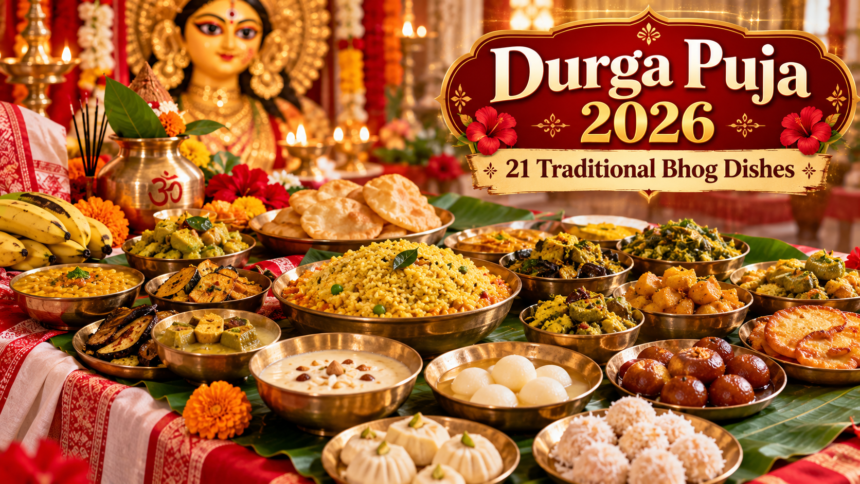
Durga Puja 2026 will bring devotees together to celebrate Goddess Durga’s victory over evil with prayers, cultural programmes, traditional clothing and beautifully decorated pandals. The festival is widely celebrated in West Bengal, Assam, Odisha, Bihar and Tripura, bringing communities together through religious rituals and cultural traditions.
The main celebrations span several days, with devotees marking the arrival of Maa Durga from Mount Kailash to her parental home after her victory over the demon king Mahishasura. Alongside worship and festivities, preparing and offering bhog is an important part of the celebrations.
Bhog refers to food prepared and offered to the Goddess as a mark of devotion. These offerings commonly include vegetarian dishes, sweets and other traditional foods. The exact menu can vary between regions and communities, reflecting local culinary customs.
Durga Puja 2026: 21 Traditional Bhog Dishes
From savoury rice and lentil preparations to Bengali sweets, these 21 dishes are associated with Durga Puja bhog traditions.
1. Khichdi
Khichdi is a familiar offering prepared with rice and lentils, often cooked with ghee and aromatic spices. Its simple preparation and traditional significance make it a popular part of Durga Puja bhog.
2. Vegetables in Mustard Gravy
Seasonal vegetables cooked in a mustard-based gravy bring a distinctive flavour to the bhog menu. The dish reflects the use of regional ingredients in traditional Bengali and Assamese cooking.
3. Lentil Cakes
Lentil cakes served in a flavourful curry are another option found in regional festive meals. This preparation is enjoyed in both Assam and Bengal.
4. Chholar Dal
Chholar dal is made with Bengal gram lentils and is often prepared with spices and grated coconut. Its mild sweetness and rich flavour make it a familiar dish in Bengali festive cooking.
5. Luchi or Poori
Luchi and poori are soft, deep-fried breads commonly served with aloo dum or vegetable curries. They are popular accompaniments to traditional festive meals in West Bengal and Assam.
6. Begun Bhaja
Begun bhaja consists of eggplant slices seasoned and fried until crisp on the outside and tender inside. It adds a savoury element to the bhog spread.
7. Aloo Posto
Aloo posto is a traditional Bengali preparation in which potatoes are cooked with poppy seeds. The dish is known for its distinctive nutty flavour and is often served with rice.
8. Labra
Labra is a mixed-vegetable preparation made with a selection of seasonal vegetables and spices. It is a familiar part of festive meals in Bengali and Assamese households.
9. Potoler Dolna
Potoler dolna is prepared using pointed gourds filled with a spiced mixture and cooked in a flavourful gravy. Its traditional preparation makes it a distinctive addition to a festive menu.
10. Kolar Bora
Kolar bora, or banana fritters, are prepared using bananas and are enjoyed as part of traditional offerings. Bananas are also associated with fertility and prosperity in the cultural beliefs described around these offerings.
11. Chanar Dalna
Chanar dalna is a Bengali curry made with pieces of fresh cottage cheese, known as chhana, cooked in a spiced gravy. It provides a rich vegetarian option for festive meals.
12. Payesh or Payokh
Payesh, also known as payokh in Assamese, is a traditional rice pudding prepared with milk, rice and sweetener. Its creamy texture and gentle aroma make it a familiar dessert for religious occasions.
13. Narkel Nadu or Narikolor Ladoo
These coconut-based sweets are prepared by combining grated coconut with sweeteners such as sugarcane jaggery. The mixture is shaped into small balls and served as a traditional festive treat.
14. Sandesh
Sandesh is a well-known Bengali sweet made from fresh chhana or paneer. It may be flavoured with cardamom and shaped into different forms for festive occasions.
15. Rasgulla
Rasgulla consists of soft, spongy cheese balls cooked in sugar syrup. The sweet is popular across India and is also associated with Bengali culinary traditions.
16. Mishti Doi
Mishti doi is sweetened yoghurt known for its creamy consistency and distinctive taste. It is a familiar Bengali dessert often served during celebrations and special meals.
17. Makha Sandesh
Makha sandesh is a softer, crumbly variation of the traditional Bengali sweet. It is made with fresh chhana and may include ghee to enrich its flavour and texture.
18. Kheer Kodom
Kheer kodom is a traditional sweet made with layered milk-based preparations. Its soft texture and sweet filling make it a distinctive addition to a festive dessert selection.
19. Malpua
Malpua is a sweet pancake made using wheat flour or refined flour and then soaked in sugar syrup. Its soft centre and lightly crisp exterior make it popular during festivals.
20. Kala Jamun
Kala jamun is a darker, richer variation of the familiar gulab jamun. These deep-coloured sweets are served as part of festive meals and dessert spreads.
21. Nimki
Nimki is a savoury, crispy snack commonly cut into diamond shapes. Unlike the many sweet dishes served during the festival, it offers a salty alternative.
Fruits, Paan and Other Sacred Offerings
Along with cooked dishes and sweets, devotees may offer seasonal fruits and paan, or betel leaves, to Maa Durga. The betel leaves may be accompanied by ingredients such as cloves and cardamom as part of the traditional offering.
Charnamrit and Panchamrit are also associated with religious rituals during Durga Puja. These offerings form part of the broader customs followed by devotees, although specific practices can differ between communities and regions.
Durga Puja: A Celebration of Devotion and Food Traditions
Durga Puja is not only a time for prayers and religious ceremonies but also an occasion for families and communities to come together. Traditional bhog preparations reflect the region’s culinary heritage and the importance of sharing food during auspicious celebrations.
From khichdi and vegetable dishes to payesh, sandesh and rasgulla, these offerings remain closely connected with the festival’s food traditions. As devotees prepare for Durga Puja 2026, the customs surrounding bhog continue to bring together faith, culture and community.
Disclaimer: This article is intended for general informational and cultural purposes. Bhog dishes, ingredients and offering practices may vary according to regional traditions, religious customs and individual communities. The dishes listed are examples of foods associated with Durga Puja and may not be included in every celebration.