
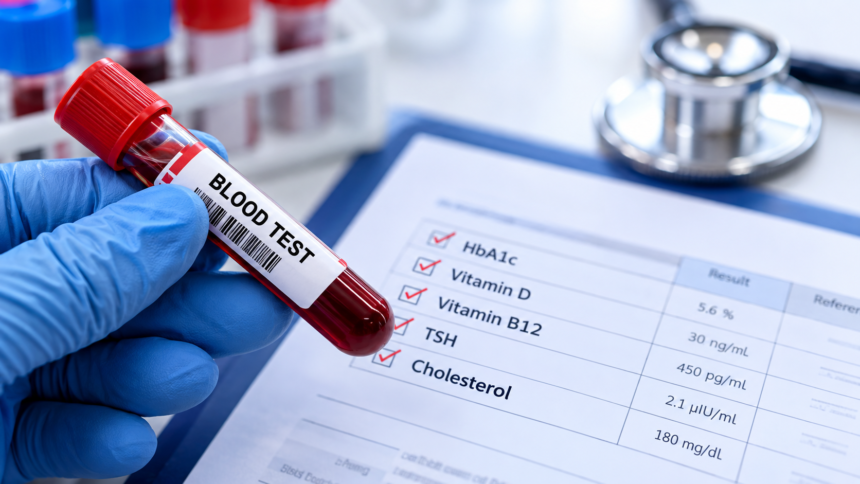
Blood tests are commonly used to assess different aspects of health, but a result marked “high” or “low” does not always mean that a person has a disease. At the same time, a result that falls within a laboratory’s reference range does not necessarily mean that everything is normal.
Dr Rajeev Sharma, Vice President, Medical Affairs, Tata1mg, explains what some commonly tested blood markers can indicate and why test results need to be considered in the right medical context.
Does a High HbA1c Level Always Mean Diabetes?
Not always. HbA1c measures the average level of blood sugar over roughly the previous two to three months. The test is commonly used both to help diagnose diabetes and to monitor blood sugar control in people who have already been diagnosed.
According to the ranges discussed in the article, an HbA1c level between 5.7% and 6.4% falls within the prediabetes range, while a reading of 6.5% or higher falls within the diabetes range.
However, the result should not be interpreted in isolation. If a person does not have relevant symptoms, a doctor may suggest repeating the HbA1c test or conducting another test, such as a fasting blood sugar test or oral glucose tolerance test.
What Can Low Vitamin D or B12 Levels Indicate?
Vitamin D is important for maintaining healthy bones and helps the body absorb calcium. Doctors may recommend a Vitamin D test for people with inadequate sun exposure, concerns related to bone health or conditions that affect the body’s ability to process or absorb Vitamin D.
The article states that Vitamin D levels between 20 ng/mL and 30 ng/mL are considered insufficient, while levels below 20 ng/mL indicate deficiency. A level below 10 ng/mL may be considered severe deficiency. However, laboratory reference ranges can differ, so results should be interpreted accordingly.
Vitamin B12 is another important blood marker. It contributes to red blood cell production, DNA synthesis and healthy nerve function. Testing may be recommended when a person has unexplained anaemia, symptoms associated with B12 deficiency or a condition that may interfere with B12 absorption.
Importantly, a B12 result within the laboratory’s reference range does not always completely rule out a deficiency. If symptoms or other findings raise concerns, a doctor may recommend additional testing, including an active Vitamin B12 test.
What Does an Abnormal TSH Result Mean?
An abnormal TSH reading can point towards a possible thyroid problem, but looking at TSH alone may not provide the complete picture.
TSH is produced by the pituitary gland and helps regulate the thyroid gland’s production of the hormones T3 and T4. According to Dr Sharma’s explanation, all three values can be relevant when evaluating thyroid function.
An abnormal TSH level by itself may indicate subclinical hypothyroidism or subclinical hyperthyroidism. Therefore, a thyroid report should be assessed as a whole rather than judged solely on whether one value has been flagged as abnormal.
Which Cholesterol Levels Are Important?
A complete cholesterol assessment involves more than a single number. A standard lipid profile generally includes HDL, LDL and triglycerides, with each providing different information about cardiovascular health.
HDL is commonly known as “good cholesterol”, while LDL is often referred to as “bad cholesterol”. Lower LDL and higher HDL levels are frequently associated with a lower risk of cardiovascular disease. Higher triglyceride levels, meanwhile, are frequently linked with an increased risk of heart disease.
Doctors therefore consider the complete lipid profile along with a person’s medical history and other risk factors instead of focusing on just one cholesterol reading.
Why Blood Reports Should Not Be Self-Diagnosed
Seeing a blood test result outside the reference range can understandably cause concern, but an abnormal number does not automatically mean that a person has a disease. Likewise, a result within the stated range cannot always rule out an underlying health problem.
Blood test results are best viewed as one part of the overall health assessment. They can help start a discussion with a doctor, who can interpret the numbers alongside symptoms, medical history and other relevant findings. In short, the numbers provide information, but context gives those numbers meaning.
Disclaimer: This article is intended for general informational purposes only and should not be considered a substitute for professional medical advice, diagnosis or treatment. Blood test results can vary depending on individual circumstances and laboratory reference ranges. Always consult a qualified doctor or healthcare professional for proper interpretation of your test results and before making changes to your diet, treatment or health routine.