
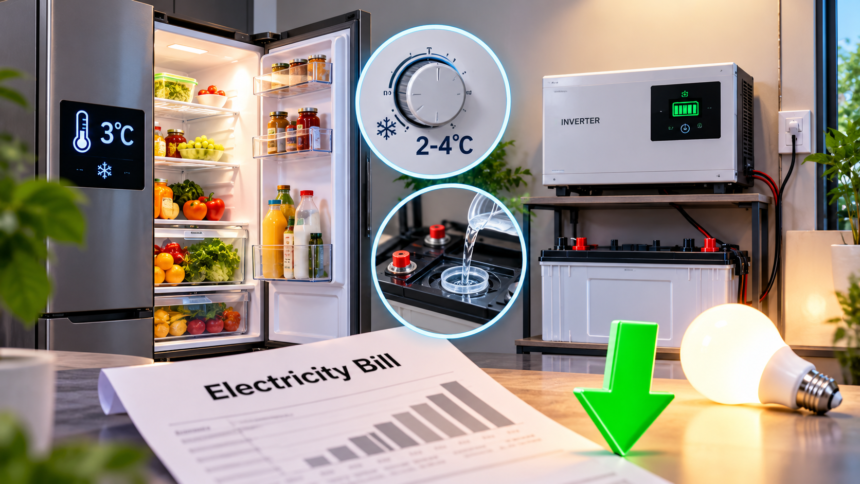
A high electricity bill every month can be frustrating, especially when household appliances continue running throughout the day. However, before spending money on new appliances, making a few simple changes to the way you use your refrigerator and inverter may help reduce unnecessary power consumption.
Since refrigerators and inverters can operate for long hours, poor maintenance or incorrect settings can increase electricity usage. Here are some practical ways to use them more efficiently.
Set Your Refrigerator Temperature Correctly
Keeping the refrigerator at its maximum cooling level all the time is not always necessary. During summer, a temperature setting of around 2 to 4 degrees Celsius can be sufficient for normal cooling, while the setting can be adjusted lower during winter depending on requirements.
Avoid unnecessarily increasing the cooling level, as the compressor may have to work harder and consume more electricity.
Give Your Refrigerator Enough Space
The refrigerator should not be placed directly against the wall. The back of the appliance needs adequate space for air circulation.
If the area around the rear coils is too restricted, the compressor may have to work harder to maintain the required temperature, potentially increasing power consumption. Keeping the refrigerator properly positioned can therefore help it operate more efficiently.
It is also better to allow hot food to cool before placing it inside the refrigerator. Frequently opening the refrigerator door can also make the appliance work harder to restore the desired temperature.
Maintain Your Inverter and Battery Properly
Inverter users should regularly check the battery’s distilled-water level where applicable. A low electrolyte level can affect the battery’s charging performance and may increase the time required for charging.
The inverter’s automatic cut-off feature should also be working properly so that charging stops once the battery reaches full charge.
Avoid connecting unnecessary heavy appliances to the inverter. Reducing the load can help prevent unnecessary electricity consumption and allow the backup system to operate more efficiently.
Switch Off Chargers and Use LED Lights
Small amounts of electricity can also be wasted when mobile phone and laptop chargers remain plugged in after the devices have finished charging. This is commonly referred to as standby or phantom power consumption. Unplugging chargers when they are not required can help avoid this unnecessary usage.
Replacing traditional bulbs with LED lights is another simple way to reduce lighting-related electricity consumption. LED lighting can use significantly less electricity than older bulb technologies, making the switch useful for households looking to lower their overall power consumption.
Disclaimer
The electricity savings mentioned above can vary depending on appliance condition, usage patterns, temperature settings, battery type, household load and other factors. These tips are intended for general information and do not guarantee a fixed reduction in electricity bills.