
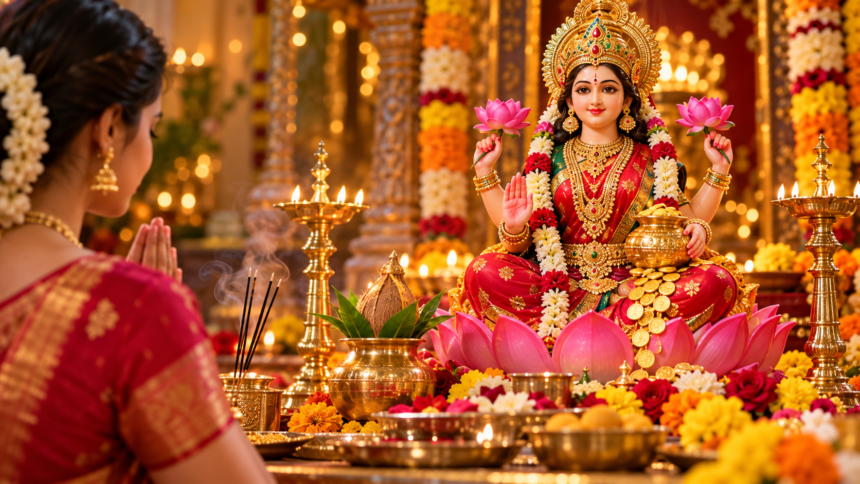
New Delhi: The 16-day Mahalakshmi Vrat dedicated to Goddess Lakshmi will conclude on Saturday, October 3, 2026. The observance began on September 19, on Bhadrapada Shukla Ashtami, and is traditionally kept for blessings related to prosperity, household well-being and stability.
With the final day approaching, devotees are looking for details about the vrat’s ending date, tithi, udyapan vidhi, puja samagri, fasting practices and religious significance.
When Will Mahalakshmi Vrat End in 2026?
According to the North Indian Purnimanta calendar followed by Drik Panchang, Mahalakshmi Vrat will conclude on October 3, 2026. The vrat started on September 19 with Bhadrapada Shukla Ashtami, which also coincided with Radha Ashtami and Durva Ashtami.
The concluding observance falls on Ashwin Krishna Ashtami. Festival dates and exact tithi timings can vary across regions because Hindu calendar calculations depend on location and the timing of tithis in relation to sunrise.
The vrat is traditionally known as a 16-day observance because it covers 16 tithis. However, in 2026, two tithis overlap in the calendar sequence. Therefore, the observance spans 15 calendar dates even though all 16 tithis are included.
Important Mahalakshmi Vrat Dates
| Occasion | Date |
|---|---|
| Mahalakshmi Vrat begins | September 19, 2026 |
| Bhadrapada Shukla Ashtami begins | September 18, 1:00 PM |
| Bhadrapada Shukla Ashtami ends | September 19, 3:26 PM |
| Mahalakshmi Vrat concludes | October 3, 2026 |
| Concluding tithi | Ashwin Krishna Ashtami |
Exact timings may differ depending on the location.
Mahalakshmi Vrat Significance and Puja Vidhi
Mahalakshmi Vrat is dedicated to Goddess Mahalakshmi, who is traditionally worshipped as the deity associated with wealth, prosperity and abundance. Devotees observe the vrat as a period of continued prayer and devotion, seeking prosperity and peace in their homes.
Traditional accounts also associate the observance with the Bhavishya Purana. Unlike a single-day puja, the vrat continues across multiple tithis, making regular worship and discipline an important part of the tradition.
For a typical home puja, devotees first bathe and clean the worship area. An idol or picture of Goddess Lakshmi is placed on a clean chowki covered with a red cloth. A kalash filled with water, along with a coin, mango leaves and a coconut, may be placed near the deity.
A ghee diya is then lit, followed by offerings such as roli or kumkum, akshat, flowers, fruits and sweets. Some traditions give special importance to making offerings in multiples of sixteen. Devotees may recite the Mahalakshmi Vrat Katha along with prayers such as Shri Mahalakshmi Ashtakam or Shri Sukta before performing aarti and distributing prasad.
For the concluding puja, families generally follow their established customs. When an udyapan is performed, it traditionally focuses on completing the sankalp taken at the beginning of the vrat, along with prayers, offerings, food distribution and charity.
16-Knot Thread, Puja Samagri and Offerings
One of the distinctive rituals associated with Mahalakshmi Vrat is the 16-knot sacred thread, known as the shodasha-granthi sutra. A cotton thread is prepared with sixteen knots and offered to Goddess Lakshmi before being tied around the wrist.
A commonly followed custom is for married women to wear the thread on the left wrist, while men and unmarried girls wear it on the right. However, these practices can differ between families and regions. The sixteen knots represent the sixteen-tithi structure associated with the vrat.
For a simple home puja, commonly used items include a Mahalakshmi idol or picture, red cloth, kalash, coconut, mango leaves, cotton or kalawa thread, turmeric, roli or kumkum, akshat, ghee, diya, flowers, fruits, sweets, Gangajal and panchmeva.
Offerings may also be prepared in groups of sixteen, depending on family tradition. Flowers, akshat, fruits, sweets and betel leaves may be offered, while kheer or panchmeva can be prepared as prasad.
Mahalakshmi Vrat Fasting Rules and Katha
Fasting practices during Mahalakshmi Vrat vary according to family traditions and individual circumstances. Some devotees observe a strict fast, while others follow a phalahari vrat.
Commonly used foods during the vrat include fruits, milk, makhana, sabudana, singhara flour, buckwheat flour, peanuts, ghee and rock salt. Rules concerning grains, regular salt, pulses, onion and garlic can differ according to regional and family customs.
Pregnant women, elderly people and those who are unwell or unable to undertake a strict fast should follow appropriate personal and family guidance rather than forcing a demanding fasting routine.
The Mahalakshmi Vrat Katha is traditionally recited during the observance. Drik Panchang associates the traditional story with King Mangalarna, Queen Padmavati and the Brahmin Tavallaka. Regional versions of the katha may differ in wording and certain details.
The 2026 Mahalakshmi Vrat will reach its conclusion on October 3 after beginning on September 19. The final observance provides devotees an opportunity to complete their sankalp, perform the concluding puja and continue their prayers for prosperity, peace and household well-being.
Disclaimer: Religious practices, puja procedures, fasting rules and festival timings may vary according to regional calendars, family traditions and local customs. Readers should verify the applicable tithi and timings for their location before performing the rituals.