
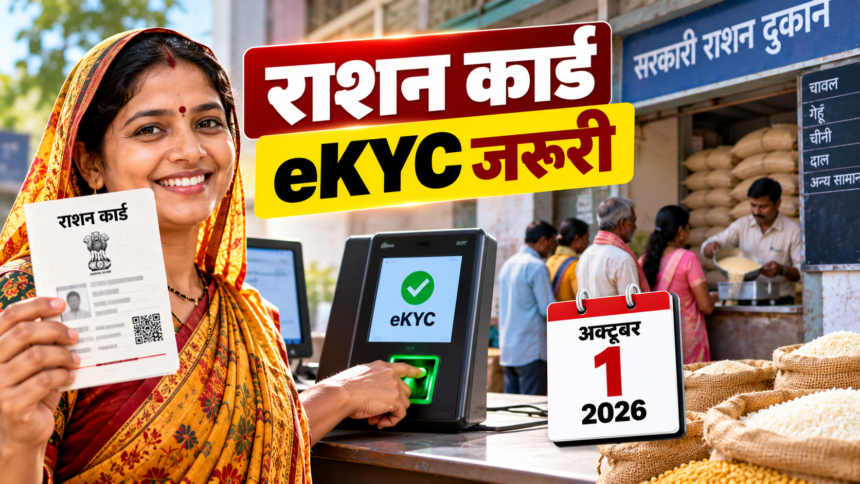
Ration card beneficiaries need to pay attention to the latest changes in the Public Distribution System (PDS). Under the revised rules, ration cards that have not been used to claim foodgrain entitlements for the past six months will be temporarily disabled as part of an effort to update and clean the PDS database.
The new system is scheduled to become operational from October 1, 2026. Recent reports estimate that around 1.58 crore beneficiaries could be covered by the temporary disablement process. Importantly, these beneficiaries will not be removed from the database immediately. A three-month window will be provided for e-KYC and field verification to establish eligibility and reactivate the ration card.
The amended Targeted Public Distribution System (Control) Order also makes e-KYC mandatory every five years. The government says the changes are aimed at improving the accuracy of beneficiary records and identifying inactive and duplicate entries.
Why Are Inactive Ration Cards Being Disabled?
The latest process targets what are described as inactive or “silent” ration cards—cards against which no foodgrain entitlement has been used for six months. The government has also introduced provisions for temporarily disabling beneficiaries identified as duplicates within or outside a state.
The objective is to keep the PDS database updated and ensure that foodgrain benefits are directed to eligible beneficiaries. The Department of Food and Public Distribution has also reported that e-KYC coverage stood at 90.64% as of July 30, 2026.
How Can a Temporarily Disabled Ration Card Be Reactivated?
A temporarily disabled ration card is not automatically cancelled permanently. Eligible beneficiaries will get three months to complete the required verification process.
During this period, the beneficiary can complete e-KYC and field verification and provide the necessary information or documents to establish eligibility. Once the verification process is successfully completed, the ration card can be revalidated and reactivated under the applicable procedure.
Therefore, beneficiaries whose cards are affected should complete their e-KYC and verification as soon as possible rather than waiting until the end of the three-month period.
New Ration Card Rules for Children and Adults
The amended TPDS rules also contain provisions related to the age of ration card holders. A person cannot hold a separate ration card before completing 18 years of age. For children below five years, Aadhaar details are to be captured where available, and their e-KYC is required within one year after they turn five.
These provisions are part of the broader effort to regularly review eligible households, remove ineligible entries and keep beneficiary information updated.
Free Foodgrain Scheme Continues
The Centre currently provides free foodgrains under the Pradhan Mantri Garib Kalyan Anna Yojana (PMGKAY) to eligible beneficiaries covered under the National Food Security Act. The Department of Food and Public Distribution says the free-foodgrain programme was extended for five years from January 1, 2024.
With the PDS database being updated through e-KYC, verification and identification of inactive or duplicate beneficiaries, ration card holders should ensure that their records remain valid and their required verification is completed.
Disclaimer
This article is intended for general informational purposes only. Ration card eligibility, e-KYC requirements, verification procedures and PDS benefits are governed by government rules and may vary in implementation across states and Union Territories. Beneficiaries should verify their individual status and the latest instructions with their state Food Department, Fair Price Shop or official government portal before taking any action.