
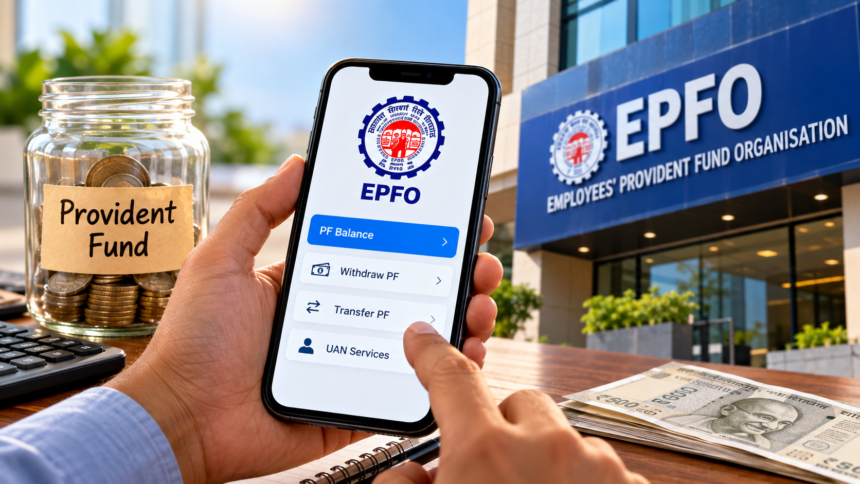
Losing a job can make PF savings an important source of financial support, especially during a prolonged period without income. Under the revised EPFO withdrawal framework, members can access a significant portion of their PF balance during unemployment, while a part of the balance is retained to protect long-term retirement savings.
However, members should understand the withdrawal conditions and tax rules before taking money out of their EPF account. The rules also clarify what happens when a person withdraws PF and later joins another employer.
How Much PF Can You Withdraw After Losing Your Job?
Under the revised provisions, a member can withdraw up to 75% of the eligible PF balance, including the employee and employer contributions and applicable interest, in case of unemployment. The remaining 25% is retained as a minimum balance and can be withdrawn after one year.
The reform changed the earlier two-month waiting period for premature final PF settlement to 12 months. The government said the longer period is intended to discourage premature depletion of retirement savings while still allowing members access to funds during prolonged unemployment.
The revised framework also provides for full withdrawal in certain special circumstances, including retirement after attaining the prescribed age, permanent disability or incapacity to work, retrenchment, voluntary retirement and permanent migration from India, subject to the applicable conditions.
What If You Get a New Job After Withdrawing PF?
If a member withdraws PF during a period of unemployment and later joins another company, the amount already withdrawn does not have to be deposited back into the PF account.
The new employer can continue PF contributions using the member’s existing Universal Account Number (UAN). The new contributions will then accumulate under the PF account linked to that employment.
It is important to distinguish between a PF transfer and PF withdrawal. If the old PF balance is transferred to the new employer’s recognised PF account instead of being withdrawn, the accumulated balance can continue as part of the member’s retirement savings. The Income Tax Department also treats a transfer of the PF balance to a new recognised provident fund as an exemption from TDS in applicable cases.
What Are the Tax Rules on PF Withdrawal?
Tax treatment depends on factors such as the length of continuous service and the circumstances of the withdrawal.
Generally, withdrawal from a recognised provident fund after five years of continuous service is exempt from tax. The service period with a previous employer can also be counted when the PF balance is transferred to the current employer. Certain cases involving termination for reasons beyond the employee’s control can also qualify for exemption.
If PF is withdrawn before completing five years of continuous service and the taxable withdrawal exceeds ₹50,000, TDS may apply. The applicable TDS rate is 10% where the relevant conditions are met and PAN is furnished. The Income Tax Department states that no TDS is deducted where the payment is below ₹50,000, subject to the applicable tax rules.
Therefore, members should check their total period of continuous service, the reason for withdrawal and their tax position before making a PF withdrawal.
EPFO PF Rules: What Members Should Remember
The revised framework allows greater access to PF savings while retaining a portion of the balance for long-term financial security. EPFO has also simplified partial withdrawal provisions and set a uniform 12-month minimum service requirement for such withdrawals.
Members should carefully consider whether they need to withdraw their PF balance or transfer it when changing jobs, as transferring the balance can help preserve continuity of retirement savings and may have tax advantages.
Disclaimer
This article is intended for general informational purposes and should not be considered financial, tax or investment advice. PF withdrawal eligibility, taxation, TDS and other conditions depend on the applicable EPFO and income-tax rules and the member’s individual circumstances. Readers should verify the latest provisions through official EPFO and Income Tax Department sources before making a withdrawal decision.