
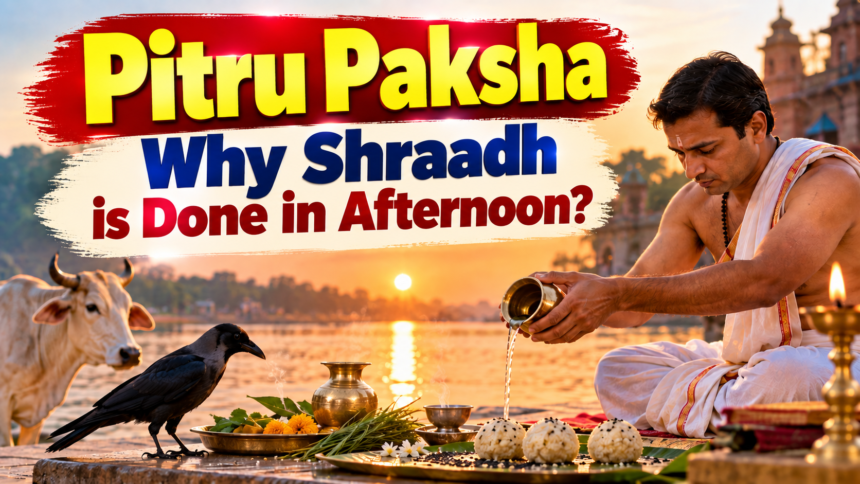
Pitru Paksha is a period traditionally dedicated to remembering and paying respect to departed ancestors. During these days, families perform rituals such as tarpan and Shraadh to honour their ancestors and pray for their peace.
According to the traditional practice, Shraadh is generally performed on the lunar date, or tithi, corresponding to the ancestor’s death. If the exact date is unknown, the ritual can be performed on Amavasya. One common observation is that Shraadh rituals are usually carried out around midday. Here is the traditional belief behind choosing the afternoon for these rituals.
Why Is Shraadh Performed in the Afternoon?
Traditional scriptures associate different periods of the day with different types of religious practices. Morning and evening are generally considered suitable for worship dedicated to deities, while the afternoon is traditionally associated with ancestors.
For this reason, performing Shraadh during the afternoon is considered appropriate during Pitru Paksha. Traditional beliefs also describe Pitru Lok as being situated between Mrityu Lok and Dev Lok and above the Moon. Based on these beliefs, food and other offerings are made to ancestors during the middle part of the day.
Why Is Food Offered During This Time?
Another traditional belief connects the afternoon Shraadh ritual with the Sun. The Sun rises in the east and reaches a position high in the sky around midday.
According to this belief, the offerings made during Shraadh are believed to reach the ancestors through the Sun’s rays. This is traditionally given as another reason why the afternoon is considered a suitable time for the Shraadh feast and related rituals.
Traditional Way to Perform Shraadh During Pitru Paksha
On the designated Shraadh tithi, traditional practices include worshipping the ancestors in the southern part of the house and offering tarpan using water mixed with sesame seeds. Pind daan is also performed as part of the ritual.
The person performing the ceremony traditionally sits on a seat made from kusha grass and prays for the peace of the ancestors. A sattvic meal is then respectfully served to a Brahmin.
Separate portions of food are traditionally kept for a cow, crow, dog, gods and ants. This practice is known as Panchbali. Traditionally, onion and garlic are not included in the food prepared for the ritual.
After the meal, clothes and dakshina are offered, followed by prayers for the ancestors’ blessings. Families may also seek forgiveness from their ancestors for any mistakes or shortcomings.
In the evening, a mustard oil lamp is traditionally lit in the southern direction. These practices are followed by many families as a traditional expression of faith, remembrance and respect for their ancestors.
Disclaimer
This article describes traditional religious beliefs and practices associated with Pitru Paksha and Shraadh. Customs and rituals may vary according to family traditions, regional practices and individual beliefs. Readers should follow the practices prescribed by their family tradition or consult a knowledgeable religious scholar for specific guidance.