
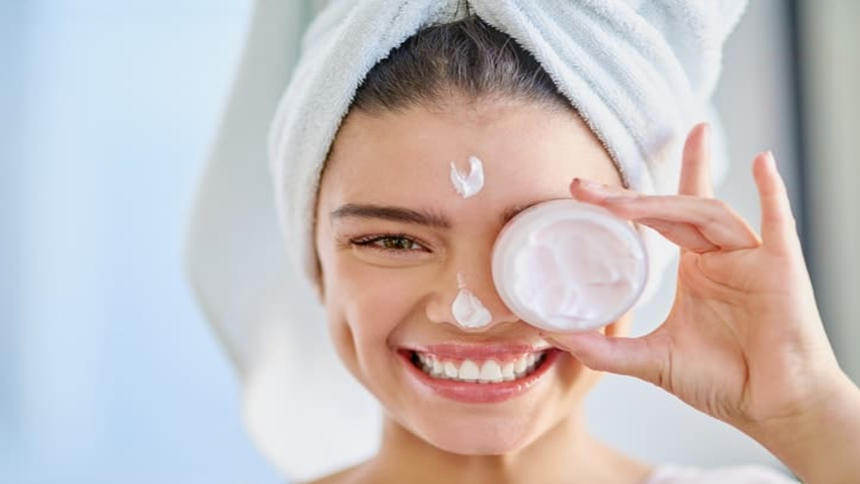
A consistent nighttime skincare routine can help replenish moisture, support the skin barrier and leave dehydrated, dull-looking skin feeling softer and more refreshed by morning. The good news is that you do not need a complicated 10-step routine to achieve this.
At night, the skin naturally enters a repair phase, making bedtime a suitable time to focus on hydration and barrier care. A simple routine involving gentle cleansing, a hydrating serum and a nourishing moisturiser can help improve the appearance and feel of dehydrated skin without overwhelming it.
What Does Dehydrated Skin Look Like?
Dehydrated skin is lacking water and may appear dull, rough or tight. It can also make fine lines look more noticeable. Building a routine around hydration and barrier support can help improve these concerns.
Dr. Noopur Jain, Founder & Consultant Dermatologist at Skinzest, says the focus should be on “hydration and barrier support products instead of layering too many products on your skin.”
Simple Nighttime Skincare Routine For Glowing Skin
Step 1: Cleanse Gently
Start your nighttime routine with a gentle, non-stripping cleanser. This helps remove makeup, sunscreen, sweat, dirt and excess oil without unnecessarily drying the skin.
Avoid harsh cleansers and very hot water, as both can affect the skin barrier and contribute to increased dryness.
Step 2: Apply A Hydrating Serum
After cleansing, apply a hydrating serum while the skin is slightly damp. Ingredients such as hyaluronic acid, glycerin and panthenol act as humectants, helping attract and retain water in the skin.
This can leave dehydrated skin looking smoother and more plump.
Step 3: Use A Barrier-Supporting Moisturiser
A hydrating serum helps attract moisture, while a moisturiser helps seal it in and reduce water loss during the night.
Look for barrier-supporting ingredients such as ceramides, squalane and fatty acids. If your skin feels particularly dry or sensitive, a richer cream may be more suitable than a lightweight gel.
Step 4: Add An Occlusive Layer If Needed
An occlusive product can be used as the final step when additional moisture retention is needed. Applying a very thin layer can help reduce overnight water loss.
However, this step may not be suitable for acne-prone skin.
Nighttime Skincare Tips To Remember
When dealing with dehydrated skin, keeping the routine simple is important. Avoid layering several exfoliating products, including acids and retinoids, as this may cause irritation and further weaken the skin barrier.
The lips and delicate area around the eyes can also show signs of dryness. A fragrance-free moisturiser or suitable hydrating product can be used around these areas, followed by a hydrating lip balm to help keep the lips moisturised.
Why Are Serums Important At Night?
Hydrating serums can contain peptides that support the skin barrier and overall skin quality. Retinol may help improve the appearance of fine lines and skin texture, but it should be introduced gradually and only when the skin can tolerate it.
If the skin is already irritated or dehydrated, prioritising hydration and barrier support before introducing retinol may be more appropriate. A hydrating sleep mask can also be used to help reduce moisture loss and leave the skin feeling supple by morning.