
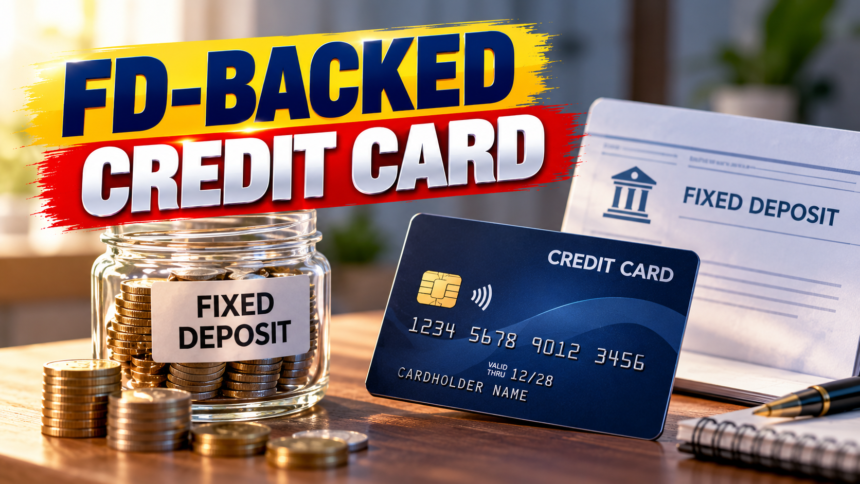
A fixed deposit (FD) is generally used to keep money invested for a fixed period while earning interest. A credit card, on the other hand, allows you to make purchases using borrowed funds that are repaid later. An FD-backed credit card combines these two financial tools by using a fixed deposit as security for the card.
Under this arrangement, the FD remains invested and continues to earn interest according to its applicable terms, while the credit card comes with a separate spending limit. The deposit acts as collateral rather than becoming the source of the money you spend through the card.
How an FD Helps You Get a Credit Card
With an FD-backed credit card, the fixed deposit is linked to the card as security. Instead of breaking the deposit to meet a spending need, you keep the FD intact and receive a credit limit based on the deposit value and the card issuer’s conditions.
For instance, if a bank offers a credit limit equal to 90% of the linked FD, a ₹50,000 deposit could result in a credit limit of up to ₹45,000.
The ₹50,000 remains invested in the fixed deposit. If you use ₹10,000 through the credit card, that amount becomes part of your card outstanding. It does not get deducted from the FD balance.
This arrangement allows the deposit to remain invested while giving you access to a separate line of credit.
Use the Credit Limit According to Your Budget
Having a higher credit limit does not mean you need to spend the entire amount. Your actual card usage should be based on your income, regular expenses and ability to repay the outstanding balance.
For example, if you have set aside ₹15,000 in your monthly budget for discretionary expenses, having a ₹50,000 credit limit does not mean you should spend ₹50,000. The credit limit represents the maximum amount available under the card’s terms, while your repayment capacity should guide your spending.
Using the card within your means can also help prevent outstanding dues from becoming difficult to manage.
Check FD and Credit Card Terms Before Applying
Before linking a fixed deposit to a credit card, it is important to understand the conditions attached to both products.
Check the minimum FD amount, deposit tenure, credit limit available against the FD, applicable interest rate, joining or annual fees, finance charges, late payment fees and any other applicable costs.
You should also check the rules governing FD withdrawal or premature closure. In particular, understand when the lien placed on the deposit can be released and what conditions apply if you want to close either the FD or the credit card.
These details determine how accessible your deposit will remain while it is being used as security.
Conclusion
An FD-backed credit card allows an existing fixed deposit to be used as collateral while the money remains invested. The deposit continues to earn interest according to its applicable terms, while the card provides a separate credit limit.
The FD itself is not used for card transactions. If you spend through the card, the amount is added to your credit card outstanding rather than being deducted from the deposit.
Before choosing this type of card, consider the credit limit, fees, repayment requirements and restrictions on the linked FD. Using the available credit within your repayment capacity and paying dues on time are also important parts of managing the card responsibly.
FAQs
Can I spend my entire FD amount using the credit card?
No. The FD and credit card balance are separate. The card provides a credit limit determined by the FD amount and the issuer’s terms. The fixed deposit itself cannot be directly spent through the card.
Does the FD continue earning interest after being linked to the card?
Yes. The fixed deposit continues to earn interest according to its applicable terms while it remains linked as security for the credit card.
Can I withdraw the FD while it is linked to the credit card?
The FD generally cannot be freely withdrawn while the lien remains active. The conditions for releasing the lien or closing the deposit depend on the terms set by the card issuer.
Disclaimer
The information in this article is provided for general educational purposes only. FD-backed credit cards, interest rates, fees, credit limits, lien conditions and withdrawal rules can differ between issuers and may be changed according to their applicable terms. Readers should carefully review the latest terms and conditions provided by the relevant bank or financial institution before making a financial decision.