
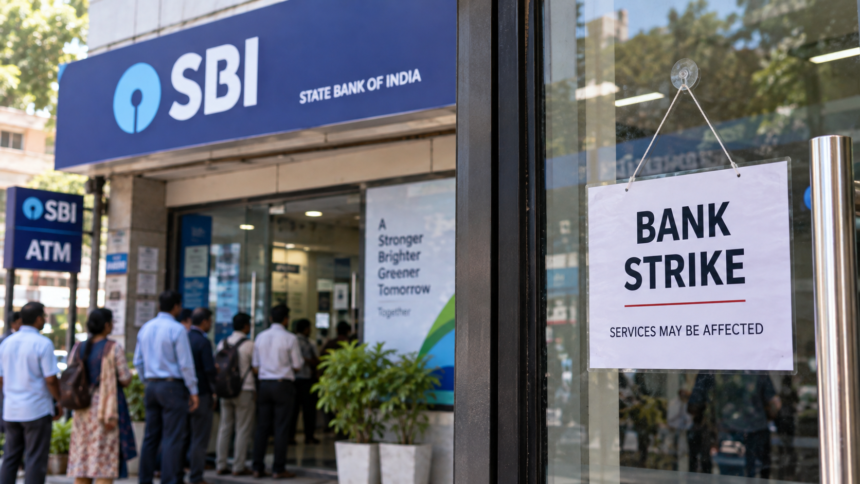
Bank customers may face disruptions toward the end of September as the United Forum of Bank Unions (UFBU) has called a three-day nationwide strike from September 28 to 30, 2026. The timing could extend the disruption to five days for some customers because September 26 and 27 fall on the weekend. The strike also coincides with the half-yearly closing period for banks.
The proposed strike is part of the banking unions’ ongoing campaign over demands including a five-day banking week and concerns regarding the Performance Linked Incentive (PLI) scheme.
Finance Ministry Calls Meeting to Maintain Banking Services
With the strike approaching, the Finance Ministry has called a meeting of the chief executives of public sector banks and regional rural banks to discuss arrangements for maintaining essential banking services.
The meeting is aimed at ensuring that customers continue to have access to essential services, including cash and digital banking facilities, during the period of industrial action.
However, branch-level operations could still be affected if employees participate in the strike. SBI and Bank of Baroda have separately indicated that they are making arrangements for normal functioning, while also cautioning that branch and office operations may be impacted.
Which Banking Services Could Be Affected?
Customers who need to visit a bank branch should plan important work in advance because physical banking operations may be disrupted during the strike.
Services that could face delays or interruptions include cash deposits and withdrawals at branches, cheque clearance, bank drafts, passbook updates and account-related work. Processes involving loan files, documentation and other branch-level activities may also be affected.
Digital banking services, however, are expected to remain available. UPI, internet banking and ATM services can continue to provide customers with access to digital and self-service banking facilities, although availability can vary by bank and service.
The September 11 nationwide strike had already affected branch-level operations at several public sector banks, including cash transactions and cheque clearances, while digital banking services remained available.
Why Are Bank Unions Going on Strike?
The UFBU has been pressing for the implementation of a five-day banking week. The unions are also opposing the revised Performance Linked Incentive scheme and have raised other employee-related issues.
The five-day banking proposal had been recommended to the government after being included in the 12th Bipartite Settlement/9th Joint Note, but the matter remains pending.
The government has also taken steps on the PLI issue. On September 7, the Finance Ministry said implementation of the PLI scheme dated November 19, 2024, for public sector bank executives for FY2025–26 had been kept in abeyance following concerns raised by employees. The matter is to be considered during the ongoing Bipartite Settlement/Joint Note discussions.
What Happens After September 30?
The September 28–30 action is not the only strike announced by the UFBU. Bank unions have also announced an indefinite nationwide strike beginning October 26 if their demands remain unresolved.
For customers, the immediate takeaway is that branch-based banking work around September 28–30 could face delays. Anyone with important cash, cheque, documentation, loan or other branch-related requirements may therefore want to complete the work ahead of the strike dates.
Disclaimer
This article is intended only to provide general information about the announced bank strike and possible service disruptions. Strike schedules, banking arrangements and service availability may change. Customers should check directly with their respective banks and official sources for the latest information before planning any important banking transaction.