
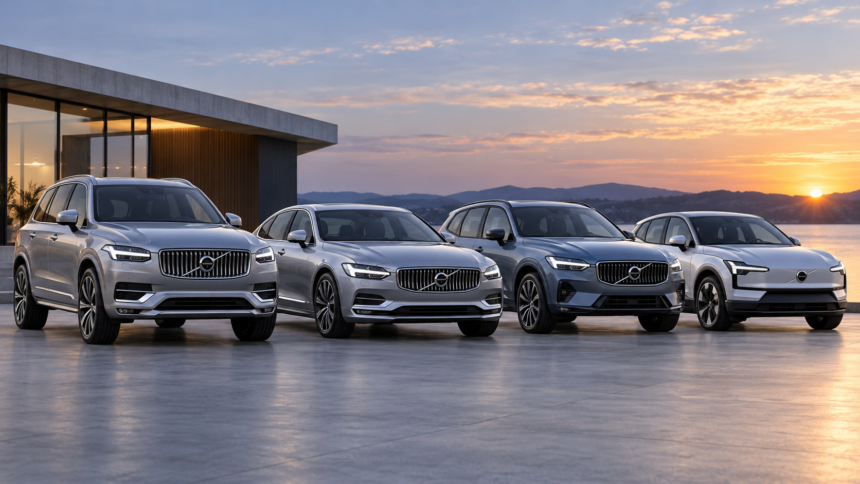
Volvo is preparing a major expansion of its global vehicle lineup, with plans to introduce 13 new cars by the end of 2030. The company will take a more regional approach to its future products, developing vehicles according to the requirements of different markets.
The planned lineup will include both battery-electric and hybrid models. Volvo also intends to update its design language and rethink how technology is used inside its cabins, including reducing its reliance on touchscreen controls.
Different Lineups Planned for Global Markets and China
Volvo outlined its future product strategy during its ‘Strategy Update’ event in Stockholm. Rather than following one identical product plan worldwide, the company will develop market-specific vehicles.
Seven of the 13 upcoming models are planned for Europe, the UK and the US, while six will be developed specifically for the Chinese market.
Vehicles for Europe, the UK and the US will continue to use Volvo’s SPA2 and SPA3 platforms along with the HuginCore computing architecture. The European range is also expected to gain new saloon and estate models, allowing Volvo to maintain its presence in these traditional body styles.
The US could also receive a new full-size electric SUV as part of the upcoming product expansion.
For China, Volvo plans to work more closely with parent company Geely. The companies will share platforms, technologies, components and supply-chain resources. This approach is expected to help lower development costs while enabling Volvo to tailor vehicles more closely to Chinese market requirements.
Volvo Plans New Design Direction and More Physical Controls
Volvo is expected to showcase its next design direction with a concept around its centenary in 2027. While the company has not yet disclosed detailed information about the concept, design chief Thomas Ingenlath said familiar Volvo elements will be reconsidered.
The brand’s Ironmark emblem and its distinctive diagonal grille element are both expected to receive new interpretations as Volvo develops its future design identity.
The company is also reconsidering its approach to touchscreen-heavy interiors. Ingenlath said screens should be used when they provide useful flexibility, while features that work better with physical controls could return to traditional buttons and switches.
Volvo may also take different approaches to cabin interfaces depending on the region where a vehicle is sold.
EV Expansion Alongside New Hybrid Models
Volvo has not yet confirmed exactly which of the 13 upcoming vehicles will be offered in each market. However, the company plans to strengthen its position in the battery-electric vehicle segment while continuing to offer hybrid models for customers who are not yet ready to make a complete transition to EVs.
As part of this strategy, Volvo plans to introduce its third-generation hybrid powertrains.
Volvo CEO and president Hakan Samuelsson said the company’s showrooms could look significantly different by 2030. The regional product strategy is also intended to help the company respond to issues such as trade tariffs, technology restrictions and varying customer preferences across markets.
Volvo Targets Lower Costs and Higher Profitability
Volvo is also working on reducing development and production costs. The company expects the share of components it shares with Geely to increase to 30% by 2030.
It is targeting a 5% reduction in material costs, along with additional savings from indirect expenses. Greater use of established SPA architectures and shared hybrid platforms could also reduce the investment needed for individual models compared with developing a vehicle on an entirely new platform.
The company is simultaneously working to reduce corporate overheads and improve productivity across its value chain.
Together, these measures are aimed at helping Volvo achieve operating profit margins of more than 8% by 2030, while the company expands its EV portfolio and continues offering hybrid vehicles across selected markets.
Disclaimer: This article is based on the information provided and Volvo’s stated future plans. Product launches, specifications, market availability and timelines may change before the vehicles are introduced.