
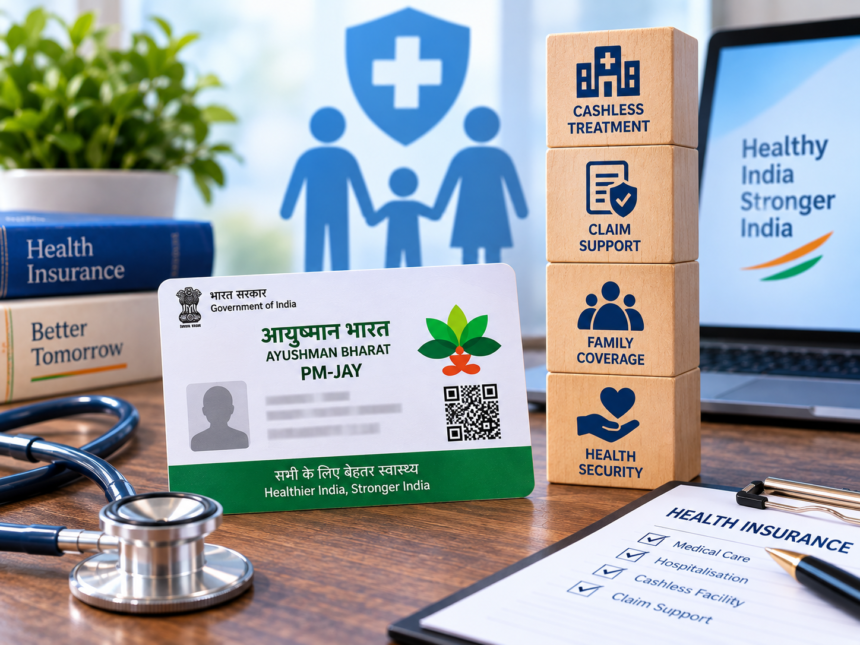
Health Insurance Claim: The rising cost of medical treatment has increased the financial pressure on families dealing with hospitalisation and other healthcare expenses. Health insurance policies and government healthcare schemes can help reduce this burden, but many people are still unfamiliar with how these benefits work.
From getting an Ayushman Bharat card to understanding cashless treatment, health insurance portability and claim rejection, knowing the basic procedures can make it easier to access available healthcare benefits.
How to Get an Ayushman Bharat Card
Under the Ayushman Bharat Pradhan Mantri Jan Arogya Yojana (PM-JAY), eligible beneficiaries can access treatment at empanelled hospitals according to the scheme’s rules and government records. The scheme also provides benefits to eligible individuals aged 70 years and above.
To apply for an Ayushman card, beneficiaries can visit the beneficiary portal and log in using their mobile number and OTP. After selecting the state and relevant scheme, they can search for their details using information such as their Aadhaar number.
Once eligibility is confirmed, the applicant needs to complete the e-KYC process. After successful completion, the Ayushman card can be downloaded.
People facing difficulties with the online process can seek assistance from a nearby Common Service Centre (CSC), government hospital or Ayushman Mitra desk.
Cashless Treatment and What to Do About High Hospital Bills
People with health insurance who want to use cashless treatment should first check whether the hospital is part of their insurer’s network. The required documents are then submitted at the hospital’s insurance desk.
The hospital generally sends details of the patient’s illness and proposed treatment to the insurance company for pre-authorisation. Once the request is approved, the insurer settles the covered treatment expenses directly with the hospital.
However, not every medical expense is necessarily covered by a health insurance policy. Depending on the policy terms, certain costs may have to be paid by the patient. Therefore, cashless treatment does not always mean that the entire hospital bill will be covered.
If a hospital bill appears unusually high, ask for an itemised bill before making the payment. Check charges for medicines, room facilities and other services carefully. Any discrepancy can first be raised with the hospital’s billing department.
If the matter is not resolved, the insurer’s grievance redressal mechanism can be used. Further complaints can be taken to the appropriate consumer forum or through the applicable insurance grievance process. Issues related to the Ayushman scheme can be raised with the relevant government authority.
Health Insurance Portability and Pre-Existing Diseases
Health insurance policyholders who are unhappy with their existing insurer may have the option to port their policy to another insurance company, subject to applicable conditions.
Portability can allow certain existing policy benefits, including credit for the waiting period, to be carried forward to the new policy under the applicable regulations. Since portability involves specific timelines, policyholders should begin the process well before the policy renewal date and check the current requirements with the insurer.
Pre-existing diseases refer to medical conditions that existed before purchasing a health insurance policy. Conditions such as diabetes, high blood pressure and asthma may fall into this category.
Private health insurance policies commonly have waiting periods for pre-existing conditions, although the applicable period varies between policies. Customers should therefore carefully check when coverage for existing medical conditions begins.
It is also important to provide complete and accurate medical information when purchasing a policy. Failure to disclose an existing illness or providing incorrect information can create problems when making a claim later.
Why Can a Health Insurance Claim Be Rejected?
A health insurance claim can be rejected for several reasons. These may include incorrect information about an illness at the time of purchasing the policy, making a claim before the applicable waiting period ends, seeking treatment that is excluded under the policy, failing to provide required documents or not informing the insurer within the prescribed time.
Policyholders whose claim is rejected should first ask the insurance company for the reason in writing. They can then request a review or reconsideration through the insurer’s grievance redressal process. If the issue is still unresolved, the applicable complaint-resolution mechanism can be used.
CGHS and ESIC Healthcare Benefits
The Central Government Health Scheme (CGHS) provides healthcare services to eligible Central Government employees and pensioners. Depending on the applicable rules, beneficiaries can receive services such as OPD consultations, medicines and treatment at listed hospitals and CGHS Wellness Centres.
Those eligible for the scheme can apply for a CGHS card through the official CGHS portal. The application may require an identity document, photograph and employment- or pension-related documents. After verification, eligible beneficiaries can access the services available under the scheme.
Employees covered under ESIC and their eligible family members can also access medical services according to the prescribed rules. Employees whose salaries include ESIC contributions should be aware of the healthcare benefits available through their ESIC coverage.
The scheme provides medical facilities for various healthcare needs, allowing eligible beneficiaries and their families to seek treatment according to ESIC rules and the advice of medical professionals.