
For years, luxury fashion has been closely linked with premium fabrics from around the world—from Italian silk and French lace to Scottish cashmere and Egyptian cotton. But in 2026, the definition of luxury is gradually changing.
India’s rich handloom tradition is gaining renewed attention as designers and fashion-conscious consumers look for textiles that combine craftsmanship, heritage, comfort and sustainability. Fabrics such as Banarasi silk, Kashmiri Pashmina and Chanderi are moving beyond traditional outfits and finding their way into contemporary wardrobes.
From statement pieces to everyday clothing, these Indian textiles demonstrate that premium fashion does not always need to come from international luxury houses.
5 Indian Handlooms to Add to Your Wardrobe
Here are five traditional Indian handloom fabrics that are getting a modern makeover and emerging as stylish alternatives to imported luxury textiles.
1. Banarasi Silk
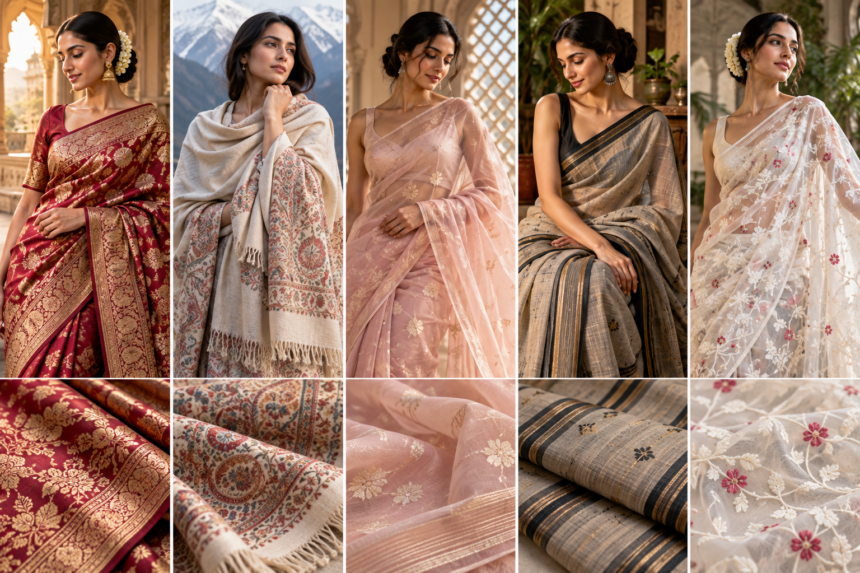
Known for its elaborate zari detailing, intricate motifs and rich texture, Banarasi silk has long been one of India’s most prized textiles. Its handwoven craftsmanship gives it a distinctive character that sets it apart from mass-produced fabrics.
While Italian silk is admired for its smooth and refined finish, Banarasi silk brings centuries of Indian weaving expertise to contemporary fashion.
Today, designers are taking the fabric beyond conventional sarees and experimenting with:
- Jackets
- Co-ord sets
- Contemporary dresses
- Shirts
- Handbags and accessories
This transformation has made Banarasi silk increasingly appealing to younger fashion consumers.
2. Kashmiri Pashmina
Authentic Kashmiri Pashmina is celebrated for its exceptional softness, lightweight feel and natural warmth. Often compared with premium Scottish cashmere, it offers a luxurious combination of comfort and craftsmanship.
Handcrafted Pashmina pieces can become long-term wardrobe investments, particularly when they are made into:
- Shawls
- Scarves
- Wraps
- Stoles
Its timeless appeal makes Pashmina suitable for both traditional ensembles and modern winter styling.
3. Chanderi
For those who prefer a lightweight, delicate and slightly sheer textile, Chanderi offers an excellent Indian alternative to fabrics such as French organza.
The fabric is versatile enough to work across casual wardrobes as well as festive dressing. Contemporary designers are giving Chanderi a modern identity by turning it into:
- Minimalist kurtas
- Contemporary sarees
- Kaftans
- Indo-Western outfits
Its airy texture makes Chanderi particularly attractive for India’s climate.
4. Maheshwari
Maheshwari fabric is traditionally created using a combination of cotton and silk, resulting in a textile that balances breathability with an elegant finish.
Its distinctive borders, stripes and traditional motifs give the fabric a recognisable identity, while its comfortable texture makes it suitable for modern clothing.
Today, designers are increasingly incorporating Maheshwari into:
- Office wear
- Contemporary dresses
- Minimal ethnic outfits
- Everyday luxury pieces
It offers the refined appearance of premium fabric blends while retaining the character of Indian handloom craftsmanship.
5. Jamdani
Jamdani is known for its incredibly lightweight texture and intricate woven motifs. The delicate patterns appear to float across the surface of the fabric, creating an almost ethereal appearance.
Although its detailed craftsmanship can make it look elaborate, Jamdani remains remarkably light and comfortable. It is sometimes compared with luxury jacquard textiles but offers a softer and more breathable experience.
Modern designers are using Jamdani for:
- Sarees
- Dupattas
- Tunics
- Contemporary fusion separates
Its combination of intricate artistry and lightweight comfort makes it particularly suited to modern fashion.
Why Indian Handlooms Are Making a Comeback
The growing popularity of Indian handlooms is about more than simply bringing traditional fabrics back into fashion. It reflects a broader movement towards quality, conscious consumption and craftsmanship over fast fashion.
Indian handlooms carry the skill and heritage of generations of artisans, while many of these textiles are produced through traditional techniques rather than large-scale industrial manufacturing.
Choosing handloom fabrics can therefore be a way to support local craftsmanship while adding distinctive, long-lasting pieces to your wardrobe.
As designers continue to reinterpret traditional Indian textiles for contemporary lifestyles, fabrics such as Banarasi silk, Pashmina, Chanderi, Maheshwari and Jamdani are proving that Indian craftsmanship can stand confidently alongside some of the world’s most celebrated luxury fabrics.
In 2026, the new definition of luxury may simply be heritage, craftsmanship and timeless quality—with an Indian identity.