
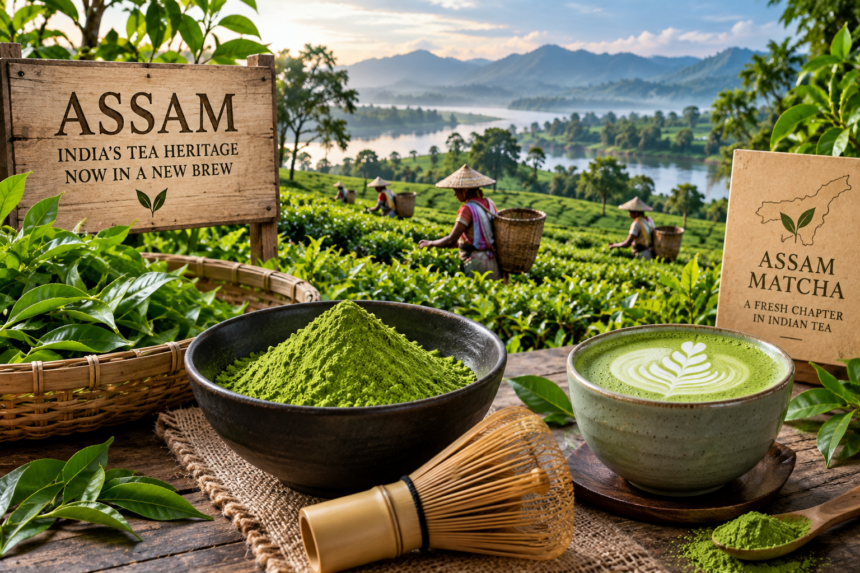
Assam, one of India’s most celebrated tea-producing regions, has long been synonymous with strong, full-bodied black tea. But the state’s tea industry is now entering an entirely new segment with the commercial production of matcha, the finely powdered green tea traditionally associated with Japan.
The development marks an important shift for India’s specialty tea industry, as Assam’s tea growers explore new cultivation methods, technologies and premium products to meet changing consumer preferences.
From Assam Black Tea to Green Matcha
Matcha has deep roots in Japanese tea culture and is made by carefully processing specially cultivated green tea leaves. Unlike conventional tea, matcha involves a highly specialised cultivation and production process.
Tea plants intended for matcha are generally grown under shade before harvesting. This technique helps increase chlorophyll and L-theanine levels in the leaves. After harvesting, the leaves are steamed and processed before being finely ground into the characteristic bright-green powder.
For decades, Assam’s tea industry has largely focused on producing CTC tea, short for Crush, Tear and Curl. However, some innovative tea growers are now investing in shade-growing infrastructure and specialised processing equipment to enter the premium matcha market.
By combining traditional Japanese cultivation techniques with Assam’s fertile alluvial soil and suitable climate, local producers are exploring the potential of producing matcha within India.
Japanese Matcha vs Assam Matcha: What’s Different?
Japanese matcha is widely appreciated for its distinctive umami flavour, fresh grassy notes and delicate seasonal characteristics. Assam-grown matcha, meanwhile, can offer a different sensory profile because of the region’s warmer and more humid environment.
The local growing conditions are expected to give Assam matcha a fuller body, smoother character and naturally sweet finish.
| Feature | Japanese Matcha | Assam Matcha |
|---|---|---|
| Flavour Profile | Rich umami and grassy notes | Smooth, earthy and naturally sweet |
| Growing Environment | Cool, temperate conditions | Warm and humid climate |
| Popular Uses | Traditional tea ceremonies | Lattes, beverages and culinary applications |
Rather than directly replacing Japanese matcha, Assam’s version could establish its own identity as a regional specialty tea with distinctive flavour characteristics.
How Assam’s Matcha Could Benefit India’s Tea Industry
The emergence of commercially produced matcha in Assam could create several opportunities for India’s tea sector.
Reduced Dependence on Imports
India has traditionally depended on imported matcha to satisfy the country’s growing interest in the beverage. Increased domestic production could reduce reliance on overseas supplies while giving consumers access to locally produced premium matcha.
Better Opportunities for Tea Growers
Specialty teas typically command higher prices than conventional bulk tea. Moving into matcha production could therefore provide Assam’s planters with an additional revenue stream and potentially improve returns from their tea gardens.
More Agricultural Innovation
The shift towards matcha demonstrates how Assam’s tea industry is adapting to changing market trends. It also highlights the versatility of Camellia sinensis var. assamica, the tea variety closely associated with Assam.
If production expands successfully, the region could eventually explore opportunities to supply Indian and international specialty tea markets.
Can Assam Matcha Become India’s Next Tea Trend?
The rise of matcha production in Assam represents more than just another addition to India’s beverage market. It reflects a broader transformation in the country’s tea industry, where growers are increasingly looking beyond traditional black tea and experimenting with premium, specialised products.
As interest in wellness-focused beverages, matcha lattes and matcha-based foods continues to grow, locally produced Assam matcha could find a growing audience across India.
With its distinctive regional character and potential economic benefits for tea producers, Assam’s entry into commercial matcha production could become an important new chapter in India’s tea story.