
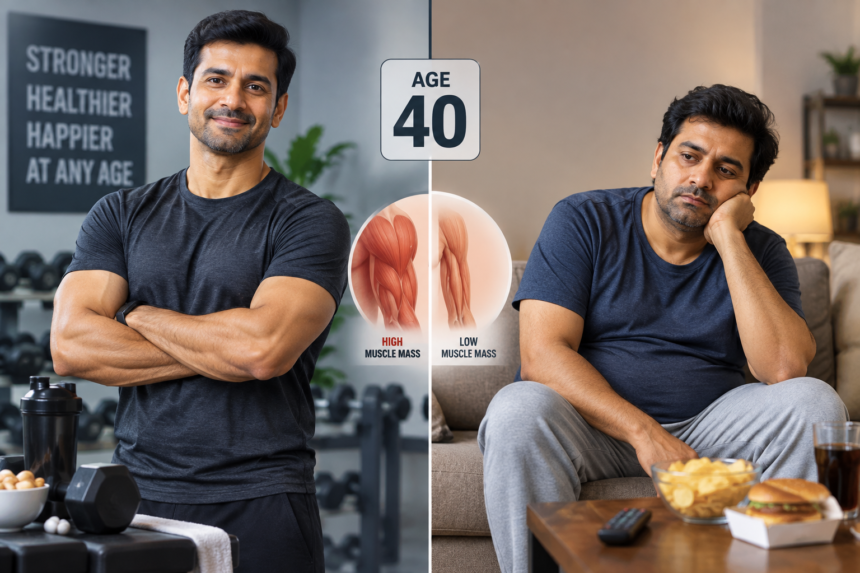
Have you ever noticed that two people of the same age can look remarkably different, even when their lifestyles appear fairly similar? While genetics is often considered the main reason behind differences in body shape and ageing, muscle mass may also have a major influence on how the body changes over time.
According to Dr. Ravi K. Gupta, differences in muscle mass can significantly affect body composition, strength, balance and physical function as people grow older.
Why Muscle Mass Becomes Important After 30
Muscle loss can gradually begin around the age of 30, making it important to focus on maintaining muscle strength from an early stage.
Dr Gupta explained that two people may be the same age and follow broadly similar lifestyles but still have very different body compositions. One of the major differences, he noted, can be the amount of muscle they carry.
This is why strength training and adequate protein intake become increasingly important as people enter their 30s.
Muscles are not only responsible for physical appearance. Skeletal muscle supports movement, helps maintain stability and enables people to perform routine activities with greater ease.
Muscle Loss Can Affect More Than Your Appearance
Changes in body shape are often attributed entirely to genetics. However, factors such as physical activity, nutrition and the ability to preserve muscle mass can also influence how a person looks and functions with age.
Dr Gupta pointed out that people can sometimes dismiss these differences simply as genetics without considering the impact of muscle loss and lifestyle.
As muscle mass and strength decline, maintaining mobility can become more difficult. Reduced strength can also affect balance and make certain everyday movements more challenging, particularly in later life.
Low Muscle Mass May Increase Problems With Balance and Mobility
Maintaining muscle becomes especially important as people get older because strength contributes to stability and movement.
Dr Gupta highlighted the connection between lower muscle mass, weaker physical function, balance problems and the fear of falling in old age.
This means that maintaining muscle isn’t simply about having a toned appearance. Strong muscles can help support mobility, independence and confidence in everyday activities as the body ages.
How to Maintain Muscle as You Age
The message from the doctor is straightforward: healthy ageing involves more than maintaining a normal body weight or following a healthy diet.
Regular strength or resistance training, combined with adequate protein and an active lifestyle, can help support muscle maintenance. Building healthy habits earlier in adulthood may also help people preserve physical strength as they get older.
Rather than focusing solely on how much someone weighs or how old they are, paying attention to muscle strength and overall body composition can be an important part of ageing well.
Who Is Dr Ravi K. Gupta?
Dr Ravi K. Gupta is a board-certified oncologist. He completed his MBBS at PGIMS Rohtak and subsequently pursued an MD in Internal Medicine at Larkin Medical System in Miami, USA, where he also served as Chief Resident.
Key Takeaway
Two people of the same age can have very different physical appearances and abilities. Although genetics can influence body composition, muscle mass, exercise and nutrition also matter.
Starting strength training and paying attention to adequate protein intake around adulthood can help support muscle health, mobility and physical independence as the years go by.