
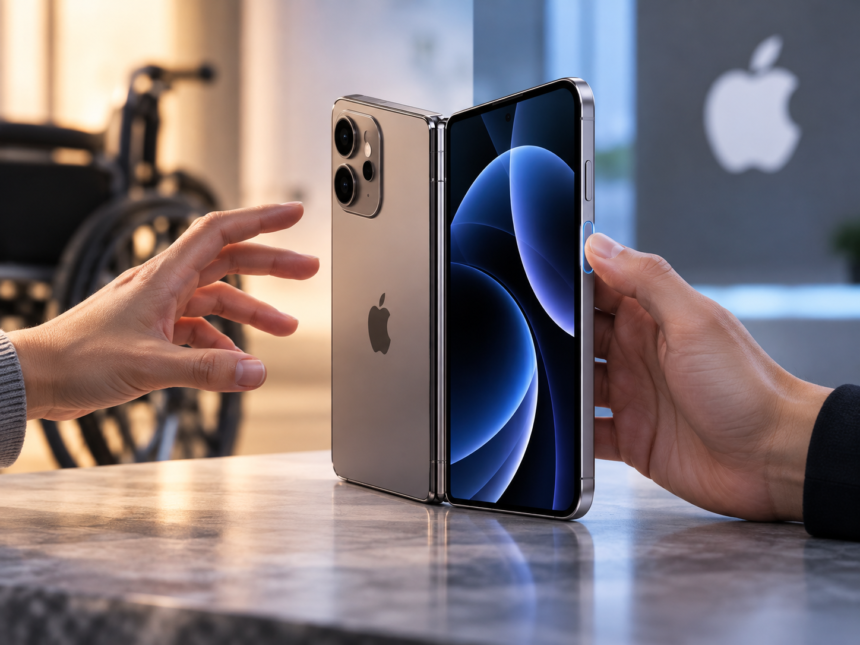
iPhone Duo: Apple’s new $1,999 foldable iPhone Duo is attracting attention not only for its premium design but also for an unexpected accessibility concern. The device places Touch ID on the right-side button, while several key interface elements are positioned toward the right edge of the larger foldable display, potentially making everyday use more difficult for left-handed users and people with limited mobility in one hand.
Apple has described moving essential controls to the side as part of the phone’s ergonomic design. While that arrangement may feel natural for many right-handed users, it could create a very different experience for the roughly 10% of people who are left-handed, particularly when the wider foldable body requires additional reach.
According to comments highlighted in New York Post coverage by Kyra Breslin on September 12, some left-handed users and people affected by stroke-related mobility limitations have already questioned whether the phone is genuinely practical for their needs.
Can Software Fix the iPhone Duo’s Right-Side Controls?
A software update could potentially make some aspects of the interface easier to use. Apple could introduce a mirrored layout, move the home-screen dock to the opposite side or reposition navigation controls so that they are more accessible to left-handed users.
However, software cannot change the physical location of the Touch ID button. It also cannot move the camera module or alter the foldable phone’s hinge and hardware orientation.
That distinction is at the heart of the criticism. Some users quoted in the New York Post discussion have argued that simply rotating or holding the phone differently would not be a practical solution. The concern is therefore not limited to the interface; it is rooted in the physical design of the device.
Touch ID Creates a Different Accessibility Challenge
The issue becomes more noticeable because of what the Duo replaces. Traditional Face ID authentication does not require users to reach for a button with either hand, making it largely hand-neutral.
By contrast, placing biometric authentication on the right edge introduces a physical preference that can disadvantage someone whose stronger or more functional hand is their left.
Some left-handed users may be perfectly comfortable adapting to a right-oriented phone. But being able to adapt does not necessarily mean the product has been designed inclusively.
The distinction matters, particularly for a premium device that is expected to accommodate a broad range of users.
Apple’s Accessibility Reputation Faces a New Test
Apple has spent years building a strong accessibility ecosystem through features such as AssistiveTouch, Switch Control and Voice Control. These tools have helped make its devices usable for people with a wide range of physical and motor needs.
The question surrounding the iPhone Duo is whether its hardware design undermines some of that progress for users who rely heavily on left-hand or single-hand operation.
Neither Apple’s launch materials, its Apple Newsroom announcement nor Wired’s detailed event coverage reportedly highlighted a dedicated left-handed mode or a way to mirror the Duo’s physical control arrangement.
Apple Still Has Time to Address the Concern
The iPhone Duo is not expected to reach the preorder stage until October 16, giving Apple an opportunity to improve the software experience before launch.
A comprehensive mirroring option could make on-screen controls considerably more accessible for left-handed customers. However, the larger lesson for future foldable iPhones is likely to be hardware design.
Handedness and one-handed usability need to be considered while the physical product is being designed—not simply addressed through software after concerns emerge.
At a $1,999 price point, asking some customers to simply “adapt” to the hardware is unlikely to be enough. For Apple’s most expensive devices, accessibility needs to be considered part of the design itself rather than an afterthought.