
For decades, relations between India and China have been shaped by a difficult reality: the two Asian giants have strong reasons to engage with each other, yet deep strategic mistrust continues to stand between them.
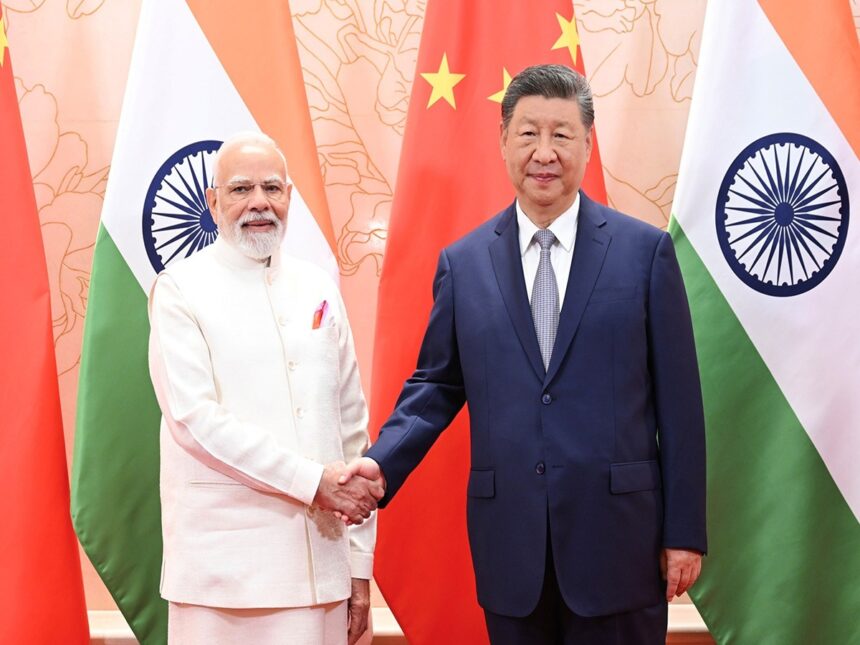
The upcoming BRICS summit in New Delhi could become another important test of whether Prime Minister Narendra Modi and Chinese President Xi Jinping can turn the recent improvement in ties into something more stable and long-lasting.
Xi is expected to travel to New Delhi for the BRICS summit scheduled from September 11 to 13, marking his first visit to India since 2019. The visit carries particular significance because the last time the two leaders met on Indian soil was before the 2020 Galwan Valley clash dramatically changed the relationship between the two countries.
However, the biggest question is not whether Modi and Xi will meet or exchange friendly gestures. The real challenge is whether India and China can develop enough confidence and communication to manage their differences without allowing another crisis to derail bilateral relations.
From the Galwan Clash to Renewed Engagement
India-China relations reached one of their lowest points in recent decades following the deadly military confrontation in the Galwan Valley in June 2020.
After the clash, both countries deployed thousands of additional troops along the Line of Actual Control (LAC). India also increased restrictions and scrutiny on Chinese investments, technology companies and business activity.
For New Delhi, peace along the border became closely connected to the future of the wider relationship with Beijing. India repeatedly argued that normal diplomatic and economic relations could not fully return without peace and stability along the frontier.
A potential turning point emerged in October 2024.
India and China reached an agreement on patrolling arrangements in the Depsang and Demchok areas of eastern Ladakh. The understanding allowed both sides to resume patrols in locations where Indian access had been restricted since the 2020 tensions.
The agreement created an opening for renewed political engagement and the gradual rebuilding of economic and diplomatic ties.
Shortly afterwards, PM Modi and Xi Jinping met on the sidelines of the BRICS summit in Kazan on October 23, 2024. The meeting followed the breakthrough on patrolling arrangements and represented an important step towards restoring high-level communication.
Since then, both sides have appeared to focus on creating safeguards around their rivalry.
The objective is not necessarily to solve every disagreement between India and China. Instead, the priority is to prevent disputes from escalating into another serious military confrontation.
In other words, the two countries may not be moving towards friendship, but they could be learning how to manage their rivalry more effectively.
Why the BRICS Summit Could Be Important
The BRICS summit in New Delhi provides one of the most significant opportunities for the two leaders to interact.
BRICS is among the few major international platforms where Modi and Xi participate as leaders of large emerging economies rather than as members of opposing military blocs.
This makes the grouping particularly important for India-China engagement.
The two countries do not necessarily need complete trust in each other for BRICS to function. Instead, they need enough shared interests and cooperation to prevent their bilateral competition from weakening the organisation.
For India, BRICS supports its policy of strategic autonomy. The platform allows New Delhi to engage with China and Russia while simultaneously strengthening partnerships with countries such as the United States, European nations and Japan.
China, meanwhile, sees BRICS as an important platform for strengthening the influence of emerging economies and building greater cooperation among countries of the Global South.
Their objectives overlap in several areas, but their long-term visions for the international order are not always the same.
That makes BRICS an important test of whether India and China can cooperate despite their strategic differences.
How the United States Influences India-China Relations
The relationship between Washington and Beijing is another major factor shaping the equation.
India has significantly strengthened its strategic and defence partnership with the United States. Its involvement in the Quad and growing defence cooperation have further deepened these ties.
However, India has consistently avoided becoming part of a formal military alliance aimed directly against China.
Beijing, on the other hand, views the expanding US-led security architecture in the Indo-Pacific as a major strategic challenge.
Interestingly, this creates a limited area of common ground between India and China.
Both countries support the idea of a more multipolar global order and are wary of international systems dominated by a single power.
But India’s vision of multipolarity differs significantly from China’s.
New Delhi does not want a multipolar world to evolve into an international order dominated by Beijing.
As a result, India’s participation in BRICS should not be interpreted as India moving closer to a China-led bloc.
Instead, India continues to pursue a strategy of engaging with multiple global powers at the same time while protecting its independence in foreign-policy decision-making.
The Border Dispute Remains the Biggest Challenge
Despite the improvement in diplomatic engagement, the unresolved border dispute remains the most serious obstacle to a complete normalisation of India-China relations.
The 2024 agreement on patrolling arrangements was an important development, but it did not resolve the larger boundary dispute.
Disengagement at some locations has resulted in buffer zones and changes in the way Indian and Chinese forces operate along the frontier.
While patrols resumed in Depsang and Demchok, concerns remain regarding the overall military situation and unresolved friction points along the LAC.
The situations in areas such as Galwan Valley and Pangong Tso also continue to be important elements of the broader security picture.
Both countries, however, have continued diplomatic and security discussions.
Recent contacts, including meetings involving National Security Adviser Ajit Doval and Chinese Foreign Minister Wang Yi, suggest that New Delhi and Beijing are trying to strengthen institutional channels of communication.
This reflects the broader strategy of creating safeguards or “guardrails” around the relationship.
The approach involves maintaining diplomatic dialogue, ensuring military communication continues, managing troop deployments and preventing individual incidents from triggering a much wider crisis.
Can Economic Relations Help Improve Ties?
Economic ties between India and China present another complicated challenge.
Despite political tensions, the two economies remain closely connected.
China continues to be a major supplier of machinery, electronics, industrial components and other important goods used by Indian businesses and manufacturers.
At the same time, India has spent the years following the Galwan clash trying to reduce its strategic dependence on Chinese companies and products.
New Delhi tightened investment regulations for companies from countries sharing a land border with India and increased scrutiny of Chinese technology firms and investments in sensitive sectors.
Even as diplomatic engagement improves, India’s security concerns have not disappeared.
Recent developments involving a proposed connection between India’s UPI system and Alipay+ highlight this continuing caution. Concerns related to national security, data protection, cyber fraud and the handling of financial information have reportedly slowed progress on the proposal.
The episode demonstrates that economic engagement may gradually increase, but national security concerns will continue to determine the limits of cooperation.
The BRICS summit could therefore provide an important setting for discussions on technology imports, investment rules and the broader economic relationship between India and China.
Can Modi and Xi Really Become Friends?
A genuine friendship between India and China remains difficult to imagine in the near future.
The two countries compete for strategic influence across South Asia, the Indian Ocean region and the wider Global South.
Their territorial dispute remains unresolved. China’s close relationship with Pakistan continues to concern India, while New Delhi’s growing partnerships with the United States and other Indo-Pacific nations remain a source of strategic concern for Beijing.
These fundamental differences will not disappear simply because the border situation becomes calmer.
The more realistic goal may be competitive coexistence.
This would involve maintaining peace along the LAC, strengthening military and diplomatic communication, restoring selected areas of economic cooperation and accepting that competition will continue where national interests conflict.
Neither India nor China is likely to abandon its existing strategic partnerships to accommodate the other.
Instead, both countries may need to develop a relationship based on predictability, communication and clearly understood limits.
The Real Test for Modi and Xi at BRICS
The success of the BRICS summit should not be measured only by photographs of Modi and Xi shaking hands or making positive public statements.
Diplomatic optics can demonstrate an improvement in relations, but they do not guarantee lasting stability.
The real test will be whether India and China can establish systems capable of surviving future disagreements.
Can both sides prevent another serious crisis along the LAC?
Can economic ties gradually improve without compromising India’s national security concerns?
Can India and China cooperate within BRICS without allowing their bilateral rivalry to weaken the grouping?
And perhaps most importantly, can Modi and Xi maintain communication even when their strategic interests sharply diverge?
If the two countries can achieve these goals, India and China may not become close friends anytime soon.
But they could develop a relationship that may be even more important for regional stability: stable and predictable rivals who understand each other’s interests, limits and red lines.
For two nuclear-armed neighbours sharing a disputed 3,488-kilometre border, managing rivalry peacefully may ultimately be a far more realistic goal than expecting friendship.