
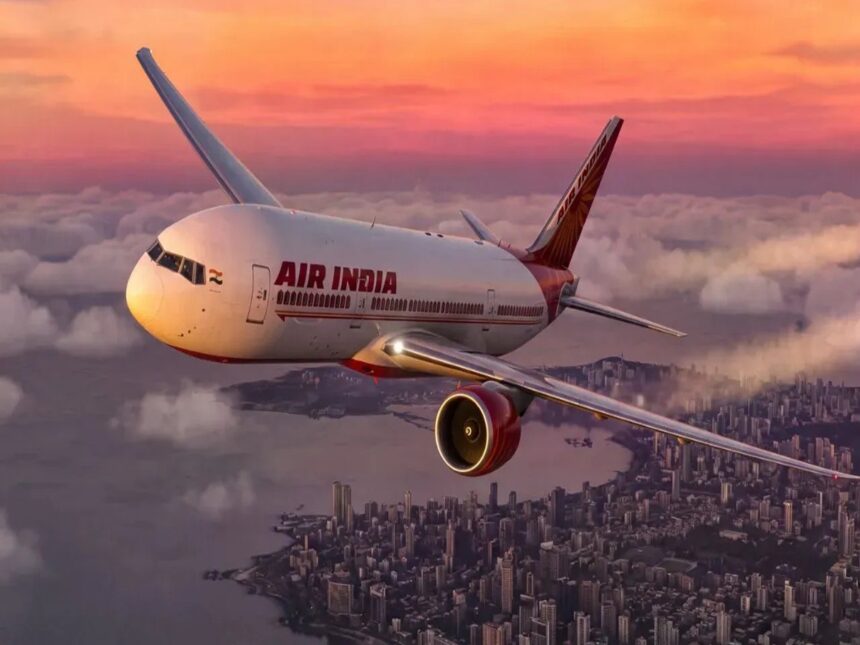
An Air India Airbus A320 flying from Phuket to Delhi suffered a dramatic technical emergency at 36,000 feet after all three of its hydraulic systems lost pressure within seconds of each other, according to a preliminary report by the Aircraft Accident Investigation Bureau (AAIB).
The incident occurred on August 4 and triggered an autopilot disconnect, a brief stall warning and a sudden change in the aircraft’s altitude. The violent movement of the aircraft injured 24 people, including passengers and cabin crew members.
One of the major concerns highlighted in the preliminary investigation was that the seatbelt signs were switched off when the incident took place, leaving people inside the cabin unprotected during the sudden altitude upset.
The event was initially classified as a serious incident but has since been categorised as an accident, according to reports.
All Three Hydraulic Systems Failed Within Seconds
The AAIB’s preliminary findings show that the first warning appeared while the aircraft was cruising at 36,000 feet.
At 04:02:43 UTC, the aircraft detected a loss of pressure in its green hydraulic system. Just four seconds later, the flight-control system reported pressure loss in the remaining two hydraulic systems — blue and yellow.
The autopilot disconnected almost immediately, while a continuous warning chime sounded inside the cockpit.
Only seconds later, the aircraft generated a stall warning that lasted for approximately two seconds.
Hydraulic systems use pressurised fluid to operate critical aircraft equipment, including important flight-control components. The sudden loss of all three systems created an extremely serious situation for the crew.
Aircraft Climbed Suddenly Before Dropping Nearly 300 Feet
The technical failure caused a sudden and violent movement of the aircraft.
Reports said the A320 initially climbed around 372 feet before descending approximately 292 feet from its assigned altitude.
The rapid pitch-up and subsequent pitch-down reportedly threw passengers and cabin crew members inside the cabin, with some people hitting overhead storage areas.
The hydraulic systems, however, began recovering shortly after the initial failure.
According to the preliminary findings, the blue hydraulic system was restored first at approximately 04:02:52 UTC. The yellow and green systems recovered soon afterwards, allowing the aircraft’s flight-control surfaces to return to normal operation.
The AAIB has not yet determined what caused all three hydraulic systems to lose pressure almost simultaneously.
Pilots Regained Control and Continued Towards Delhi
The first officer was operating the aircraft when the emergency occurred. The preliminary report said the first officer initially responded to the situation before the captain took control.
The flight had departed Phuket International Airport at 01:41 UTC, or 7:11 am IST, carrying:
- 137 passengers, including three infants
- Six cabin crew members
- Two pilots
After the aircraft stabilised, the crew decided to continue the journey to Delhi instead of diverting to another airport.
The cabin supervisor later informed the pilots that several passengers and crew members had suffered injuries.
The flight crew subsequently requested medical priority from Delhi air traffic control.
The aircraft landed safely at Indira Gandhi International Airport at 05:30 UTC, or 11:00 am IST, and was able to taxi to its parking position under its own power.
24 Passengers and Crew Members Required Medical Attention
Airport medical teams attended to 24 injured people, including 20 passengers and four cabin crew members.
Most of those injured received treatment for relatively minor injuries and were discharged.
However, four people with serious injuries were admitted to hospital for further treatment.
The fact that the seatbelt signs were not illuminated at the time of the sudden aircraft movement was identified as an important factor in the number of injuries.
Extensive Damage Reported Inside the Aircraft Cabin
The sudden movement of the aircraft also caused significant damage inside the cabin.
Investigators found damage across several areas, including:
- Cracked and distorted ceiling panels
- Dislodged passenger-service-unit panels
- Broken handrails
- Detached overhead-bin doors
- Damage to a crew seat
- A broken emergency-exit handle
A lavatory commode was also uprooted from its original position during the incident.
The post-flight technical report recorded several warnings, including low pressure in the green, blue and yellow hydraulic systems, autopilot disconnection and faults related to the elevator flight-control system.
An Airbus technical assessment reviewed as part of the investigation reportedly indicated that the near-simultaneous hydraulic failure briefly affected the aircraft’s ability to respond to certain flight-control inputs.
For approximately four seconds, the crew reportedly had limited use of the elevators and ailerons, which are essential for controlling the aircraft’s pitch and banking movements.
Investigation Focuses on Hydraulic Failure and Maintenance History
The AAIB is continuing its investigation into the hydraulic-system malfunction and other possible contributing factors.
Investigators said there was no adverse weather reported by either the pilots or air traffic control at the time of the event.
Before departure from Phuket, maintenance staff carried out a pre-flight inspection and reportedly found no fresh technical issues apart from an existing item listed under the Minimum Equipment List (MEL).
The aircraft had been operating with MEL item 29-23-01A, related to the Power Transfer Unit (PTU). The item had reportedly been invoked on July 28, around one week before the accident.
The Airbus A320 has three separate hydraulic systems — green, blue and yellow — which provide hydraulic power to major flight-control and other aircraft systems.
The Power Transfer Unit provides additional support between the green and yellow systems and is designed to operate automatically when there is a significant pressure difference between them.
Relevant hydraulic components have now been removed from the aircraft for detailed testing.
Investigators have also recovered and downloaded data from the cockpit voice recorder and flight-data recorder.
Airbus and French Aviation Investigators Assisting AAIB
France’s Bureau of Enquiry and Analysis for Civil Aviation Safety (BEA) is also participating in the investigation as the representative of the aircraft’s state of design and manufacture.
Technical specialists associated with Airbus inspected the aircraft in India between August 13 and August 15.
Following the inspection, investigators collected hydraulic components and fluid samples for further scientific and technical examination.
The AAIB is also reviewing maintenance records, operational information, fuel and oil records, air traffic control data and other evidence connected to the flight.
Pilot’s Psychoactive Substance Test Raises Separate Concerns
The preliminary investigation also mentioned the results of medical tests conducted on the pilots after the aircraft landed in Delhi.
Both pilots underwent breath-analyser tests, with satisfactory results. They were also tested for psychoactive substances.
The co-pilot tested negative.
However, the pilot-in-command’s initial test returned a non-negative result. A blood sample was subsequently sent to a laboratory for confirmation, and the confirmatory test was also reported as non-negative.
The AAIB did not identify the substance detected or state whether it had any impact on the operation of the flight.
Importantly, the preliminary report did not establish a connection between the pilot’s test result and the hydraulic-system failure or the sudden altitude upset.
The AAIB described the confirmed psychoactive-substance finding as a serious concern and recommended that the Directorate General of Civil Aviation take appropriate action to prevent the misuse of such substances.
Following the release of the preliminary report, Air India terminated the services of the pilot-in-command with immediate effect.
The airline also announced expanded drug-testing measures, including voluntary testing covering its pilot workforce.
AAIB Says Final Cause Has Not Yet Been Determined
The Aircraft Accident Investigation Bureau has stressed that the investigation is still ongoing.
The purpose of the probe is to identify the probable causes and contributing factors behind the accident rather than assign blame or legal liability.
Investigators have interviewed members of the flight and cabin crew and collected technical and operational evidence related to the incident.
The preliminary findings could change as further evidence is analysed.
The final AAIB report is expected to provide a clearer explanation of how the Air India A320 lost pressure in all three hydraulic systems at cruising altitude and what factors contributed to the dramatic mid-air event that left 24 people injured.