
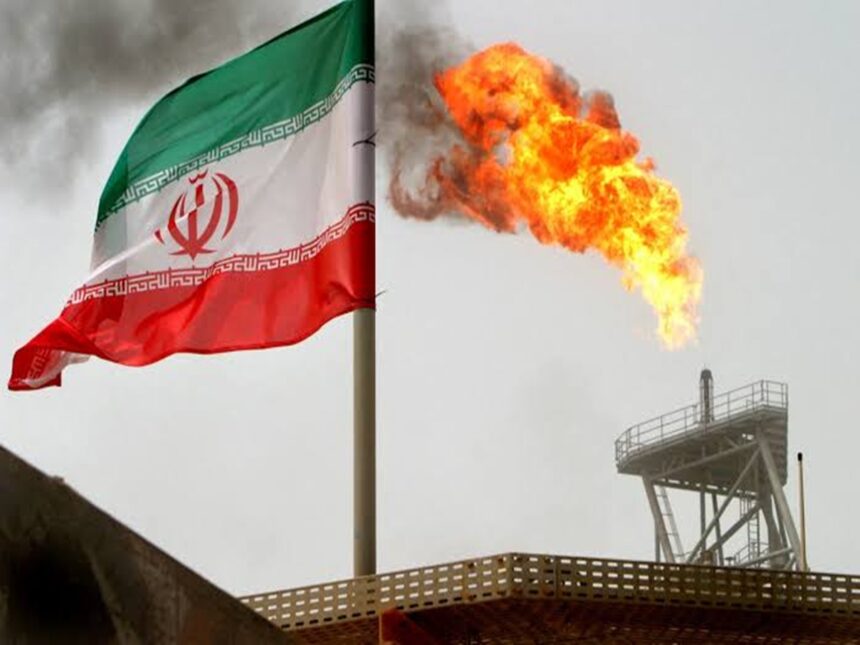
Tensions between Iran and the United States have intensified, with Tehran warning that it could completely stop oil exports through the Strait of Hormuz and other routes in the Persian Gulf if Washington continues its economic pressure campaign.
Iranian Supreme National Security Council Secretary Mohsen Rezaei issued the warning as the United States prepared to announce another round of sanctions aimed at Iran and countries continuing to trade with Tehran.
Rezaei said that if what Iran describes as an American “economic war” continues, the country could prevent oil from being exported through the Strait of Hormuz or from other locations in the Persian Gulf.
He also delivered a broader warning, saying countries that participate in or support Washington’s economic measures against Iran could be viewed by Tehran as taking an “act of war.”
US Plans New Economic Pressure on Iran
Iran’s latest warning came as Washington prepared what it described as a significant new financial campaign against Tehran.
US Treasury Secretary Scott Bessent was expected to address the issue publicly as the administration considered tougher economic measures against Iran and its trading partners.
In an opinion article published in the Financial Times, Bessent described the planned action as an exceptionally large financial offensive against an adversary.
Although the exact details of the measures were not immediately disclosed, his comments indicated that the US could put additional pressure on countries that continue doing business with Iran or remain connected to its financial system.
Washington has also urged other major economies to reconsider their economic ties with Tehran.
Iran Warns Countries Supporting US Sanctions
Rezaei’s statement was not limited to Washington. He warned that any country helping or supporting the US economic campaign against Iran could face serious consequences.
His comments came amid reports that Washington was seeking cooperation from China, one of the world’s biggest energy consumers. Bessent had previously pointed to China’s dependence on Gulf oil supplies while urging Beijing to work with the United States.
China, however, has opposed the use of economic pressure as a solution to the dispute. A spokesperson for the Chinese embassy in Washington said sanctions and pressure would not resolve the underlying problems and called for diplomacy.
Iranian Officials Mock New US Sanctions Threat
Other senior Iranian officials have also stepped up their criticism of Washington.
Iranian Parliament Speaker Mohammad Bagher Ghalibaf used satire to attack the latest US sanctions threat. In a post on X, he referred to an “Iran boomerang” and shared a cartoon portraying a massive economic weapon returning to hit the person who launched it.
The Islamic Revolutionary Guard Corps also criticised Washington’s strategy. IRGC spokesperson Sardar Mohebi argued that the US decision to intensify economic pressure demonstrated what he described as Washington’s failure to achieve its objectives through military means.
Iranian Foreign Ministry spokesperson Esmaeil Baghaei likewise dismissed the latest sanctions threat, noting that Iran has lived under sanctions for around two decades and is familiar with their consequences.
Strait of Hormuz Becomes a Major Flashpoint
The Strait of Hormuz remains at the centre of the latest confrontation because of its enormous importance to global energy supplies.
Iran’s economy was already facing severe pressure from international sanctions before military attacks damaged parts of its infrastructure. The country is now dealing with disrupted trade, reduced production, infrastructure damage and the cost of rebuilding.
At the same time, Iran retains missile and drone capabilities that could potentially threaten neighbouring Gulf states and commercial shipping.
Any major disruption to tanker traffic through the Strait of Hormuz could therefore have consequences far beyond the region, potentially putting additional pressure on international oil markets and fuel prices.
Global Energy Markets Face Fresh Uncertainty
The possibility of Iran restricting oil exports or disrupting shipping through the Strait has raised concerns about the stability of global energy supplies.
The Strait of Hormuz is one of the world’s most important energy corridors, making any prolonged disruption potentially significant for oil-importing nations.
The situation is further complicated by uncertainty surrounding Iran’s nuclear programme. While the US and Israel continue to focus on preventing Iran from advancing its nuclear capabilities, the precise status of the programme remains unclear.
US-Iran Conflict Remains Unresolved
The latest escalation comes despite the absence of direct military strikes between the United States and Iran for several weeks. At the same time, meaningful negotiations aimed at ending the conflict have yet to resume.
With Washington preparing additional economic measures and Tehran threatening a potentially dramatic response involving oil exports and the Strait of Hormuz, the standoff remains a major source of geopolitical and energy-market uncertainty.
Any further escalation could have implications not only for Iran and the US but also for Gulf nations, international shipping and global crude oil prices.