
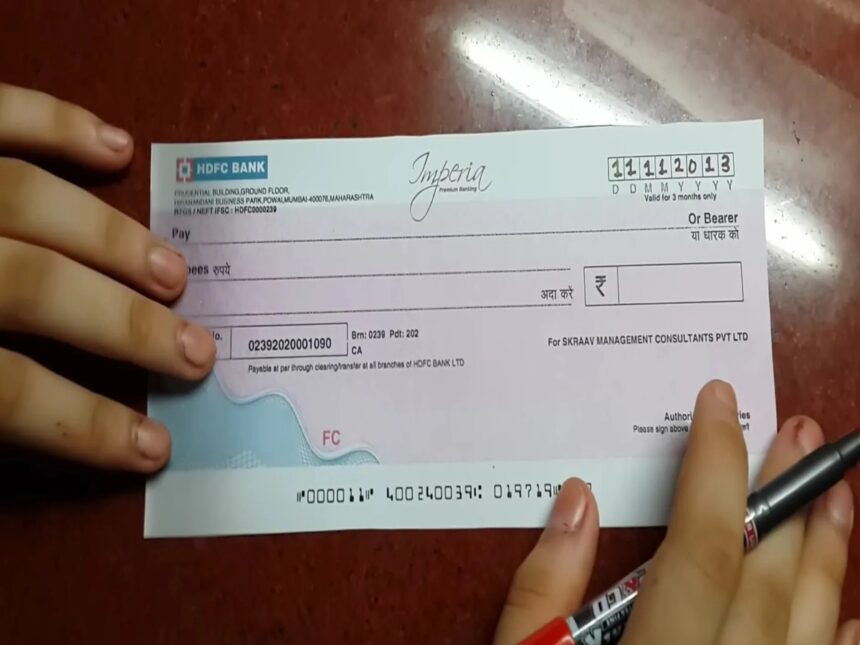
New Cheque Book Rules: Customers who regularly use cheques for banking transactions may need to check whether their cheque book meets the latest requirements. Several banks, including Bank of India (BOI), have started issuing cheque books carrying a new alphanumeric identification code and are encouraging customers to obtain updated cheque books.
Banks are reportedly informing customers through SMS and email so that large-value transactions are not disrupted in the future.
Why Are Banks Introducing the New Cheque Rule?
Under the new requirement described in the original report, cheques of ₹50,000 or above without the prescribed alphanumeric code may not be accepted after December 31, 2026.
The alphanumeric code combines letters and numbers to help banks identify and authenticate cheques more efficiently. The objective is to strengthen cheque security and reduce the risk of counterfeit cheques, alteration and other forms of fraud.
The change also comes as the banking system moves towards faster digital cheque processing. Under the Cheque Truncation System (CTS), physical cheques are converted into digital images and processed electronically, reducing the time required for cheque clearing.
New Cheque Book Charges: What Customers Should Know
The cost of obtaining a replacement or additional cheque book depends on the bank and the type of account.
For example, Bank of India provides a 25-leaf cheque book free once a year for certain savings accounts. Additional cheque leaves may attract charges, with the reported rate being ₹5 per leaf.
However, customers should check their individual bank’s latest schedule of charges because cheque book fees and free limits can differ between banks and account categories.
What Exactly Is a Cheque?
A cheque is a banking instrument that allows an account holder to instruct their bank to make a payment to another person or entity. It can be used for payments and, depending on the type of cheque, may also be used to withdraw cash.
A cheque generally contains details such as:
- Name of the payee
- Date of issue
- Amount to be paid
- Account-related information
- Account holder’s signature
A cheque is generally valid for three months from its date. The signature on it must also correspond with the signature registered with the bank.
Different Types of Cheques
1. Bearer Cheque
A bearer cheque can generally be encashed by the person who presents it at the bank, subject to applicable banking procedures.
2. Order Cheque
An order cheque is payable to the person named on the cheque after the required verification.
3. Crossed Cheque
A crossed cheque carries two parallel lines and is generally deposited into a bank account rather than being directly paid as cash over the counter.
Why Do People Still Use Cheques?
Despite the growth of UPI and online banking, cheques continue to be used for certain large-value and formal transactions.
Better Security Than Carrying Cash
Carrying substantial amounts of cash can expose people to theft or loss. A cheque provides an alternative payment method, although customers should still take precautions if a cheque book is lost or stolen.
Creates a Payment Record
Cheque transactions are recorded through the banking system, providing documentary evidence of a payment that can be useful for financial and business records.
Legal Remedy in Case of Dishonour
A cheque that is dishonoured may attract legal consequences under Section 138 of the Negotiable Instruments Act, 1881, subject to the applicable conditions and procedures.
Useful for Financial Documentation
Cheque payments create a traceable transaction trail, which can be helpful when maintaining business accounts or documenting financial transactions.
Suitable for Large Payments
For certain high-value transactions, cheques can still serve as an alternative to cash, particularly where parties require a formal banking record of the payment.
Should You Replace Your Old Cheque Book?
If your bank has specifically contacted you about replacing your existing cheque book, it is sensible to check the requirement with the bank before making a large payment.
Customers should also verify the latest rules directly with their bank, as cheque acceptance requirements, charges and implementation procedures can vary.
The broader shift towards coded and digitally processed cheques is aimed at making cheque transactions faster, more secure and easier to authenticate, while reducing the possibility of fraud.